
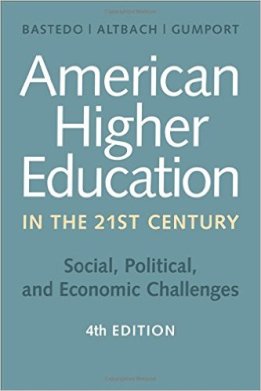
 Johns Hopkins University Press has released the fourth edition of American Higher Education in the Twenty-First Century: Social, Political, and Economic Challenges, co-edited by Research Professor and Center for International Higher Education Founding Director Philip G. Altbach, Michael N. Bastedo and Patricia J. Gumport. The volume address major changes in higher education, including the rise of organized social movements, the problem of income inequality and stratification, and the growth of for-profit and distance education. Three new chapters cover information technology, community colleges and teaching and learning. Placing higher education within its social and political contexts, the contributors discuss finance, federal and state governance, faculty, students, curriculum and academic leadership. Altbach’s chapters are “Harsh Realities: The Professoriate in the Twenty-First Century” and “Patterns of Higher Education Development.” This volume follows the publication last year of two books co-edited by Altbach and CIHE Associate Director Laura Rumbley: Academic Inbreeding and Mobility in Higher Education: Global Perspectives and Young Faculty in the Twenty-First Century: International Perspectives.
Perspectives on higher ed
Internationalization: global and local
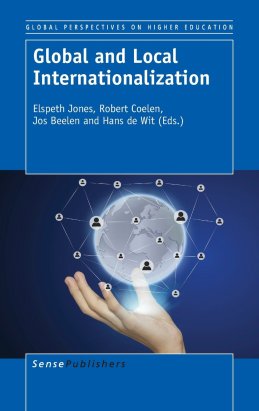 Offering a range of perspectives on internationalization in higher education from a globally dispersed group of authors, Global and Local Internationalization (Sense Publishers) highlights that while internationalization is strongly connected to the globalization of society, at the same time it is deeply embedded in local political, economic and social structures, systems and cultures. Co-edited by Center for International Higher Education Director Hans de Wit (with Elspeth Jones, Robert Coelen and Jos Beelen), the volume focuses on six aspects: Internationalization in local and global contexts; local and global drivers for change; global and local dimensions of curriculum internationalization; outcomes of local and global international education; internationalization for local and global employability and regional and national cases of local and global internationalization.
Cold War espionage
 Alumnus Bill Plunkert, a former CIA agent featured in the book The Billion Dollar Spy: A True Story of Cold War Espionage and Betrayal (Penguin Random House, 2015) by Pulitzer Prize winner David E. Hoffman, will give a talk Apr. 20 at 6:30 p.m. in the Murray Function Room of Yawkey Center. After a stint as a Navy aviator, Plunkert joined the CIA and worked as a clandestine operations officer in Moscow during the Cold War. Sponsors: The Winston Center for Leadership and Ethics, Political Science Department and the International Studies Program. Book excerpt in the Washington Post.
Greater Boston Intercollegiate Undergraduate Poetry Festival
 Students representing 25 Boston-area colleges and universities will read from their own poetry at the annual Greater Boston Intercollegiate Undergraduate Poetry Festival at BC on Apr. 19 at 7:30 p.m. in Yawkey Center’s Murray Function Room. Senior Kwesi Aaron, a major in English and political science, was selected as BC’s representative poet and will present “North of the City,” which he wrote as a response—“a defense of city life”—to John Updike’s “Coming Into New York.” “For me, poetry is the most raw way of distilling emotion into words. When I write poems, words usually come to me in a flurry. I enjoy the process of tidying up those subconscious thoughts enough so that they may mean something to someone else as well,” said Aaron. The festival is sponsored by Poetry Days and Boston College Magazine. More from BC News
Mayor’s memoir
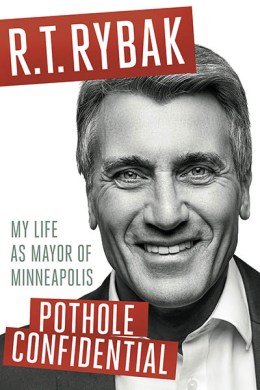 Alumnus R.T. Rybak, who served three terms as mayor of Minneapolis, has published a memoir about his life and time as mayor of his hometown. Pothole Confidential: My Life as Mayor of Minneapolis (University of Minnesota Press, 2016) takes readers into the highs and lows and the daily drama of a Ryback’s life, which has been inextricably linked with Minneapolis for 50 years. A former journalist, Rybak offers a candid account of the challenges and crises confronting the city, including the collapse of the I-35W bridge, the rise of youth violence, and the fight over a ban on gay marriage. More from Minnesota Public Radio
Citizen poets of Boston
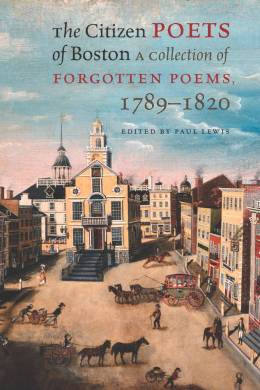 This month marks the launch of The Citizen Poets of Boston: A Collection of Forgotten Poems, 1789–1820 (University Press of New England), an anthology of poetry created during the country’s post-revolution days. The poetry—the work of a generation of virtually forgotten poets who created an intimate and interactive literary culture in Boston–was recovered through the efforts of Boston College students working on a research project led by Professor of English Paul Lewis. A book launch and panel discussion will be held April 14 from 4 to 6 p.m. in O’Neill Library’s Reading Room. According to alumnus Harrison Kent, this project “gave us the opportunity to rediscover pieces of literature that practically no one had seen for hundreds of years, which is obviously an amazing project for an undergraduate student. It was as much an archaeological dig as it was a study in literature, which is what made discovering these lost treasures so fun and exciting. It’s a truly singular piece of academia, and I’m very glad that we get to share our favorite findings with the rest of Boston—and the world.” Read more in BC News.
Posted in Boston College Authors, Students
Tagged American Studies program, English Department, poetry
Leave a comment
The War on Poverty
 Christopher Jencks, the Macolm Wiener Professor of Social Policy at the Harvard Kennedy School, will give a talk titled “The War on Poverty: Did We Give up Too Soon?” on Apr. 11 at 4:30 p.m. in Fulton Hall, room 230. Jencks is a member of the editorial board of the American Prospect. His recent research deals with changes in family structure over the past generation, the costs and benefits of economic inequality, the extent to which economic advantages are inherited, and the effects of welfare reform. His books include The Academic Revolution (with David Riesman); Inequality: Who Gets Ahead?; The Urban Underclass (with Paul Peterson); Rethinking Social Policy; The Homeless; and The Black White Test Score Gap (with Meredith Phillips). He is a former fellow of the Institute for Policy Studies in Washington, DC and former editor of the New Republic. Sponsors: Institute for the Liberal Arts, Political Science Department, School of Social Work, and Sociology Department.
English Dept. book event
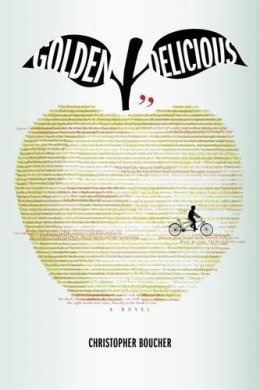 English Department faculty members Suzanne Berne and Christopher Boucher will read from their new novels on Apr. 12 at 5 p.m. in Stokes Hall, RoomS195. Boucher’s latest novel, Golden Delicious (Melville House, 2016), is a modern, inventive story about the trials of a family from Appleseed, Massachusetts. According to Booklist, “Boucher’s second novel solidifies him as a master of evoking compassion through absurd, shape- shifting landscapes … As wacky as it is recognizable, [his] capricious world filled with delightful wordplay is strikingly vivid, funny, and moving.” Boucher’s first novel was How to Keep Your Volkswagen Alive. Berne, who was awarded the Orange Prize for her first novel, A Crime in the Neighborhood, satires middle-class America in her latest novel, The Dogs of Littlefield [Read more in the 2/2/16 BC Bookmarks post.] Sponsor: English Department.
Reframing educational research
 Decolonizing Educational Research (Routledge) by Lynch School of Education Associate Professor Leigh Patel examines the ways through which coloniality manifests in contexts of knowledge and meaning making, specifically within educational research and formal schooling. Purposefully situated beyond popular deconstructionist theory and anthropocentric perspectives, Patel’s book investigates the longstanding traditions of oppression, racism, and white supremacy that are systemically reseated and reinforced by learning and social interaction. Through her explorations into the unfixed and often interrupted narratives of culture, history, place and identity, a bold and hopeful vision emerges of how research in secondary and higher education institutions might break free of colonial genealogies and their widespread complicities. Patel also is the author of Youth Held at the Border: Immigration, Education, and the Politics of Inclusion.
Rankings gone global
 Based on a unified case methodology of 11 key countries and academic institutions, The Global Academic Rankings Game (Routledge, 2016) provides expert analysis on how academic rankings are becoming increasingly visible and influential on the international stage. The volume is co-edited by Lynch School of Education Research Professor Philip Altbach, founding director of the Center for International Higher Education, CIHE Associate Director Laura Rumbley and Maria Yudkevich. Each chapter provides an overview of government and national policies as well as an in-depth examination of the impact that rankings have played on policy, practice, and academic life in Australia, Chile, China, Germany, Malaysia, the Netherlands, Poland, Russia, Turkey, the United Kingdom, and the United States.
 BC Bookmarks