
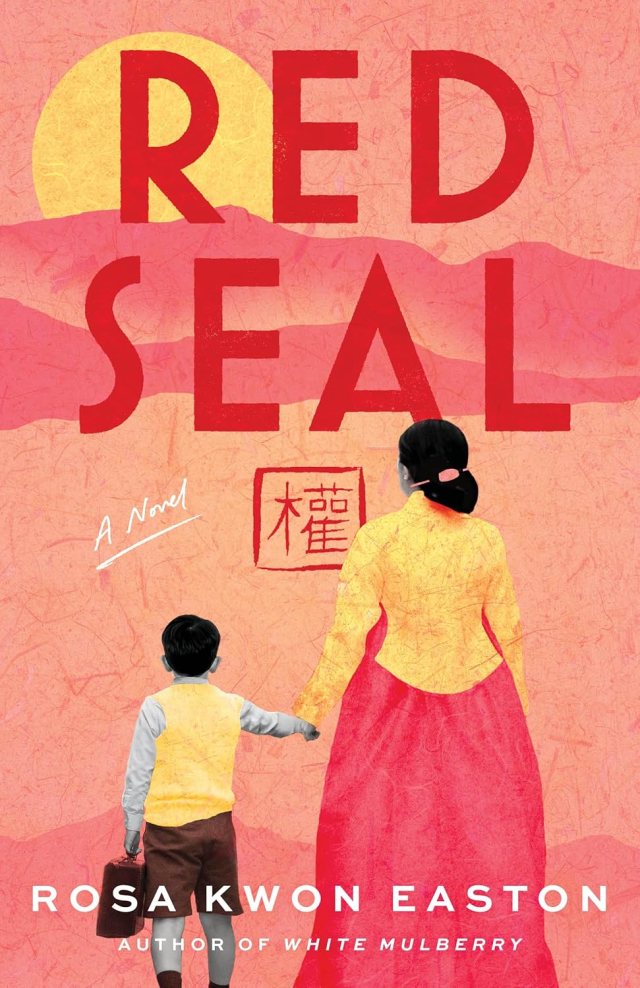
 A Korean mother and son navigate wars, displacement, and identity in a multi-generational saga written by Boston College Law School graduate Rosa Kwon Easton. Starting in the midst of World War II, Red Seal (Lake Union Publishing, 2026) follows the journey of Miyoung, a Korean-born single mother and nurse, and her son, Ko-chan, who embark on a decades-long odyssey of survival, sacrifice, and—for the generations to follow—a search for identity across three nations. Easton’s debut novel was White Mulberry.
A search for home and identity
U.S. Catholic schools
Nearly 1.7 million students are enrolled in Catholic schools in the United States. In The Playbook for Whole-Child Education in U.S. Catholic Schools (National Catholic Educational Association, 2025), the authors establish a cohesive definition, conceptional framework, and operational guidelines for practitioners to implement a whole-child approach to education within U.S. Catholic schools. The objective of this holistic approach, they write, is to ensure that students receive a well-rounded education that addresses their diverse needs, promotes their overall well-being, and endows them with the requisite knowledge, spiritual depth, and moral grounding essential for success across various dimensions of life. The Playbook’s authors include members of Boston College’s Barbara and Patrick Roche Center for Catholic Education team: Executive Director Melodie Wyttenbach; Director of Leadership Programs Molly McMahon; Director of Research, Program Evaluation, and Innovation John Reyes; Program Director of the Two-Way Immersion Network for Catholic Schools (TWIN-CS) Katie Ward; and graduate assistant Victoria Berges. Roche Center team members also wrote Governance and Leadership: A Sourcebook for Practitioners (NCEA, 2024), a resource on the latest research and practical knowledge organized around the National Standards and Benchmarks for Effective Catholic Elementary and Secondary Schools, Second Edition (NSBECS). It is designed to assist those engaged in the work of Catholic education to better understand the dimensions of faith formation—for faculty, staff, and students—to provide a research-based context for the standards, and to provide insight about how to make abstract processes of faith formation more concrete. BC authors for this volume are: Wyttenbach; Reyes; McMahon; part-time instructional leadership coach Anne-Marie Grejdus; and Andrew Miller, an associate professor in the Lynch School of Education and Human Development.
Poet Victoria Chang
 Poetry Days Presents An Evening with Victoria Chang at Boston College on October 28 at 7 p.m. in Gasson 100. Chang’s most recent book of poems, Tree of Knowledge, is a finalist for the 2026 National Book Award for Poetry. Her previous works of poetry include The Trees Witness Everything and With My Back to the World, which received the Forward Prize for Best Collection of Poetry, was a finalist for the Kingsley Tufts Poetry Award and the PEN Jean/Stein Book Award, and was named a Best Book of the Year by NPR, The Guardian, Literary Hub, and Electric Literature. Another book of poems, OBIT, was named a New York Times Notable Book, a Time Must-Read Book, and received the Los Angeles Times Book Prize, the Anisfield-Wolf Book Award in Poetry, and the PEN/Voelcker Award. Her poems have been translated into Italian, Chinese, Spanish, Greek, Latvian, German, Romanian, and Dutch. Chang is the Margaret T. and Henry C. Bourne Chair at Georgia Tech and director of the Poetry@Tech program. The event, free and open to the public, is cosponsored by the Lowell Humanities Series and the Asian American Studies Program. Advance registration is required.
‘Money Talks’
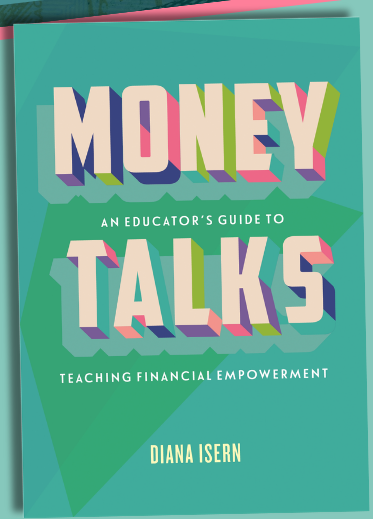 Drawing on her 20 years of experience as a New York City public school educator and financial literacy advocate, 2005 Boston College graduate Diana Isern has published Money Talks: An Educator’s Guide to Teaching Financial Empowerment (Beacon Press/Penguin Random House, 2026). According to Isern, Money Talks comes at a time when more than half the country requires personal finance education in high schools, and most of the instructors being tasked with teaching those courses were never trained to do so. Money Talks is a jargon-free guide that helps educators create engaging lessons about topics ranging from savings and the stock market to real estate and building credit. Isern’s book blends personal reflection, practical tools, and real voices from students and educators on the transformative power of financial education. Isern is an accredited financial counselor whose work has been featured in Bloomberg, The Wall Street Journal, and MarketWatch.
Quoth the Raven
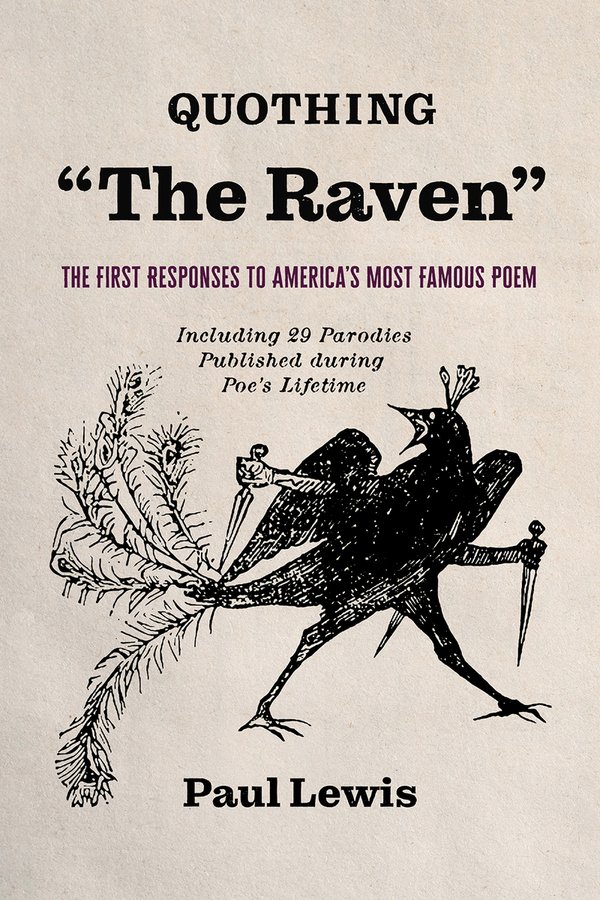 Edgar Allan Poe’s “The Raven,” a narrative poem about a grieving student mourning the death of his lost love—and his slow descent into madness after a mysterious talking bird visits him, was an immediate sensation and remains one of the most iconic poems in literary history. In his new book, Quothing “The Raven”: The First Responses to America’s Most Famous Poem (Mercer University Press, 2026), BC English Professor Emeritus Paul Lewis follows “The Raven” from the literary salons where it was discussed, to the newspapers where it was reviewed, to the 29 parodies that made fun of both the poem and its author. A Poe scholar, Lewis addresses why “The Raven” was widely reprinted, praised, criticized, and mocked during the years from its 1845 publication to Poe’s death in 1849. Read more on BC News.
Posted in Boston College Authors
Tagged Edgar Allan Poe, English Department, literary analysis, poem
Leave a comment
‘Weathering’
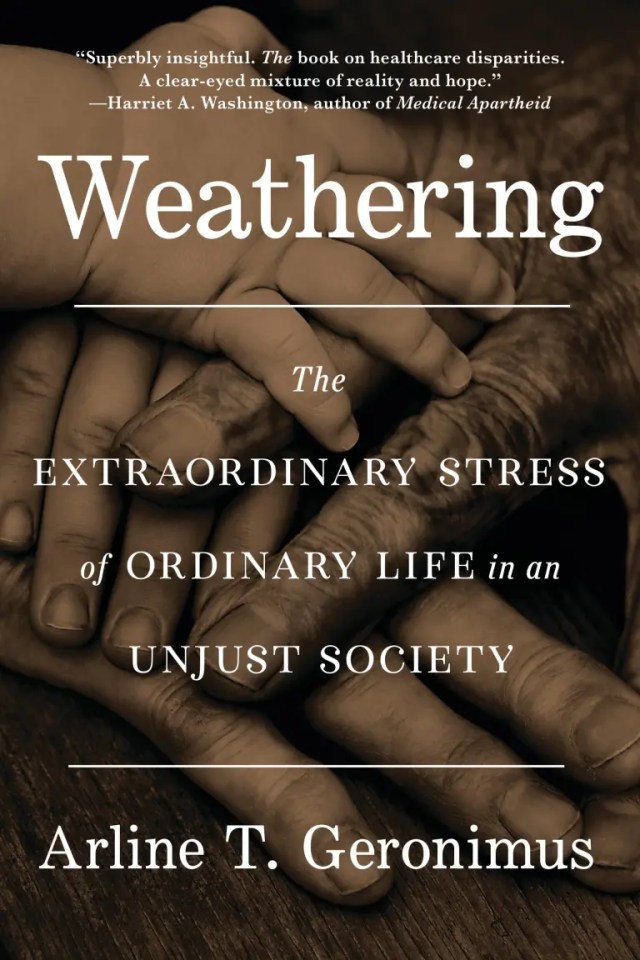 In her book Weathering: The Extraordinary Stress of Ordinary Life in an Unjust Society, Arline T. Geronimus coined the term “weathering” to describe the effects of systemic oppression—including racism and classism—on the body. She will be the featured speaker at the Lowell Humanities Series Lecture on October 21 at 7 p.m. in Gasson 100. Based on more than 30 years of research, Geronimus argues that groups who experience systemic cultural oppression, long-term material hardship, exploitation, stigma, and political marginalization suffer biological aging long before they are chronologically old. She is a professor in the School of Public Health and research professor in the Institute for Social Research at the University of Michigan, where she also is affiliated with the Center for Research on Ethnicity, Culture, and Health. Her talk is co-sponsored by the Park Street Corporation Speaker Series, Connell School of Nursing, and BC School of Social Work. The event is free and open to the public, but advance registration is required.
‘Servants of the Mysteries’
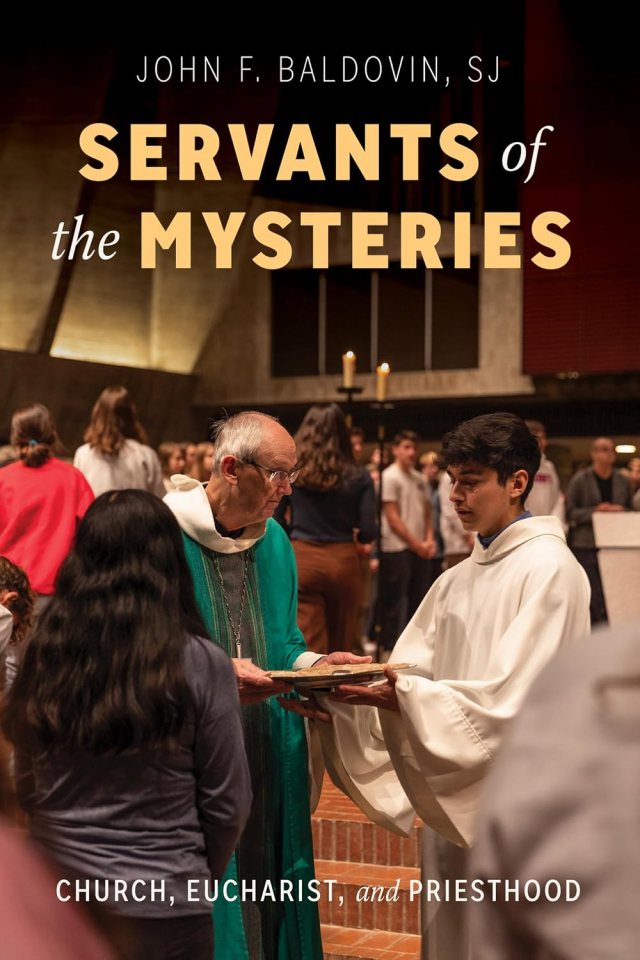 BC Clough School of Theology and Ministry Professor John Baldovin, S.J., presents a comprehensive Eucharistic theology of the ministerial priesthood as envisioned by the Second Vatican Council in his new book, Servants of the Mysteries (Liturgical Press, 2026). Fr. Baldovin has 40 years of experience teaching and writing on the relation between ordained priesthood and the Eucharist. Servants of the Mysteries brings the theology and sacramental practice of Catholic priests in line with Vatican II’s commitment to full, active, and conscious participation of all the faithful in the liturgy in light of insights from contemporary Catholic theology of the Eucharist. He talks about his book in this video from Liturgical Press.
Emily Knox on book banning
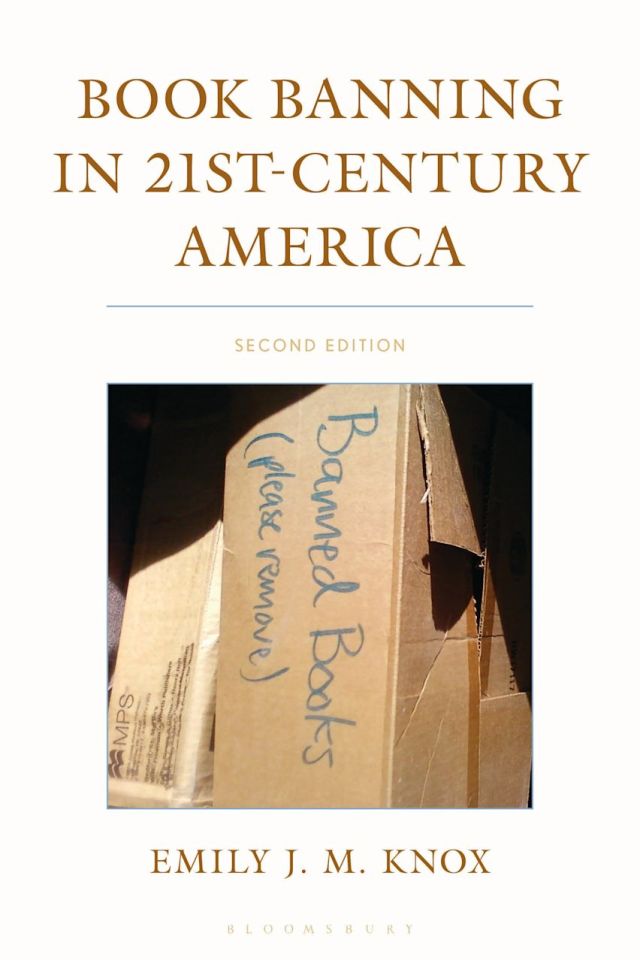 Emily J.M. Knox, interim dean and professor at the School of Information Sciences at the University of Illinois at Urbana-Champaign, will present “Book Banning in the 21st Century” at Boston College on October 14 at 7 p.m. in Devlin 110. Knox has testified before the U.S. Senate Judiciary Committee on book banning and is author of Book Banning in 21st-Century America (Bloomsbury). First published in 2015, with a second edition earlier this year, Book Banning examines contemporary cases of book challenges in schools and public libraries across the United States. Knox’s scholarly work focuses on information access, intellectual freedom and censorship. She also is the author of the award-winning book Foundations of Intellectual Freedom and a former editor of the Journal of Intellectual Freedom and Privacy. Her lecture is presented by the Lowell Humanities Series and cosponsored by Boston College Libraries, the Lynch School of Education and Human Development, and the Communication Department. The event is free and open to the public, but advance registration is required.
‘The Taste of Rain in Buenos Aires’
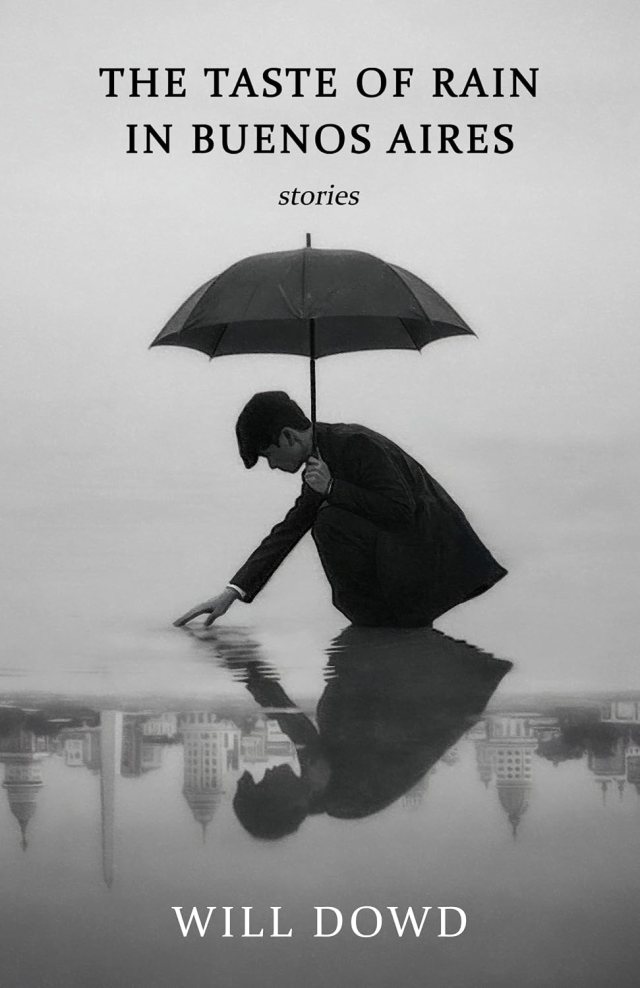 When a vision disorder stole his ability to read, 2005 Boston College graduate Will Dowd found himself exiled from the world of books—until he discovered an unusual path back through the landscape of dreams. Armed with an experimental dream-inception device from MIT, Dowd embarked on a yearlong odyssey into his own unconscious. His new book, The Taste of Rain in Buenos Aires (Etruscan Press, 2026), chronicles 20 dream narratives born from this first-of-its-kind experiment. Part literary experiment, part exploration of consciousness, The Taste of Rain in Buenos Aires reveals how dreams, like books, can become portals to other worlds. A regular editorial cartoonist for The Boston Globe, Dowd’s writing and artwork have appeared in The Washington Post, NPR, The Boston Globe Magazine, Lithub, and elsewhere. He is a poetry editor for Post Road Magazine. Dowd’s previous book, Areas of Fog, was named a Massachusetts Book Award “Must Read.”
Posted in Alumni Authors
Leave a comment
‘From Suffrage to Sisterhood’
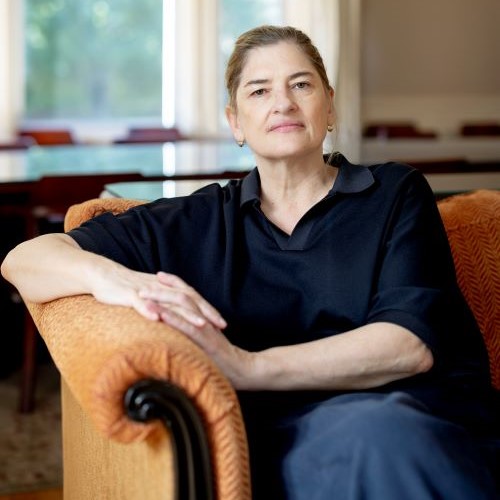 Burns Visiting Scholar in Irish Studies at Boston College Senia Pašeta studies the intersection of Irish women’s political and social activism with the Irish nationalism that took root in the late 19th century, and ultimately sparked Irish independence from Great Britain in 1922. A professor of modern history at the University of Oxford, Pašeta is the author of Modern Ireland: A Very Short Introduction, Irish Nationalist Women 1900-1918, and Before the Revolution: Nationalism, Social Change and Ireland’s Catholic Elite, 1879-1922. Her current book project scheduled for release next year, Political Women in Ireland, 1880-1918, is a more expansive survey of women’s multifaceted political activism, its historical foundations, and adaptation to wider political challenges. Pašeta will discuss her research on the continuity and transformation in Irish feminism at the Burns Scholar Lecture on September 30 in the Burns Library Thompson Room at 6 p.m. (preceded by a 5 p.m. reception). Her lecture, “From Suffrage to Sisterhood: A History of Feminism in Modern Ireland,” is free and open to the public. Learn more at BC News.

