
 Ada Limón will give a reading from her acclaimed poetry collection, The Carrying, on April 20 at 7:00 p.m. in Gasson Hall, room 100. The Carrying won the National Book Critics Circle Award for Poetry and was named one of the year’s best books of poetry by Publishers Weekly and Chicago Review of Books. Limón is the author of six books of poetry, including The Hurting Kind, which will be published next month. She also is host of the poetry podcast, “The Slowdown.” Limón’s talk is sponsored by the Lowell Humanities Series and co-sponsored by the Poetry Days Series and the English Department.
Ada Limón
Posted in Guest Authors, Lowell Humanities Series
Tagged English Department, poet, poetry
Leave a comment
“Female Genius” in the Age of the Constitution
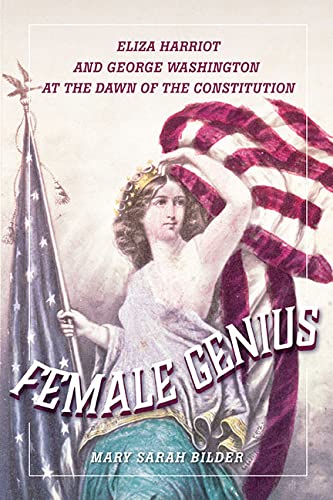 In her new book, Female Genius: Eliza Harriot and George Washington at the Dawn of the Constitution (University of Virginia Press, 2022), Boston College Law School Founders Professor of Law Mary Sarah Bilder recounts the life of a pioneering educator whose ideas likely inspired the gender-neutral language of the U.S. Constitution. Eliza Harriot Barons O’Connor came to the United States and promoted the concept of “female genius”—the belief that women had equal capacity to men, that they should be educated, and that their education would make them capable of participating in politics, in representation, in holding office, and of being fully involved in the constitutional state. A lecture Harriot delivered at the University of Pennsylvania was attended by George Washington as he and other Constitutional Convention delegates gathered in Philadelphia. Bilder used digital technology to trace Harriot’s influence and expand the understanding of women and gender in connection with the framing period of the Constitution. Bilder’s previous book, Madison’s Hand: Revising the Constitutional Convention, earned the Bancroft Prize in American History and Diplomacy, and was a finalist for the George Washington Book Prize. Read more about Female Genius in this Q&A from BC Law Magazine.
Posted in Boston College Authors
Tagged American history, biography, Boston College Law School, feminism, government
Leave a comment
A theology of life with depression
 Boston College graduate Jessica Coblentz considers the realities of life with depression from a Christian theological perspective in her new book, Dust in the Blood: A Theology of Life with Depression (Liturgical Press, 2022). In conversation with popular Christian theologies of depression that justify why this suffering exists and prescribe how people ought to relate to it, Coblentz offers another Christian approach to this condition: she reflects on depression as a wilderness experience. Weaving first-person narratives of depression, contemporary theologies of suffering, and ancient biblical tales of the wilderness, Coblentz argues for and contributes to an expansion of Christian ideas about what depression is, how God relates to it, and how Christians should understand and respond to depression in turn. Coblentz is an assistant professor in the Department of Religious Studies and Theology at Saint Mary’s College in Notre Dame, Indiana. She earned a Ph.D. in systematic theology from Boston College in 2017. Listen to Coblentz discuss her book in this podcast from BYU.
International tax
 Introduction to United States International Taxation is an ideal reference source for tax practitioners, tax professors, students, and others in the tax community. The authors—Kenealy Professor James Repetti, Interim Dean Diane Ring, and Paulus Endowment Senior Tax Fellow Stephen Shay—are all faculty members in the Boston College Law School. The latest edition of Introduction to United States International Taxation was published at the beginning of this year. It provides an introduction to the application of the U.S. international taxation system to taxpayers investing or transacting business in the U.S. and other countries, and sets forth the principles adopted by the U.S. in taxing American or foreign individuals and corporations as they invest, work, or carry on a trade or business in the U.S. or abroad.
Posted in Boston College Authors
Tagged Boston College Law School, international, tax
Leave a comment
After Genocide
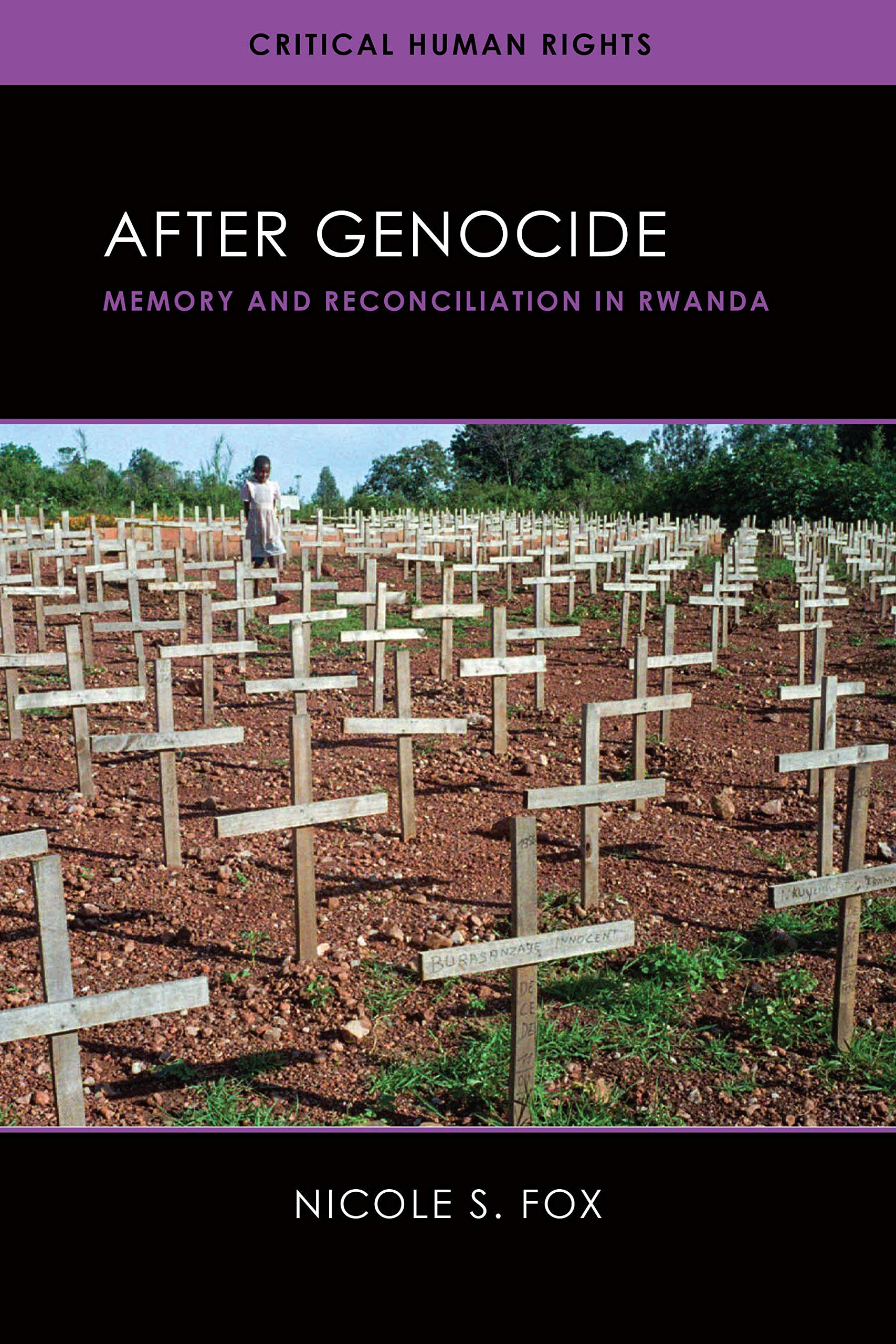 How can any population move on from the experience of genocide? How can such events be memorialized in a way that is productive and even healing for survivors? The Center for Human Rights and International Justice will host a talk by Nicole Fox who took up such questions in her new book After Genocide: Memory and Reconciliation in Rwanda (University of Wisconsin Press). Fox’s talk will take place on April 7 at 12 noon in Campion Hall, room 139. Through extensive interviews with survivors’ decades after mass violence has ended, Fox reveals the relationship survivors have to memorial spaces and uncovers those voices silenced by the dominant narrative—arguing that the erasure of such stories is an act of violence itself. Fox is a professor of criminal justice at California State University Sacramento and serves on the United Nations Economic and Social Council. Register for the event at tinyurl.com/Fox0407.
Posted in Guest Authors
Tagged Center for Human Rights and International Justice, genocide, trauma, violence
Leave a comment
Kevin Barry
 Award-winning writer Kevin Barry will give a lecture on the influence of place, dialect, and hauntedness in his fiction on April 6 at 7:00 p.m. in Gasson Hall, room 100. Barry is the author of the novels City of Bohane, Beatlebone, and Night Boat to Tangier, and the story collections Dark Lies the Island and There Are Little Kingdoms. He is the recipient of the IMPAC Dublin Literary Award, Goldsmiths Prize, Sunday Times EFG Short Story Prize, Lannan Foundation Literary Award, Rooney Prize, Author’s Club Best First Novel Prize, and the European Union Prize for Literature. Sponsor: Lowell Humanities Series.
A journey through bulimia, depression, and anxiety
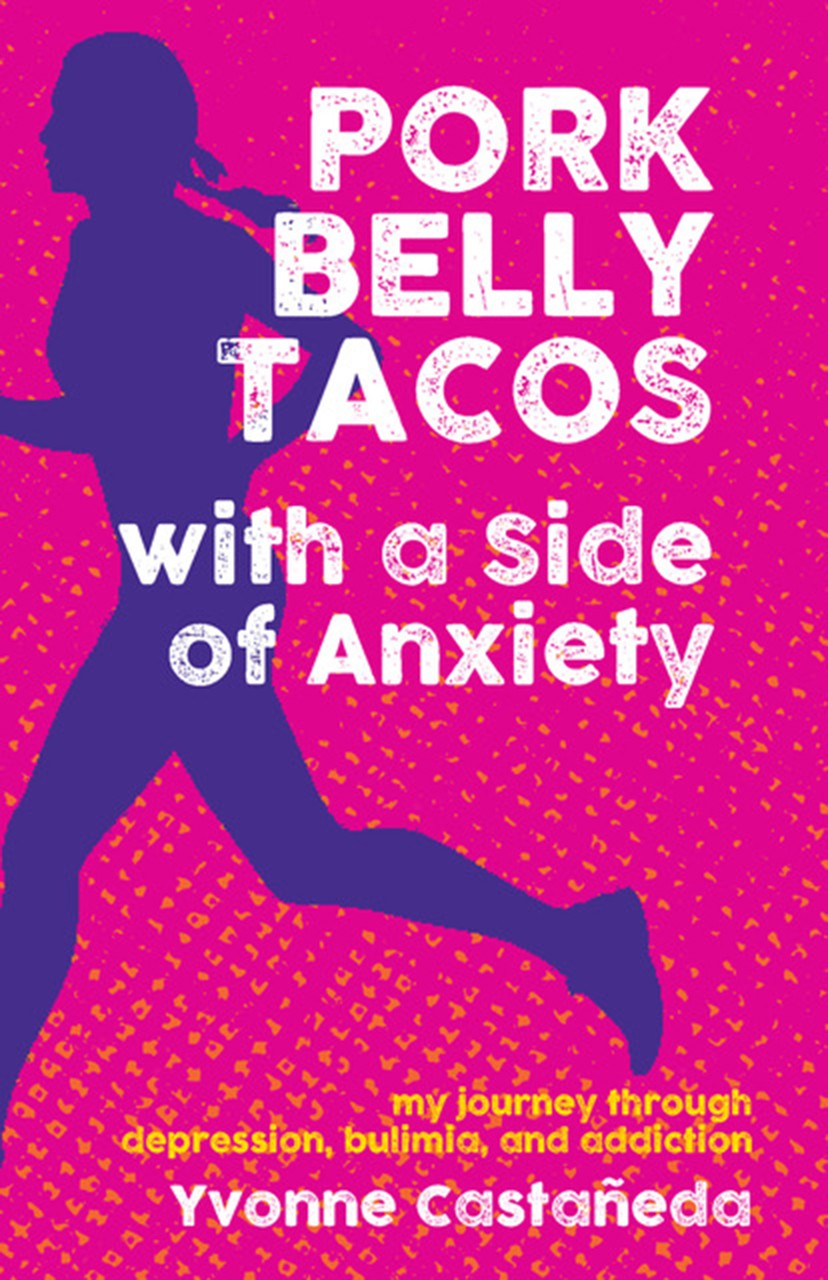 Boston College alumna Yvonne Castañeda chronicles her journey through anxiety, depression, and an eating disorder in the new book, Pork Belly Tacos with a Side of Anxiety (Santa Monica Press, 2022). In her memoir, Castañeda reflects on her upbringing as the daughter of immigrants, the adverse side effects of bulimia, and the sage advice that turned her life around. According to Castañeda, mental illness is often seen as taboo in the Latinx community, stopping people from seeking help. She hopes her story will resonate with other Latinx people who might be struggling with their own mental health issues. Castañeda earned a M.S.W. from Boston College School of Social Work in 2018 and is now on the BCSSW faculty. Her message is “that change is possible, that grace is possible, that healing is possible.” Read more in this Q&A from BCSSW.
Posted in Alumni Authors, Boston College Authors
Tagged Latinx, memoir, mental health, School of Social Work
Leave a comment
Play ball
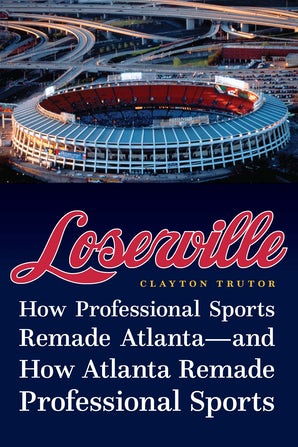 Atlanta was the first southern city with professional teams in the four major sports of baseball, football, basketball, and hockey. The pursuit, arrival, and response to professional sports in Georgia’s capital city is the focus of Loserville: How Professional Sports Remade Atlanta—and How Atlanta Remade Professional Sports (University of Nebraska Press, 2022), a new book by Boston College alumnus Clayton Trutor. According to the publisher: “The excitement surrounding the arrival of four professional franchises in Atlanta in a six-year period soon gave way to widespread frustration and, eventually, widespread apathy toward its home teams. All four of Atlanta’s franchises struggled in the standings and struggled to draw fans to their games.” Loserville also scrutinizes the origins of the primary model for acquiring professional sports franchises: offers of municipal financing for new stadiums. Other Sunbelt cities like San Diego, Phoenix, and Tampa adopted Atlanta’s approach, with mixed results—both in terms of on-field success and financial stability. Trutor earned a Ph.D. in history from Boston College. He writes about college football and basketball for SB Nation and is an instructor at Norwich University in Vermont.
Cybersecurity risk management
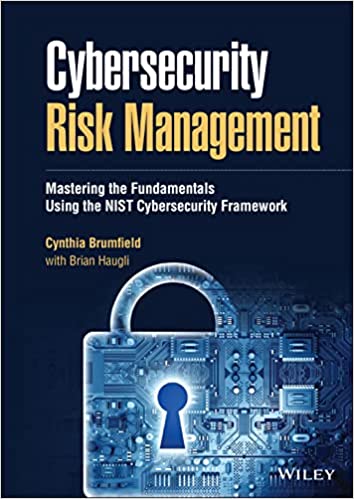 Woods College of Advancing Studies adjunct faculty member Brian Haugli is co-author, with Cynthia Brumfield, of the new book, Cybersecurity Risk Management: Mastering the Fundamentals Using the NIST Cybersecurity Framework (Wiley, 2021). Brumfield, a veteran technology analyst, and Haugli, a cybersecurity expert, deliver a straightforward and up-to-date exploration of the fundamentals of cybersecurity risk planning and management. Cybersecurity Risk Management offers readers easy-to-understand overviews of cybersecurity risk management principles and network infrastructure planning, as well as the tools and techniques for detecting cyberattacks. The book also provides a roadmap to the development of a continuity of operations plan in the event of a cyberattack. Haugli is the managing partner for SideChannel and CEO of RealCISO.io. He teaches in the Woods College’s M.S. in Cybersecurity Policy & Governance Program.
Posted in Boston College Authors
Tagged cybersecurity, Woods College of Advancing Studies
Leave a comment
Abolitionist Tools for the New Jim Code
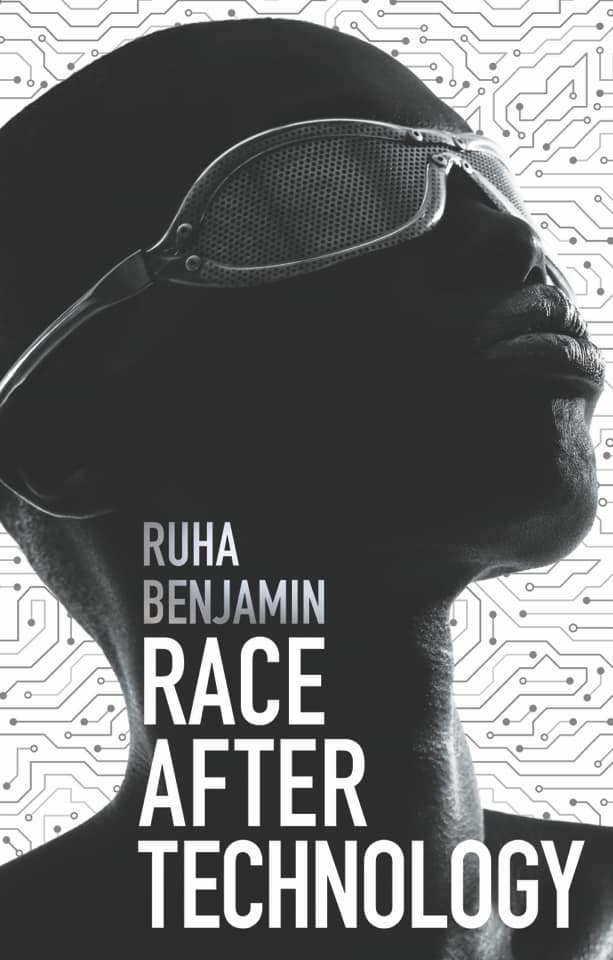 Ruha Benjamin, professor of African American Studies and founding director of the Ida B. Wells Just Data Lab at Princeton University, investigates the social dimensions of science, medicine, and technology with a focus on the relationship between innovation and inequity, health and justice, knowledge and power. On March 24 at 7 p.m., Benjamin will give a webinar lecture on her award-winning book Race After Technology: Abolitionist Tools for the New Jim Code. According to the publisher, Race After Technology “cuts through tech-industry hype to understand how emerging technologies can reinforce white supremacy and …shows how a range of discriminatory designs encode inequity.” Her lecture is presented by the Park Street Corporation Speaker Series and co-sponsored by the Lowell Humanities Series and the Schiller Institute for Integrated Science and Society. Visit the Humanities Series website to register.

