
Kindness of strangers
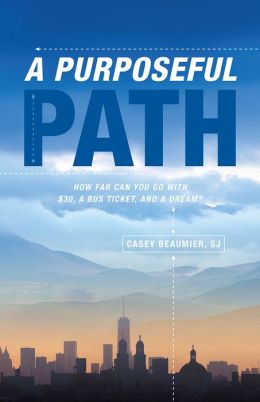 A new book by Casey Beaumier, SJ, director of the Institute for Advanced Jesuit Studies at Boston College, recalls his days as a Jesuit novice and a pilgrimage he took to help in his discernment. A Purposeful Path: How Far Can You Go with $30, a Bus Ticket, and a Dream? (Loyola Press, 2015) is part memoir and part inspirational guide. Readers will join the young Jesuit as he travels the Appalachian Trail, reliant only on the kindness of strangers and his faith. Through it all, Fr. Beaumier discovers that the best way through life’s hard battles is to trust God and keep on moving. Fr. Beaumier earned a doctorate in United States religious history from Boston College. He teaches in the Capstone Program and serves as mentor and spiritual director for students, seminarians, women religious and priests. Read an excerpt. Video
Blueprints
 Boston College alumna and best-selling author Barbara Delinsky has published her latest novel, Blueprints (St. Martin’s Press, 2015). Blueprints is the story of Caroline and Jamie MacAfee. The day after her 56th birthday, Caroline is told that she is too old to be the public face of Gut It!, a family-based home construction show, and that her 29-year-old daughter, Jamie, will replace her as its host. The resulting rift occurs at a time when each needs the other more than ever. More about the book. Delinsky is the author of dozens of novels and the non-fiction book, UPLIFT: Secrets from the Sisterhood of Breast Cancer Survivors. She was recently interviewed by USA Today | Kirkus Review

Origins of international adoption
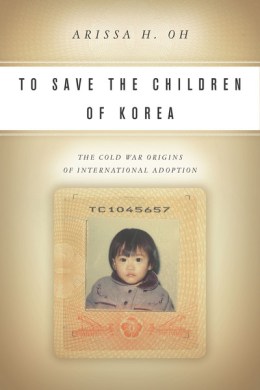 In her new book, To Save the Children of Korea: The Cold War Origins of International Adoption (Stanford University Press, June 2015), Assistant Professor of History Arissa Oh contends that although Korea was not the first place that Americans adopted from internationally, it was the place where organized, systematic international adoption was born. Korean adoption began in the aftermath of the Korean War and served as a kind of template for when international adoption began–in the late 1960s–to expand to new sending and receiving countries. First established as an emergency measure through which to evacuate mixed-race “GI babies,” Korean adoption became a mechanism through which the Korean government exported its unwanted children: the poor, the disabled, or those lacking Korean fathers. Focusing on the legal, social, and political systems at work, this book shows how the growth of Korean adoption from the 1950s to the 1980s occurred within the context of the neocolonial U.S.-Korea relationship, and was facilitated by crucial congruencies in American and Korean racial thought, government policies and nationalisms. Oh was interviewed recently by the Boston Globe about topic of her book.

Posted in Boston College Authors
Tagged adoption, Cold War, History Department, Korea
Leave a comment



 BC Bookmarks