
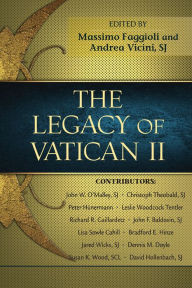
Naturalizing Heidegger
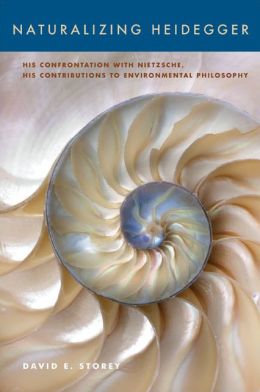 In Naturalizing Heidegger: His Confrontation with Nietzsche, His Contributions to Environmental Philosophy (State University of New York Press, 2015), Assistant Professor of the Practice of Philosophy David Storey proposes a new interpretation of Heidegger’s importance for environmental philosophy. Primarily drawing on Heidegger’s engagement with Nietzsche, but also on his readings of Aristotle and the biologist Jakob von Uexküll, Storey focuses on his critique of the nihilism at the heart of modernity, and his conception of the intentionality of organisms and their relation to their environments. From these ideas, a vision of nature emerges that recognizes the intrinsic value of all living things and their kinship with one another, and which anticipates later approaches in the philosophy of nature, such as Hans Jonas’s phenomenology of life and Evan Thompson’s contemporary attempt to naturalize phenomenology.
Bigamy in Victorian novels
 From sensational plots to “simultaneous” remarriages in such classic literature as Jane Eyre, David Copperfield and Middlemarch, bigamy in Victorian novels is a surprisingly prevalent narrative phenomenon. In the first extended study on this topic, a new book by Assistant Professor of English Maia McAleavey — The Bigamy Plot: Sensation and Convention in the Victorian Novel (Cambridge University Press, 2015) — fills a key gap in the history of the Victorian novel and revises the view that links its narrative structure to courtship and marriage, which have dominated accounts of these works. Familiar conventions are upended in this innovative study which explores authors’ use of bigamy plots to undermine conventional forms and values. In hundreds of novels, plays and poems published in Victorian Great Britain, spouses thought dead reappear to their newly remarried husbands or wives. McAleavey, a specialist in the Victorian novel, nineteenth-century British literature and culture, narrative analysis, gender theory, and generic distinctions and conventions, makes the case for a historical approach to narrative which is grounded in the legal and social changes of the period, but counters cultural expectations. The book includes an index of nearly 300 novels featuring bigamy plots. McAleavey’s work has been published in Representations, Victorian Studies, the Dickens Studies Annual and Victorian Review.

The art and thought of Paul Klee
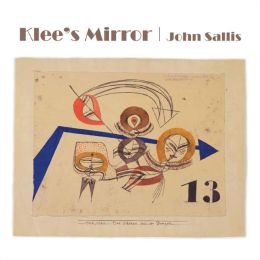 Frederick J. Adelmann, SJ, Professor of Philosophy John Sallis has written a book that provides a philosophical perspective on the relation between artist Paul Klee’s work and his thought. Klee once said that “art does not reproduce the visible but makes visible.” In Klee’s Mirror (State University of New York Press, 2015), Sallis examines the various ways in which Klee’s art is like a mirror capable of reflecting not only the surface appearance of things, but also their hidden depth and the cosmic setting to which they belong. Tracing the relation of Klee’s paintings and drawings to music, poetry, and philosophy, Sallis also takes account of Klee’s own extensive writings, both theoretical and autobiographical. In 2012, Sallis curated a highly acclaimed exhibition at the Boston College McMullen Museum of Art titled “Paul Klee: Philosophical Vision; From Nature to Art.”
Naive guys
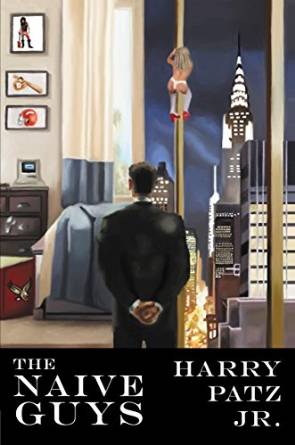
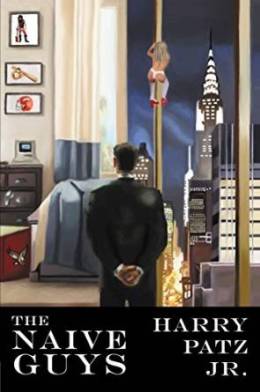 Boston College alumnus Harry Patz, Jr. has published The Naive Guys: A Memoir of Friendship, Love and Tech in the Early 1990s (Gondolin Advisors LLC, 2014), a novel that follows BC graduate Mark Amici as he makes his way in New York City in the early 1990s. With a trio of wingmen (Pete, Sally and Kostas), Mark searches for love, tries to truly understand his family, and navigates the pitfalls of corporate machinations. Patz has also contributed the short story, “Off Season,” to The Moving Pen: A Nantucket Atheneum Writer’s Group Anthology. For more from Patz, follow him on Twitter.
Saga of the Redeemed
 As Boston College alumnus Auston Habershaw likes to tell it, when you are born on the same day that a NASA space station falls to Earth, you are destined to be supervillain or science fiction/fantasy writer. Habershaw is the latter and the author of two new novels, The Iron Ring and Iron and Blood (Harper Voyager/Harper Collins, 2015). Parts One and Two of the Saga of the Redeemed, the books follow the story of Tyvian Reldamar, a criminal mastermind set on revenge. Habershaw won a Writers of the Future award based on an international short story competition for new science fiction and fantasy authors. His piece, “A Revolutionary’s Guide to Practical Conjuration,”‘ was published in the anthology Writers of the Future, Vol. 31. His work has also appeared in Analog, The Sword and Laser Anthology and Stupefying Stories. He teaches at the Massachusetts College of Pharmacy and Health Sciences University. Follow Habershaw on his blog or Twitter.

A boyhood remembered
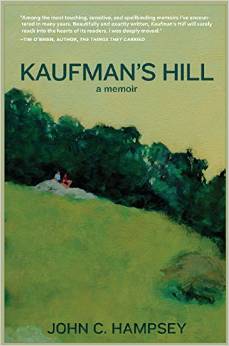 In his memoir, Kaufman’s Hill (Bancroft Press, 2015), author John C. Hampsey recalls his boyhood in Pittsburgh during the 1960s, before the counterculture revolution takes hold. Hampsey’s world is a mix of exhilarating freedom — because of absent parents, teachers, and priests — and imminent dangers. His middle-class Catholic neighborhood is dominated by bullies who often terrify him. He befriends the enigmatic, erratic, but charismatic Taddy Keegan. Hampsey focuses on uncovering the mystery of Taddy. Hampsey, who graduated from Boston College with a doctorate in English, is a professor at California Polytechnic State University, San Luis Obispo. His stories and essays have been published in The Gettysburg Review, The Midwest Quarterly, Antioch Review, The Alaska Quarterly, The Boston Globe, Arizona Quarterly, European Romantic Review, Witness, Colby Quarterly, The Chronicle of Higher Education, and McNeese Review.
Posted in Alumni Authors
Tagged 1960s, Catholic, English Department, memoir, Pittsburgh
Leave a comment
 BC Bookmarks