
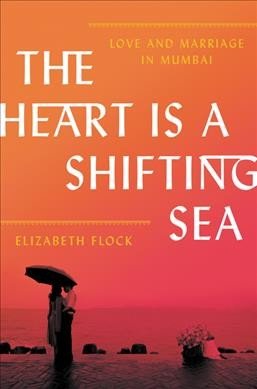
 In India today, tradition is colliding with Western culture, creating an uneasy fusion whose impact is most evident in the institution of marriage. In her new book, The Heart Is a Shifting Sea: Love and Marriage in Mumbai (Harper, 2018), journalist Elizabeth Flock takes a deep dive into the married lives of three couples as they navigate issues such as infertility, women’s roles, religious tradition, and infidelity. Flock spent close to a decade getting to know these couples—listening to their stories and living in their homes, where she was privy to countless moments of marital joy, inevitable frustration, dramatic upheaval, and whispered confessions and secrets. The Heart Is a Shifting Sea is both a look at the universal mysteries of love and marriage and a portrait of a nation in the midst of transition. A graduate of Boston College, Flock is a reporter for PBS NewsHour. She began her career at Forbes India Magazine, and has worked for U.S. News & World Report and the Washington Post. She has also written for the New York Times, the Atlantic, Al Jazeera, the Hindustan Times and the Hindu. National Public Radio interview.
Love and marriage in today’s India
Making education abroad more inclusive
 While education abroad is increasingly emphasized as a critical factor in preparing undergraduates for a globally interconnected world, many segments of the student population are underrepresented in the pool of students partaking in international education. Students with disabilities, first-generation college students, and science, technology, engineering, and mathematics (STEM) majors are just a few of the groups that encounter barriers to education abroad. In Promoting Inclusion in Education Abroad: A Handbook of Research and Practice, co editors Nick J. Gozik of Boston College and Heather Barclay Hamir of Butler University gather leading thinkers and practitioners to offer research and case studies that illuminate the personal and institutional issues which may inhibit education abroad participation and present practices to increase the diversity of students engaged in international education. Gozik is director of Boston College’s Office of International Programs and McGillycuddy-Logue Center for Undergraduate Global Studies.
Posted in Boston College Authors
Tagged globalization, International Programs, study abroad
Leave a comment
Book award for Ross
 Everyday Renaissances: The Quest for Cultural Legitimacy in Venice (Harvard University Press) by History Professor Sarah Gwyneth Ross has been awarded the Helen and Howard R. Marraro Prize in Italian History by the Society for Italian Historical Studies, an affiliate of the American Historical Association. The award recognizes the best book, published in the previous calendar year, on Italian history in any epoch, Italian cultural history, or Italian-American relations. In Everyday Renaissances, Ross looks beyond Michelangelo and the Medici to the lives of more than 100 artisans, merchants, and others on the middle rung of Venetian society who embraced literature, learning, and humanistic education. For more about the book see the 3/3/16 BC Bookmarks post.
How Did China Get So Big?
 University of Chicago Professor of Modern Chinese History Kenneth Pomeranz will deliver a talk titled “How Did China Get So Big? Redefining the Qing Realm and its Subjects ca. 1750-1900″ on Feb. 28 at 7:00 p.m. in Gasson Hall, room 100. Pomeranz is the author of The Great Divergence: China, Europe, and the Making of the Modern World Economy and The Making of a Hinterland: State, Society and Economy in Inland North China, 1853–1937, both of which won the John K. Fairbank Prize for the best book in East Asian history awarded by the American Historical Association. His current projects include a history of Chinese political economy from the seventeenth century to the present, and a book called Why Is China So Big? which tries to explain how and why contemporary China’s huge land mass and population have wound up forming a single political unit. Sponsor: Lowell Humanities Series.
Dr. Paul Farmer
 Dr. Paul Farmer, whose humanitarian work was recounted in the Tracy Kidder book Mountains Beyond Mountains: The Quest of Dr. Paul Farmer, A Man Who Would Cure the World, will participate in “A Conversation with Paul Farmer” Feb. 27 at 5:30 p.m. in Yawkey Center’s Murray Function Room. He will be interviewed by Church in the 21st Century Center Director Thomas Groome, a professor in the School of Theology and Ministry, on the theme of accompaniment in practice. Dr. Farmer is co-founder of Partners in Health, a nonprofit organization dedicated to bring sustainable, modern health care to the poorest regions of the world. He was awarded an honorary doctorate from Boston College in 2005. He also serves as UN Special Advistor to the Secretary-General on Community-based Medicine and Lessons from Haiti. Dr. Farmer is the author or co-author of several books, including Reimagining Global Health: An Introduction; To Repair the World: Paul Farmer Speaks to the Next Generation, and Haiti: After the Earthquake. Sponsor: C21 Center.
Why you eat what you eat
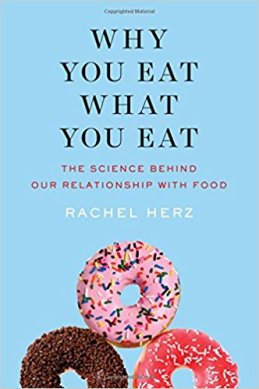 Preferences and perceptions of food are not solely driven by a sense of taste. In her new book, Why You Eat What You Eat: The Science Behind Our Relationship With Food (W. W. Norton & Company, December, 2017), Rachel Herz, a part-time faculty member in the Psychology Department, examines the sensory, psychological, neuroscientific, and physiological factors that influence eating habits. She looks into research that shows, for example, that loud music can impact taste and consumption rates and labels can influence metabolism rates. Herz is a neuroscientist who specializes in olfaction, emotion and sensory cognition. She is also the author of The Scent of Desire: Discovering Our Enigmatic Sense of Smell and That’s Disgusting: Unraveling the Mysteries of Repulsion. She was recently interviewed about her book by the Boston Globe.
Posted in Boston College Authors
Tagged food, neuroscience, perception, Psychology Department
Leave a comment
Reading by Donal Ryan
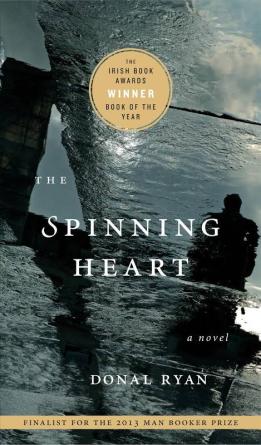 Award-winning novelist and short story author Donal Ryan will read from a selection of works on Feb. 22 at 4:30 p.m. in Devlin Hall, room 101. Ryan was awarded a 2015 European Union Prize for Literature. His debut novel, The Spinning Heart, was honored with the 2013 Guardian First Book Award and has been adapted for the stage. He is also the author of the novels, The Thing About December and All We Shall Know, as well as a collection of short stories, A Slanting of the Sun. His writings have been translated into more than 20 languages. His forthcoming novel, From a Low and Quiet Sea, tells the story of three men, each searching for something they have lost: a lover, a brother, a Syrian homeland. Burns Library has recently acquired Ryan’s literary archives. Sponsor: Boston College Libraries and the Center for Irish Programs.
A conversation about race and immigration in America
 Wall Street Journal columnist and Fox News commentator Jason Riley will present “A conversation about race and immigration in America” on Feb. 22 at 6 p.m. in the Yawkey Center, Murray Room. A senior fellow at the Manhattan Institute, Riley is the author of the books, Let Them In: The Case for Open Borders, which argues for a more free-market oriented U.S. immigration policy; Please Stop Helping Us: How Liberals Make it Harder for Blacks to Succeed, which is about the track record of government efforts to help the black underclass, and False Black Power?, an assessment of race relations in the Obama era. Sponsor: Winston Center for Leadership and Ethics/Chambers Lecture Series.
Posted in Guest Authors
Tagged immigration, race, Winston Center for Leadership and Ethics
Leave a comment
The ethics of food and the health of the planet
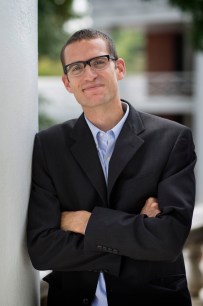 University of Virginia Professor of Religion, Ethics & Environment Willis Jenkins will give an address on “The Ethics of Food and the Health of the Planet” on Feb. 22 at 7 p.m. in Gasson Hall, room 100. A co-director of the Institute for Practical Ethics, Jenkins studies how religious traditions interpret social questions, with a particular interest in intersections of religious ethics and environmental questions. He is an expert on the ethics of climate change, the ethics of food, the relation of Christian theology to modern environmental problems, and other questions attending moral life in the Anthropocene. Jenkins is the author of Ecologies of Grace: Environmental Ethics and Christian Theology, winner of a Templeton Award for Theological Promise, and The Future of Ethics: Sustainability, Social Justice, and Religious Creativity, which won an American Academy of Religion Award for Excellence in the Study of Religion. Sponsor: Park Street Corporation Speaker Series.
Margaret Thomas appointed LSA archivist
 The Linguistic Society of America has appointed Slavic and Eastern Languages and Literatures Professor of Linguistics Margaret Thomas as LSA Archivist, for an initial term of three years. Among her responsibilities, Thomas will act as a liaison between the Western Historical Manuscript Collection staff and both the LSA staff and potential users or contributors to the archives. She also will promote the usefulness of the LSA Archives collections to scholars. Thomas’ areas of expertise are the history of linguistics and second language acquisition. She is the author of Fifty Key Thinkers on Language and Linguistics and Universal Grammar in Second-Language Acquisition, among other works. Founded in 1924 to advance the scientific study of language, the Linguistic Society of America plays a critical role in supporting and disseminating linguistic scholarship both to professional linguists and to the general public.
 BC Bookmarks