
 Sam Quinones is the author of three acclaimed books of narrative nonfiction, including his most recent, Dreamland: The True Tale of America’s Opiate Epidemic, which he will discuss at Boston College on April 4 at 7 p.m. in Gasson Hall, room 100. A journalist whose career has spanned nearly three decades, Quinones covered immigration, drug trafficking, neighborhood stories, and gangs for the Los Angeles Times. He also freelanced for such publications as National Geographic and The New York Times. In the National Book Critics Circle Award winner Dreamland, Quinones weaves together two classic tales of capitalism run amok whose unintentional collision has been catastrophic. Sponsor: Lowell Humanities Series.
The True Tale of America’s Opiate Epidemic
Posted in Guest Authors, Lowell Humanities Series
Leave a comment
My Old Faithful
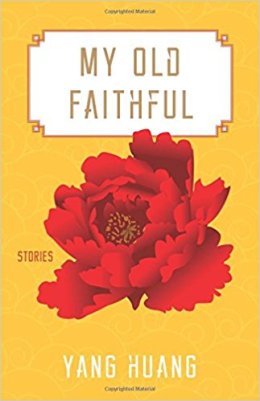 Through 10 interconnected short stories, which take place in China and the United States over a 30-year period, Boston College alumna Yang Huang introduces readers to a close-knit Chinese family. Her new book, My Old Faithful (University of Massachusetts Press, 2018), presents a nuanced portrait of family life, full of pain, surprises, and subtle acts of courage, played out against the backdrop of China’s social and economic change. It was awarded the Juniper Prize for Fiction by the publisher. Huang grew up in China’s Jiangsu province and participated in the 1989 student uprisings. Her debut novel, Living Treasures, won the Nautilus Book Award silver medal in fiction. Huang earned a master’s degree in English from BC. | Q&A with Yang Huang.
Hollywood, China and creative freedom
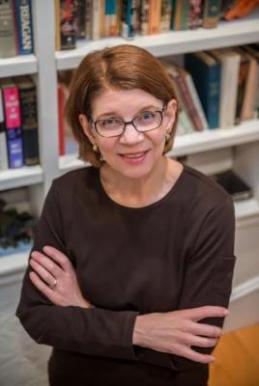 Morrissey College of Arts and Sciences faculty member Martha Bayles writes on the rocky romance between Hollywood and Xi Jinping’s China for the Claremont Review of Books. Bayles is a film and TV critic for the Claremont Review and the author of Through a Screen Darkly: Popular Culture, Public Diplomacy, and America’s Image Abroad and Hole in Our Soul: The Loss of Beauty and Meaning in American Popular Music.
Coercion in the 21st century
 The nature and conduct of international politics has changed dramatically since the Cold War. Yet much of the literature on deterrence and compellence has not kept pace. In their new book, Coercion: The Power to Hurt in International Politics (Oxford University Press, 2018), co-editors Peter Krause of Boston College and Kelly M. Greenhill of Tufts University seek to expand the understanding of coercion for conflict in the 21st century. Contributing authors address tools (terrorism, sanctions, drones, cyber warfare, intelligence, and forced migration), actors (insurgents, social movements, and NGOs) and mechanisms (trilateral coercion, diplomatic and economic isolation, foreign-imposed regime change, coercion of nuclear proliferators, and two-level games) that have become more prominent in recent years. Krause, an associate professor in the Political Science Department, contributed a chapter on “Coercion by Movement: How Power Drove the Success of the Eritrean Insurgency, 1960-1993” and Political Science Department colleague Timothy Crawford contributed the chapter “The Strategy of Coercive Isolation.” Krause is also the author of Rebel Power: Why National Movements Compete, Fight and Win.
In honor of T. Frank Kennedy, S.J.
 A book of essays in memory of Canisius Professor of Humanities and Music T. Frank Kennedy, S.J. (1948-2016) will be unveiled at a special celebration of Fr. Kennedy’s legacy on March 25 in Gasson Hall. An internationally recognized scholar of the Jesuit music tradition, Fr. Kennedy served as the rector of the Jesuit Community at Boston College, directed the University’s Jesuit Institute from 2002-14 and was a founding member of BC’s Music Department. “A Palm Sunday Celebration of the Legacy of Professor T. Frank Kennedy, S.J.” will begin with a concert, followed by the official book launch and reception for Listening to Early Modern Catholicism: Perspectives from Musicology (Brill). Edited by Daniele V. Filippi and BC Music Department Chairman Professor Michael Noone, the volume showcases the many and varied modalities and meanings of sonic experience in Early Modern Catholic life. Read more from BC News.
What is the future of Jews in Russia?
 Monica Osborne, a scholar of Jewish literature and culture, writes for the Jewish Journal about Boston College Professor Maxim D. Shrayer’s latest book, With or Without You: The Prospect for Jews in Today’s Russia. For the book, Shrayer returned to his homeland to explore what it means to live as a Jew in Russia today and to ask why, given the long history of Russian anti-Semitism, Jews continue to stay. Osborne notes that Shrayer’s interview subjects “all share, despite their optimism, a sense of foreboding.” With more Russian-speaking Jews living outside of Russia than within its borders and the Jewish population that remains in Russia aging, she wonders: “How important is it to Diasporic Jews that Russian Jewish life continue to flourish, and what are we going to do about it?” Shrayer is a professor of Russian, English, and Jewish Studies and the author/editor of more than 15 books of criticism, biography, nonfiction, fiction, poetry, and translation. Jewish Journal article | He will talk about his book at the Dean’s Colloquium on Mar. 22 at 4 p.m. in O’Neill Library room 303.
Lubbock Electric
 Anne Elezabeth Pluto, a faculty member in the Woods College of Advancing Studies, has published a book of poetry, Lubbock Electric (Nixes Mate Books, 2018). According to fellow poet Gene Barry, “Annie Pluto has an inbuilt ability to poetically emote a specific feeling, situation or scene with admirable craft. Between the lines of the poem, ‘Love Letter to Lubbock,’ the poet has placed a seat for every reader. This heartfelt and warm, cleverly woven tapestry delivers wishes, regrets, celebrations, acknowledgments and love with extraordinary economy.” Pluto is an alumna of Shakespeare & Company, and has been a member of the Worcester Shakespeare Company since 2011. She is the artistic director and one of the founders of the Oxford Street Players.
Samantha Power
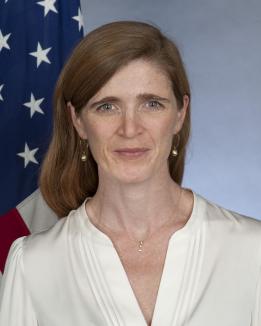 Former U.S. Ambassador to the United Nations Samantha Power will present “America’s Foreign Policy and the State of the World” at Boston College on March 22 at 4 p.m. in the Heights Room of Corcoran Commons. One of TIME’s “100 Most Influential People,” Power has been called “a powerful crusader for U.S foreign policy as well as human rights and democracy” by Forbes and been named one of Foreign Policy’s “Top 100 Global Thinkers.” As U.S. Ambassador to the U.N., Power became the public face of U.S. opposition to Russian aggression in Ukraine and Syria, negotiated the toughest sanctions in a generation against North Korea, lobbied to secure the release of political prisoners, and helped mobilize global action against ISIL. She won a Pulitzer Prize for her non-fiction book, “A Problem From Hell”: America and the Age of Genocide. She is currently the Anna Lindh Professor of Practice at Harvard Kennedy School and Harvard Law School where she is writing a book, The Education of an Idealist, which will chronicle her years in public service and reflect on the role of human rights and humanitarian ideals in contemporary geopolitics. Sponsor: Winston Center for Leadership and Ethics Clough Colloquium, with the Women’s Collaborative and the Women’s Center.
Viet Thanh Nguyen
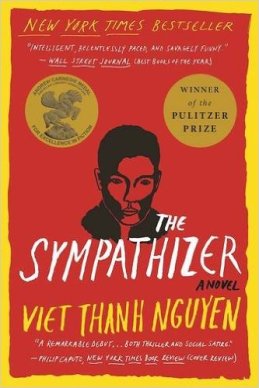 Pulitzer Prize winner Viet Thanh Nguyen will talk about his best-selling novel, The Sympathizer, on Mar. 21 at 7:00 p.m. in Gasson Hall, Room 100. In addition to the Pulitzer, The Sympathizer has been awarded the Dayton Literary Peace Prize, the Edgar Award for Best First Novel, the Andrew Carnegie Medal for Excellence in Fiction, a Gold Medal in First Fiction from the California Book Awards, and the Asian/Pacific American Literature Award, among other honors. A black comedy, historical novel, and literary thriller, The Sympathizer follows a nameless spy who has infiltrated the South Vietnamese army and flees with its remnants to America. His mission: report on their efforts to continue their lost war. Nguyen’s other books include Nothing Ever Dies: Vietnam and the Memory of War (a finalist for the National Book Award in nonfiction) and a short story collection, The Refugees. He is a University Professor, the Aerol Arnold Chair of English, and a Professor of English, American Studies and Ethnicity, and Comparative Literature at the University of Southern California. His writing has appeared in the New York Times, Time, The Guardian, The Atlantic, and other venues. Sponsors: Lowell Humanities Series, Asian American Studies, the English Department, and the Institute for the Liberal Arts. | NPR interview, Late Night with Seth Meyers
Lessons from Piers Plowman
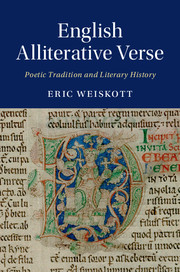 Higher education has become a polarizing topic in U.S. politics, but the underlying issues—who should be taught, what should be taught, and to what end—stretch back to the Middle Ages, according to Assistant Professor of English Eric Weiskott. In a piece for the Winter issue of Boston College Magazine, Weiskott considers the timeliness of the message in English writer William Langland’s epic poem Piers Plowman. “In the late 14th century, as in the early 21st century, everyday people felt the chasm between the haves and have-nots widening,” writes Weiskott, adding “Langland wondered whether education was living up to its promises.” Weiskott is the author of the book English Alliterative Verse: Poetic Tradition and Literary History (Cambridge University Press). He recently talked about his book in this video from BC Libraries.
Posted in Boston College Authors
Tagged BC Libraries, English Department, higher education
Leave a comment
 BC Bookmarks