
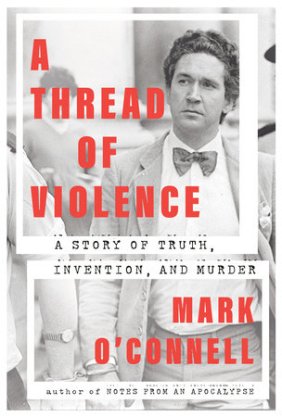
 Award-winning author Mark O’Connell will discuss writing true crime and his latest book, A Thread of Violence: A Story of Truth, Invention, and Murder (Penguin Random House, 2023), at Boston College on September 13. The event, which is free and open to the public, takes place at 5 p.m. It is sponsored by BC’s Irish Studies Program and will be held in Connolly House at 300 Hammond St. For A Thread of Violence, O’Connell spent countless hours in conversation with Malcolm Macarthur—a well-known Dublin socialite who, when faced with financial ruin, decided to commit bank robbery. But Macarthur’s plan spun out of control, and he killed two innocent civilians. The ensuing manhunt, arrest, and conviction amounted to one of the most infamous political scandals in modern Irish history. O’Connell is the author of Notes from an Apocalypse and To Be a Machine, which was awarded the 2019 Rooney Prize for Irish Literature, the 2018 Wellcome Book Prize, and was shortlisted for the Baillie Gifford Prize for Non-Fiction. He is a contributor to The New Yorker, The New York Review of Books, The New York Times Magazine, and The Guardian.
Writing True Crime: Mark O’Connell
‘His Name Is George Floyd’
 Robert Samuels, co-author of the Pulitzer Prize-winning book His Name Is George Floyd: One Man’s Life and the Struggle for Racial Justice (Viking/Penguin Random House, 2022), will deliver the first Lowell Humanities Series lecture of the semester on September 13 in Robsham Theater at 7 p.m. His Name is George Floyd is a landmark biography by Samuels and co-author Toluse Olorunnipa that is a poignant exploration of how one man’s tragic experience brought about a global movement for change. Drawn on more than 400 interviews, His Name is George Floyd reveals how systemic racism shaped Floyd’s life and legacy—from his family’s roots in the tobacco fields of North Carolina, to ongoing inequality in housing, education, health care, criminal justice, and policing. His Name is George Floyd was a finalist for a National Book Award, a Los Angeles Times Book Prize, and the J. Anthony Lukas Prize. Samuels is a staff writer for the New Yorker. He previously spent 12 years as a reporter for The Washington Post, traveling to 41 states and three countries, chronicling how political discussions in the nation’s capital affect the lives of everyday Americans. Samuels’ lecture is co-sponsored by the Boston College Forum on Racial Justice in America and the African and African Diaspora Studies Program. Please RSVP at bit.ly/lhs-robertsamuels to reserve seating.
Psychoanalysis, subjectivity, and technology
 The newly published Routledge International Handbook of Psychoanalysis, Subjectivity, and Technology has been described as an invaluable resource for academics and students of psychoanalysis, philosophy, ethics, media, liberal arts, social work, and bioethics. The volume is co-edited by Lynch School of Education and Human Development Associate Dean for Strategic Initiatives and External Relations David Goodman, director of the Lynch School’s Center for Psychological Humanities & Ethics, and Matthew Clemente, a research fellow at the center. The book features contributions from an international community of scholars and practitioners who consider how psychoanalytic formulations can be brought to bear on the impact technology has had on the facets of human subjectivity. Chapters examine how technology is reshaping our understanding of what it means to be a human subject, through embodiment, intimacy, porn, political motivation, mortality, communication, interpersonal exchange, thought, attention, responsibility, vulnerability, and more. Boston College faculty and staff contributors to the volume include Richard Kearney; Antonio Taiga Guterres; Karley Guterres; William Hendel; and Michael Mookie Manalili.
Posted in Uncategorized
Leave a comment
A case of murder
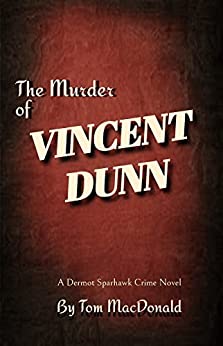 Dermot Sparhawk has another murder case to solve in a new novel by writer Tom MacDonald, who graduated from Boston College with an MBA in 2002. The Murder of Vincent Dunn is MacDonald’s fifth book to feature the Boston-based private investigator. In The Murder of Vincent Dunn, Sparhawk is asked by the New Hampshire State Police to help solve the murder of a Boston ex-convict whose body was dumped in the Granite State. MacDonald’s other Dermot Sparhawk novels are The Charlestown Connection, Beyond the Bridge, The Revenge of Liam McGrew, and Murder in the Charlestown Bricks. Learn more about MacDonald and how he became a writer in this BC News story.
A haunted house in Maine
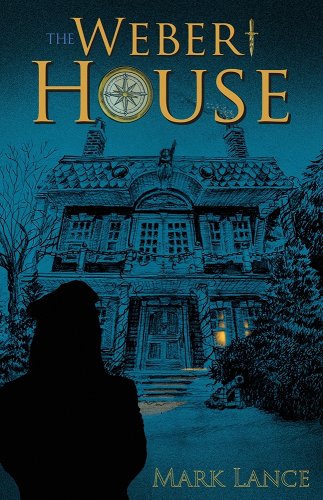 Mark Lance, a former labor reporter who graduated from Boston College in 1971, has published his first book, The Weber House (2022). It’s a young adult mystery that tells the story of Nicole who has moved into a house on Maine’s seacoast that locals say is haunted. She and her new friend “team up to search for a legendary treasure. They apply math and science lessons in centuries-old tunnels and on the Atlantic Ocean. But this is no game. Someone else, armed not with theorems but rather an assassin’s knife, is also searching, and watching their every move. The girls think they are hunters. In fact, they are the prey.” Lance teaches math in a GED program in New York City. He said he wrote The Weber House as gift for his daughter. He is currently working on a historical novel about the year 1877.
A kid’s guide to the First Amendment
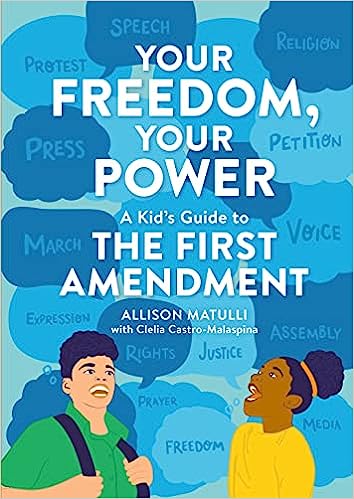 Boston College graduate Clelia Gore, a former literary agent and vice president of a boutique literary agency, has co-authored a children’s book, Your Freedom, Your Power (Running Press Kids/Hachette, 2023). Writing under the name Clelia Castro-Malaspina, she and her co-author Allison Matulli offer middle grade readers a look at the freedoms and rights granted through the First Amendment (freedom of religion, freedom of speech, freedom of the press, freedom of assembly, and the right to petition the government). The book not only explains fundamental legal concepts, but also shares the stories behind some of the most important legal cases and social movements that have affected kids’ lives and rights.
Rough Sleepers
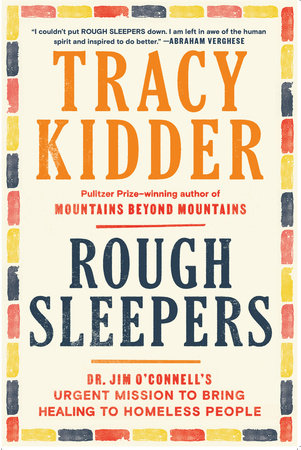 Pulitzer Prize-winning author Tracy Kidder will return to campus September 7 to address BC first-year students, who were asked to read his critically acclaimed new book, Rough Sleepers: Dr. Jim O’Connell’s Urgent Mission to Bring Healing to Homeless People (Random House, 2023), over the summer. Kidder will be accompanied by Dr. Jim O’Connell—the subject of his story of a dedicated doctor who helped to create a medical system for the homeless people of Boston. A master of reporting and nonfiction storytelling, Kidder spent time over five years riding with Dr. O’Connell as he navigated the city, offering medical care, socks, soup, empathy, and friendship to some of the city’s endangered residents. Called a “magnificent, deeply researched, and inspiring book,” Rough Sleepers highlights the dignity of each person and the importance of integrating care for the physical, intellectual, emotional, and spiritual dimensions of a person. “First-year students will benefit greatly from reading this honest, reflective, and authentic account of someone who has significantly impacted the way in which Boston cares for its unhoused population,” said Michael Sacco, executive director of the Center for Student Formation and Office of First Year Experience. “By engaging with both Kidder and Dr. O’Connell, we hope that our students can envision what a life of service to others might mean for them.” Read more in BC News.
Posted in Guest Authors
Tagged Boston, First Year Academic Convocation, homelessness, nonfiction
Leave a comment
Mystery on Cape Cod
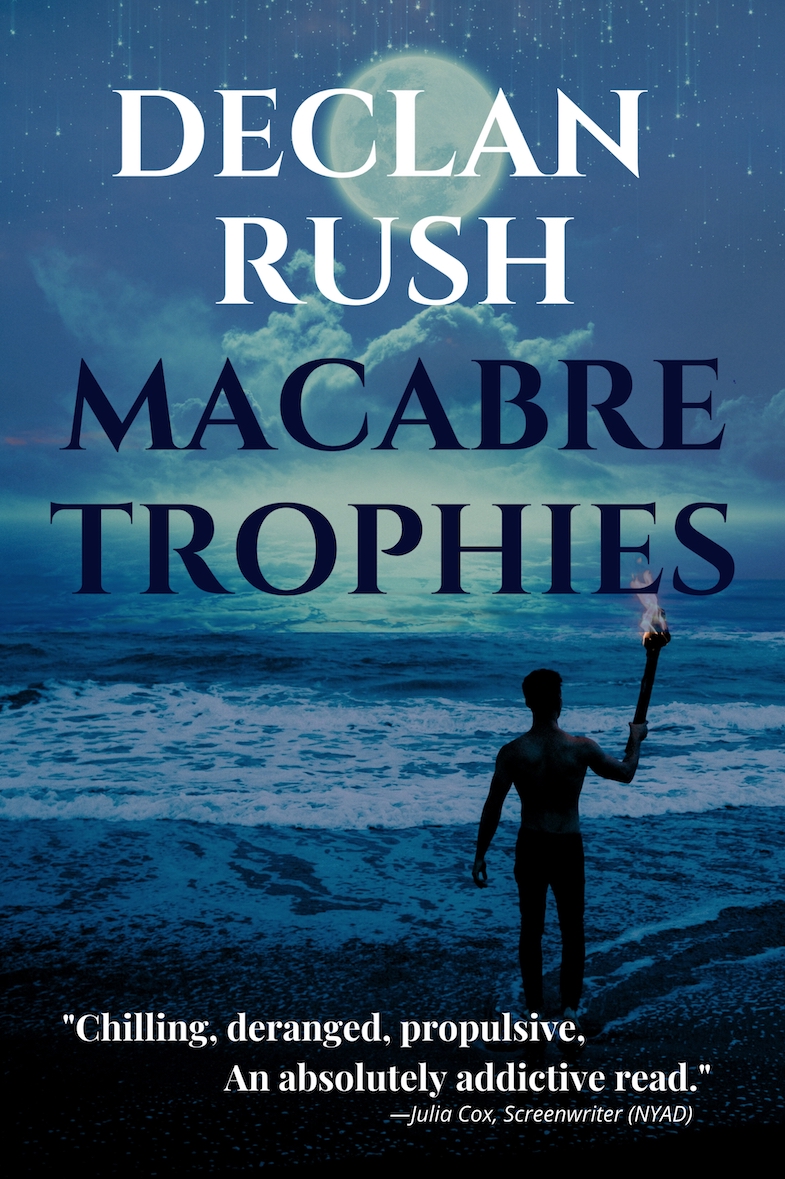 Boston College graduate Ted (T.M.) Murphy, writing under the pen name Declan Rush, has published a new novel set on Cape Cod. In the suspense thriller Macabre Trophies (Dark Waters Books, 2023), J.T. O’Rourke’s life has entered another downward spiral, but then he’s offered a job as a reporter for a local bi-weekly paper at The Point on Cape Cod. J.T. welcomes the opportunity not only to escape another stifling summer manning a pub, but also to leave behind a traumatic secret that haunts his dreams. J.T enjoys the postcard scenery of The Point until a summer kid goes missing and everything changes. As the last person to see the teenager alive, J.T. is thrust into the limelight as the disappearance opens old wounds from a cold case involving the brutal murder of a local boy on Christmas Eve, 1972. An author and educator, Murphy has written several books, including The Running Waves, the Belltown Mystery series, and the Totally Weird Activity books.
Philosophical hermeneutics
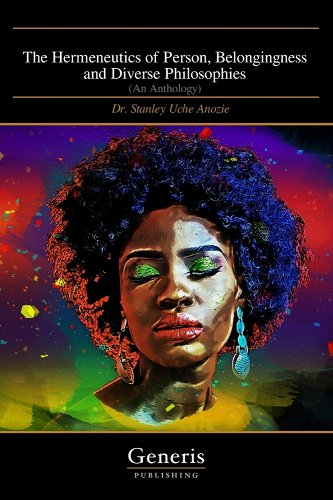 The Hermeneutics of Person, Belongingness and Diverse Philosophies (an anthology) is a collection of essays written by Boston College Assistant Professor of the Practice of Philosophy Stanley Uche Anozie. Philosophical hermeneutics is central to Anozie’s research and writings. These essays are recent hermeneutical reflections on the person, social responsibility, political belongingness, political rights, rights to self-determination, justice, global development, cultural competence, the question of responsibility, and just war theory. The perspectives range from indigenous African philosophy/African hermeneutic philosophy to Western/European perspectives.
Animals in the Bible
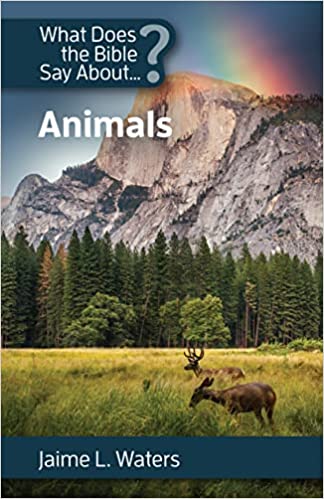 In What Does the Bible Say About Animals? (New City Press, 2022) author Jaime Waters surveys all the different ways that animals appear in the Bible. She highlight animals as a part of creation—as something that’s blessed and cared for by God—but also animals as food and animals as sacrifices. She also explores the possibility of animal afterlife and the ethical responsibility humans have for animals. A Biblical scholar, Waters focused some of her early scholarship on agricultural and ecological issues in the Bible. Waters received her bachelor’s degree from Boston College and is now an associate professor in the BC School of Theology and Ministry.

