
 The Universities of Scotland, Ireland and New England during the British Civil Wars: Contested Seminaries (Boydell Press, 2024), written by Boston College alumnus Salvatore Cipriano, provides new insight into the contested nature of higher education in the British Atlantic world between the Reformation and the Enlightenment and corrects outmoded notions about the universities’ purported insularity and intellectual poverty. In Cipriano’s volume, the image that emerges of these universities is one of genuine academies of strategic importance, employed to serve the agendas of ruling powers in Scotland, Ireland, and New England. Trinity College, Dublin, Harvard College, and the Scottish universities existed on the frontiers of a deteriorating composite monarchy with a centralizing impulse, becoming battlegrounds of the mid-17th-century’s intellectual, political, and religious conflicts. Cipriano earned bachelor’s and master’s degrees in history from Boston College. He is an associate director of career coaching and education at Stanford University.
Higher education in the British Atlantic world
The book of love
 Love: A History (Oxford University Press, 2024), edited by BC Moakley Professor of Political Science Ryan Patrick Hanley, traces the history of thinking about love from antiquity to the 20th century, and includes how various literary, cultural, and political representations of love supplement the history of philosophical reflection. According to the publisher, Love: A History “chronicles the most significant moments in this concept’s long and remarkable evolutionary life, ranging from ancient Hebrew and Greek and Christian conceptions of love to those advanced by thinkers from Kierkegaard and Nietzsche and Levinas.” As an interconnected story, the volume also tells a story the ways in which love’s horizons shifted from the transcendent to the immanent.
Nearly dead
 How does one recover from a near-death experience? In his memoir, 1974 Boston College graduate Michael J. Hession, M.D., a physician who has cared for critically ill patients for more than 30 years, shares the story of his own near-death experience and his arduous recovery in the hopes of helping others. In Physician Heal Thyself: Nearly Dead and the Journey Back to Health, Dr. Hession details his brush with death from pneumonia, complicated by acute respiratory distress syndrome and then paralysis from the neck down due to Guillain-Barre syndrome. Slowly, he rebuilt his body, both physically and emotionally, with faith, meaning, and purpose playing roles in his recovery. With empathy and practical wisdom, Dr. Hession provides readers with invaluable insights into the complexities of recovery and the human spirit, empowering them to face adversity with courage and grace and offering solace, guidance, and hope.
Navajo carver Clitso Dedman
 Clitso Dedman, Navajo Carver (University of Nebraska Press/Bison Books, 2023) by Boston College Professor Emerita Rebecca Valette is an illustrated biography of master wood carver Clitso Dedman, a remarkable and underrecognized 20th-century artist. A former blacksmith and builder, Dedman took up wood carving at age 60. He created wooden sculptures of the various participants in the Yeibichai dance, which closed the Navajo Nightway ceremony. Dedman’s distinctive and highly regarded work can be found in private collections, galleries, and museums, such as the Navajo Nation Museum at Window Rock, the California Academy of Sciences in San Francisco, and the Arizona State Museum in Tucson. Valette and her husband Jean-Paul Valette are co-authors of Weaving the Dance: Navajo Yeibichai Textiles (1910–1950) and Navajo Weavings with Ceremonial Themes: A Historical Overview of a Secular Art Form.
Short stories from an alumna
 Men Who Walk in Dreams (Guernica Editions, 2024) is a collection of short stories where men and women cling to ambitions, thwarted love, and misguided assumptions, as they dream to reinvent themselves, seek revenge, foresee the future, recapture that which has escaped their grasp, or merely survive. Written by 1971 Boston College graduate Grace Marisa Labozzetta, Men Who Walk in Dreams will take readers from El Salvador to Cape Cod to Antarctica, from a secluded Italian Snake Festival to a packed subway car to a World War II bomber. Her story “The Woman Who Drew on Walls,” from this new short story collection, was a New Millennium Writings Fiction Award Finalist. Labozzetta is the author of three novels (Sometimes It Snows in America, A Day in June, and Stay With Me, Lella,) and two previous works of short fiction (At the Copa and Thieves Never Steal in the Rain). She is a John Gardner Fiction Book Award Finalist and Pushcart Prize nominee. Her novel, A Day in June, was shortlisted for the 2020 Eric Hoffer Grand Prize Award. Read more about Labozzetta in this Q&A from Boston College Magazine.
Broadcast journalist tells her story
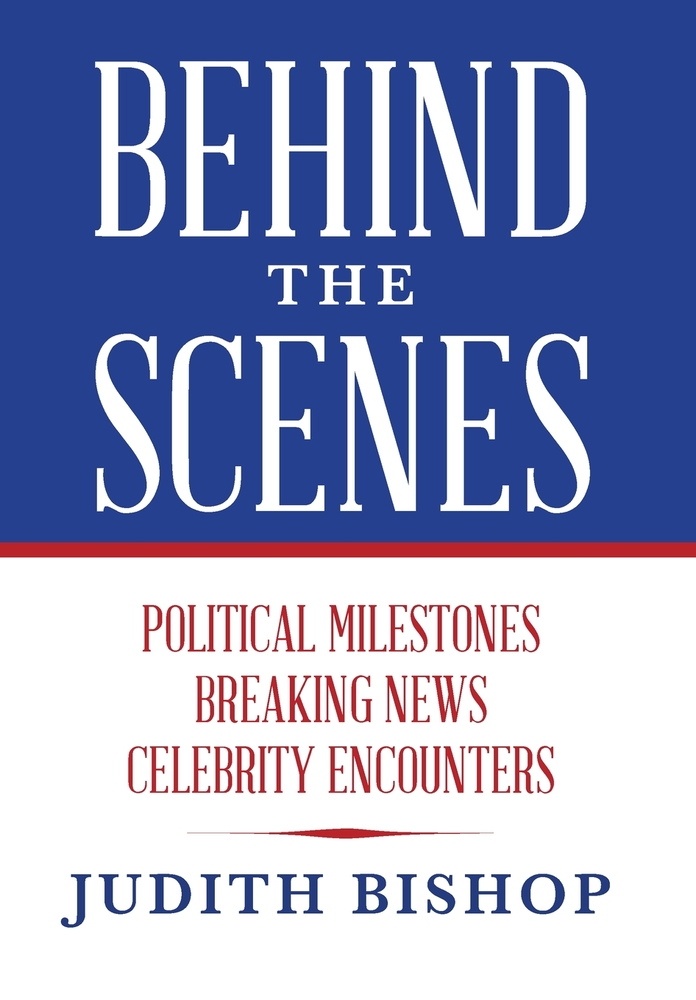 Broadcast journalist Judith Bishop, a member of the Newton College of the Sacred Heart Class of 1962, reflects on her career covering political milestones, breaking news, and the arts in the new book,
An innocent man
 In a small Missouri town in 1992, the body of 19-year-old Mischelle Lawless was found in her car, stalled on the side of a road. Joshua C. Kezer was arrested and charged for her murder—and spent the next 16 years of his life in prison. In the new book, The Murder of Angela Mischelle Lawless: An Honest Sheriff and the Exoneration of an Innocent Man (Rowman & Littlefield Publishers, 2023), 1969 Boston College alumnus Stephen R. Snodgrass writes about how Kezer was imprisoned for a crime he didn’t commit. Snodgrass is an award-winning lawyer who worked to exonerate Kezer and two other men wrongfully convicted of murder. Writing with Kezer, Snodgrass unveils the web of manipulation and corruption that led to Kezer’s conviction. This book has been called “a timely, compassionate work of true crime that calls for better and more equitable justice for all.”
Sublime poetry
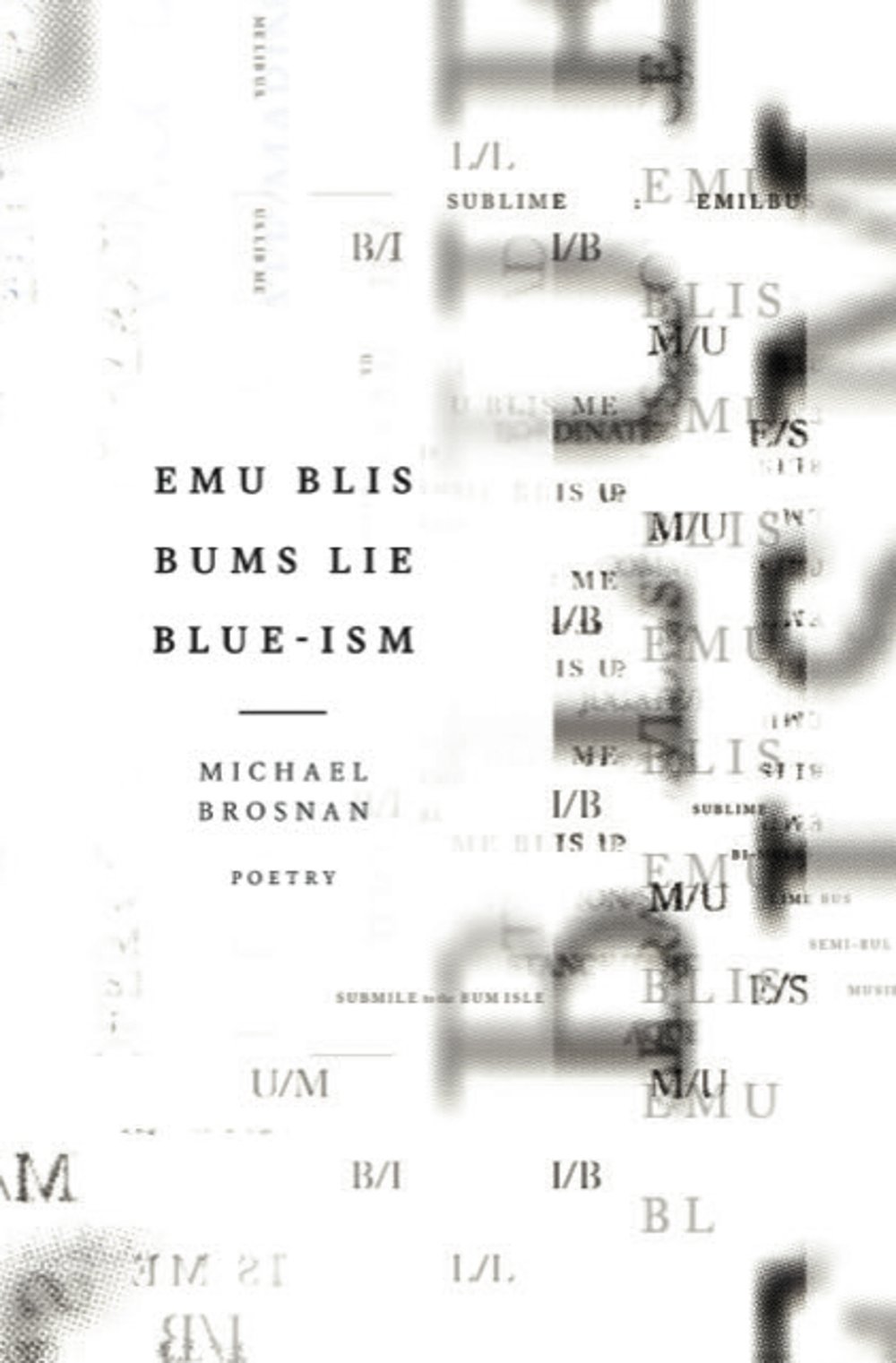 Emu Blis, Bums Lie, Blue-ism (Broadstone Books, 2024) is a collection of poetry by 1976 Boston College graduate Michael Brosnan. According to the publisher: “In this profound volume of experimental poetry, Michael Brosnan exhibits exquisite control as he employs (and invents) tools of verse language (far beyond mere ‘odd enjambments’) to interrogate—and deconstruct, literally—the word sublime, in all of its senses. Many sublime companions (real and imaginary) are along for the ride—Mozart, Coltrane, Jimmy Page, Moby-Dick, Dr. Philosophy—while erasures of Wordworth poems frame and intersperse the work (an act of distillation that serves as a model for the book as a whole).” Emu Blis, Bums Lie, Blue-ism was a finalist for a Wandering Aengus Book Award. Brosnan’s previous poetry collections are Adrift and The Sovereignty of the Accidental.
Ecological hospitality
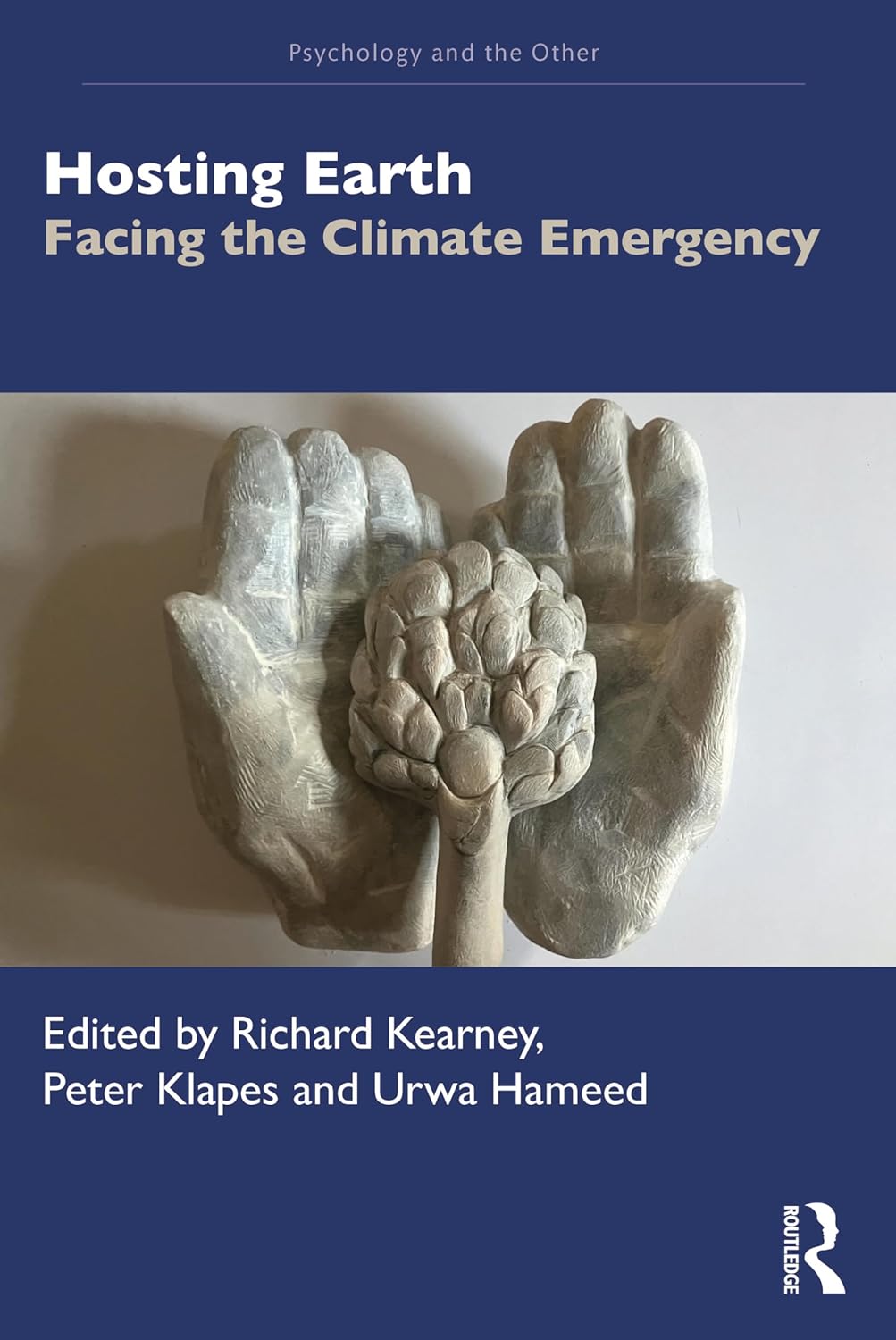 Hosting Earth: Facing the Climate Emergency (Routledge, 2024) is a timely volume in the emerging literature of environmental philosophy. Co-edited by Boston College Charles Seelig Professor of Philosophy Richard Kearney and BC alumni Peter Klapes and Urwa Hameed, the book engages the question of ecological hospitality: What does it mean to be guests of the Earth as well as hosts? While most books on the climate emergency focus on science and politics, the editors say “our volume also invites artists, poets, and philosophers to add new light and depth to this urgent ecological debate.” Hosting Earth features a dialogue with former President of Ireland and climate justice advocate Mary Robinson, drawn from a 2022 conference at Boston College. Read more about the book from BC News.
Posted in Boston College Authors
Tagged climate change, Earth, environment, nature, Philosophy Department
Leave a comment
Early Christianity encyclopedia
 The Brill Encyclopedia of Early Christianity, co-edited by Boston College’s Margaret O’Brien Flatley Professor of Catholic Theology David G. Hunter, focuses on early Christianity from a historical perspective in order to uncover the lasting legacy of the authors and texts. The publication of the six-volume set was the culmination of a 15 years of work. According to the publisher: “Its content is intended to bridge the gap between the fields of New Testament studies and patristics, connecting a number of related fields of study including Judaism, ancient history and philosophy, covering the whole period of early Christianity up to 600 CE. The BEEC addresses a range of traditions, including iconographic, martyrological, ecclesiastical, and Christological traditions, as well as cultic phenomena, such as the veneration of saints.”
 BC Bookmarks