
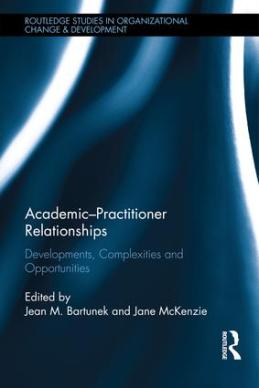
 What is the optimal mixture of real-world experience and scholarly research that produces the best educational preparation for business students? The sharp divide between practitioners and academics that once existed has been largely erased, but there is still much progress to be made in the arena of scholarly engagement within the world of business education. In their book, Academic-Practitioner Relationships: Developments, Complexities and Opportunities (Routledge, 2017), editors Jean Bartunek of the Boston College Carroll School of Management and Jane McKenzie of the Henley Business School at the University of Reading, UK, highlight the sorts of capabilities academics need to collaborate effectively with practitioners and illustrate case studies that demonstrate how successful academic-practitioner relationships can produce research of rigor and relevance. Bartunek is the Robert A. and Evelyn J. Ferris Professor of Management and Organization and a member of the Society of the Sacred Heart, a women’s Roman Catholic religious order. Carroll School Professor Sandra Waddock, the Galligan Chair of Strategy, and Professor Richard Nielsen are contributors to the volume. Bartunek discussed the book in this BC Libraries video.
Practitioners and academics
Posted in Boston College Authors
Tagged business schools, Carroll School of Management, research
Leave a comment
Engaging first-gen college students
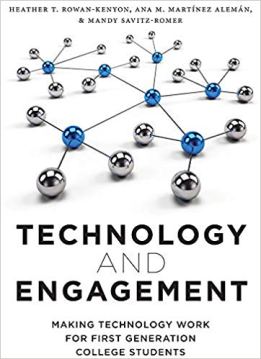 Digital tools can help ensure the academic success of students who are first in their families to go to college, according to a new book co-authored by BC Lynch School of Education Associate Professor Heather Rowan-Kenyon, Lynch School of Education Professor and Associate Dean Ana M. Martinez Alemán, and BC grad Mandy Savitz-Romer of Harvard University. Technology and Engagement: Making Technology Work for First Generation College Students (Rutgers University Press, 2018) is based on a four-year study of how first-gen college students use web technology, including social media sites, to improve their transition to and engagement with their university. Students were better able to maintain close ties with family and friends from home, as well as engage more with social and academic programs at their university. Technology and Engagement is the recipient of the Association for the Study of Higher Education Outstanding Book Award for 2018. The authors discussed their book in a BC Libraries video and wrote an opinion piece outlining digital strategies higher education faculty and administrators for Inside Higher Ed.
Mike Lupica
 Boston College alumnus and legendary sportswriter Mike Lupica will present “The Next Moment is the One that Can Change Everything” on Nov. 15 at 7 p.m. in Gasson 305. A member of the National Sports Media Hall of Fame, Lupica was a columnist for the New York Daily News for some 40 years. He is a contributor to MLB.com and a frequent commentator on ESPN. He also hosts “The Mike Lupica Podcast,” a lively take on professional sports and politics. In addition to his media career, Lupica is a best-selling author of novels for adults and young readers, including his most recent books, No Slam Dunk and Robert B. Parker’s Blood Feud.
Michael Sandel
 Political philosopher and best-selling author Michael Sandel will present “Bioethics and the Common Good” on Nov. 13 at 7 p.m. in Gasson Hall, room 100. Sandel is the Anne T. and Robert M. Bass Professor of Government Theory at Harvard University. His course “Justice” — the first Harvard course to be made freely available online and on television — has been viewed by tens of millions of people around the globe. His writings on justice, ethics, democracy, and markets have been translated into 27 languages. He is the author of the books, What Money Can’t Buy: The Moral Limits of Markets, The Case Against Perfection: Ethics in the Age of Genetic Engineering, and Justice: What’s the Right Thing to Do?, among others. Co-sponsors: Lowell Humanities Series and the Park Street Corporation Speaker Series.
The Paulist Biblical Commentary
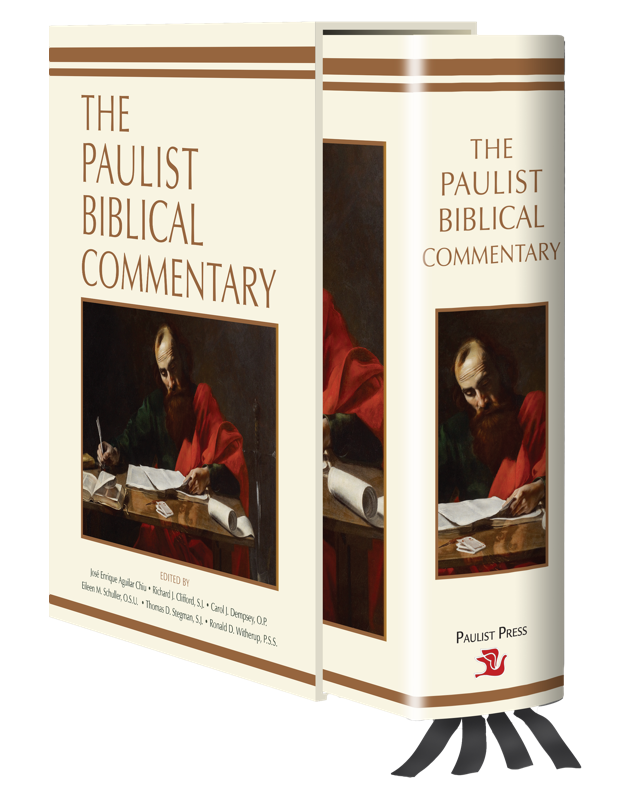 The Paulist Biblical Commentary (Paulist Press, 2018) is a significant new compendium of the very best in contemporary biblical scholarship. The 1,686-page volume, which brings together in collaboration more than 70 international biblical scholars, consists of a commentary on each of the 73 books of the Catholic canon of the Bible along with 12 general articles, written to be accessible to a wide variety of readers, especially those engaged in pastoral ministry. The book’s general editors include STM Dean and Professor of New Testament Thomas D. Stegman, S.J., and STM Professor Emeritus of Old Testament Richard J. Clifford, S.J., who served as STM’s founding dean from 2008-2010. Fr. Stegman penned the volume’s commentary on Romans. Fr. Clifford contributed commentaries on Genesis, Wisdom, and Nahum. Fr. Stegman and Fr. Clifford also co-wrote the general article on “The Christian Bible.” Other BC contributors are: STM’s Associate Professor of Old Testament Andrew R. Davis (Job), Associate Professor of New Testament Angela Kim Harkins (Daniel), and Assistant Professor of Old Testament Michael Simone, S.J., (Judges) and Pheme Perkins, Joseph Professor of Catholic Spirituality in BC’s Theology Department, who contributed a piece on the Gospels. More from BC News.
Posted in Boston College Authors
Tagged Bible, School of Theology and Ministry, Theology Department
Leave a comment
Doctor Levitin
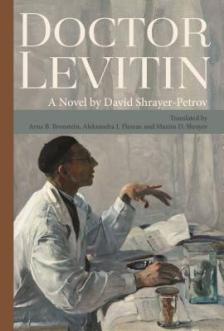
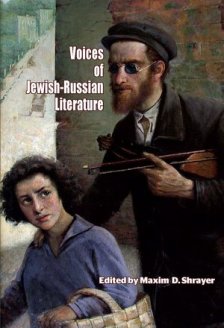 A major work of late 20th-century Russian and Jewish literature, Doctor Levitin, a novel depicting the experience of the Jewish exodus from the former USSR, has been published in English. BC professor of Russian, English, and Jewish Studies Maxim D. Shrayer oversaw the translation and contributed a commentary. University of New Hampshire professors Arna B. Bronstein and Aleksandra Fleszar co-translated the novel with Shrayer. First published in Israel in 1986, Doctor Levitin was written by Shrayer’s father, writer David Shrayer-Petrov, who drew on the personal plight of his Jewish-Russian family and their emigration from the USSR in 1987. A book launch will take place at Brookline Booksmith on Nov. 14 at 7 p.m. featuring Shrayer in conversation with Shrayer-Petrov and Bronstein. More from BC News.| Shrayer is also editor of a new volume titled Voices of Jewish-Russian Literature (Academic Studies Press, 2018), an anthology of major 19th- and 20th-century fiction, nonfiction, and poetry by 80 Jewish-Russian writers. He profiles Lev Ginzburg, a Jewish-Russian author and investigator of Nazi crimes, in Tablet Magazine.
Immigration and the right to healthcare
 Beatrix Hoffman, a historian of the U.S. health care system, will present “Immigration and the Right to Healthcare” on Nov. 8 at 7 p.m. in Gasson 100. She is the author of the books, The Wages of Sickness: The Politics of Health Insurance in Progressive America and Health Care for Some: Rights and Rationing in the United States since 1930, and co-editor of Patients as Policy Actors. She has published articles on topics such as social movements in the U.S. health system, the origins of insurance co-payments and deductibles, and the rise of the emergency room as safety net. Hoffman is a faculty member at Northern Illinois University and her work has been supported by awards from the Robert Wood Johnson Foundation, the National Endowment for the Humanities, and the American Council for Learned Societies. Sponsor: Park Street Corporation Speaker Series.
Posted in Guest Authors, Park Street Corporation Speaker Series
Tagged health care, immigrants
Leave a comment
Latino City honored
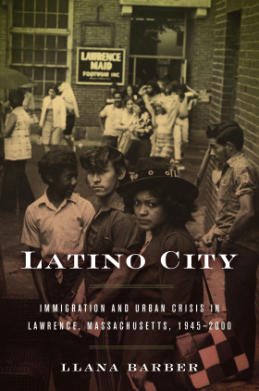 Latino City: Immigration and Urban Crisis in Lawrence, Massachusetts, 1945–2000 (University of North Carolina Press, 2017), written by Boston College alumna Llana Barber, is the recipient of the Kenneth Jackson Award from the Urban History Association. The award honors the best book in North American urban history. Latino City explores the transformation of Lawrence into New England’s first Latino-majority city. Like many industrial cities, Lawrence entered a downward economic spiral in the decades after World War II. The arrival of tens of thousands of Puerto Ricans and Dominicans in the late 20th century brought new life to the struggling city, but the newly arrived faced hostility from their neighbors, exclusion from local governance, inadequate city services, and limited job prospects. Barber received her Ph.D. in history from Boston College and is on the faculty of State University of New York College at Old Westbury. Her book is also co-winner of the 2018 Lois P. Rudnick Book Prize from the New England American Studies Association.
Posted in Alumni Authors, Awards/Honors
Tagged History Department, Latino/a, Massachusetts, urban life
Leave a comment
Burns Scholar Lecture
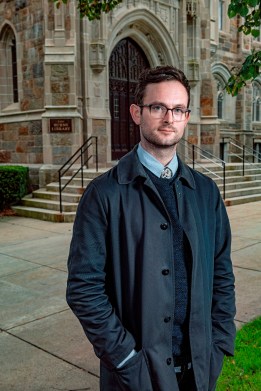
Ciaran O’Neill (Gary Wayne Gilbert)
Burns Visiting Scholar in Irish Studies Ciaran O’Neill will present a public lecture on “Love, Power, and Consent in pre-famine Ireland: a Dublin Courtship” on Nov. 6 at 4:30 p.m. in Burns Library. O’Neill has been conducting a study, with Juliana Adelman of Dublin City University, on an unpublished diary kept by law student James Christopher Fitzgerald Kenney, who had a love affair with Mary Louisa McMahon. O’Neill will discuss what their relationship reveals about love, social class, courtship, and moral conduct in 1840s Dublin. O’Neill is the Ussher Assistant Professor in Nineteenth-Century History at Trinity College Dublin and president of the Society for the Study of Nineteenth-Century Ireland. He is editor of Irish Elites in the Nineteenth Century and author of Catholics of Consequence: Transnational Education, Social Mobility and the Irish Catholic Elite, 1850-1900, winner of the James S. Donnelly Prize for History and the Social Sciences. More from BC News.
Posted in Guest Authors
Tagged Burns Library, Burns Visiting Scholar in Irish Studies, Ireland, Irish history
Leave a comment
Lebanon’s Jewish community
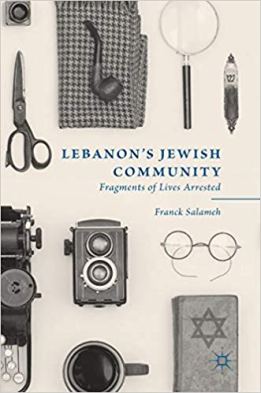 In his new book, Lebanon’s Jewish Community: Fragments of Lives Arrested (Palgrave MacMillan), BC Associate Professor of Near Eastern Studies Franck Salameh presents both history and memory of Lebanon’s Jews, considering what, how, and why they choose to remember their Lebanese lives. The work gives voice to personal testimonies, family archives, private papers, recollections of expatriate and resident Lebanese Jewish communities, as well as rarely tapped archival sources. Salameh is the chair of BC’s Department of Slavic and Eastern Languages and Literatures and senior editor in chief of The Levantine Review. He is the author of Language Memory and Identity in the Middle East: The Case for Lebanon and Charles Corm: An Intellectual Biography of a Twentieth-Century Lebanese “Young Phoenician,” among other works. He also recently published an essay on Belgian-Lebanese Jesuit scholar Henri Lammens in The Journal of the Middle East and Africa.
 BC Bookmarks