
 Eibhear Walshe, director of creative writing and senior lecturer at University College Cork, will present “The Other Wilde Trial – The Mary Travers Scandal” on Oct. 23 in Connolly House. In his novel, The Diary of Mary Travers, Walshe imagines the life of Mary Travers, a woman connected to Oscar Wilde’s parents Jane and William and a key figure in a court case in 1864 Dublin. The Diary of Mary Travers was shortlisted for the Kerry Group Novel of the Year and longlisted for the International Dublin Literary Award. Walshe’s talk will begin at 4 p.m. Co-sponsors: Irish Studies and Culture Ireland. More about Walshe’s book.
The other Wilde trial
Rebecca Solnit
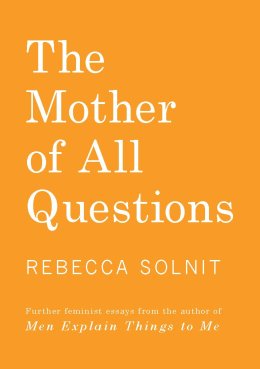 Author and activist Rebecca Solnit will discuss her collection of essays titled, The Mother of All Questions, on Oct. 24 at 7 p.m. in Gasson Hall, room 100. Solnit is the author of 20 books on feminism, western and indigenous history, popular power, social change and insurrection, wandering and walking, and hope and disaster. Some of her titles include: The Faraway Nearby (nominated for a National Book Award), River of Shadows (National Book Critics Circle Award), and Men Explain Things to Me—which inspired the word ‘mansplaining.’ Her most recent publication is Call Them by Their True Names: American Crises. She has received two NEA fellowships for literature and a Guggenheim Fellowship. She is a columnist at Harper’s and frequent contributor to the Guardian newspaper. Read more about Solnit in the New York Times Style Magazine. Sponsor: Lowell Humanities Series.
Posted in Guest Authors, Lowell Humanities Series
Leave a comment
James Harvey Robinson Prize
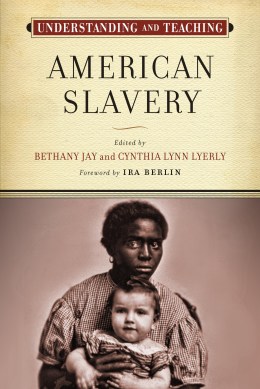 BC Associate Professor of History Cynthia Lynn Lyerly and BC alumna Bethany Jay of Salem State University have won the American Historical Association’s James Harvey Robinson Prize for their co-edited book, Understanding and Teaching American Slavery (University of Wisconsin Press, 2016). The James Harvey Robinson Prize recognizes the teaching aid that has made the most outstanding contribution to the teaching and learning of history in any field for public or educational purposes. The award will be presented to the editors at a ceremony in January in Chicago. More from BC News.
Posted in Alumni Authors, Awards/Honors, Boston College Authors
Tagged American history, History Department, slavery
Leave a comment
Invisible
 Croatian playwright and screenwriter Tena Štivičić will present “Invisible: A Conversation about Migration” on Oct. 18 at 4 p.m. in Robsham Theater in advance of the U.S. premiere of her play “Invisible” that evening at BC. “Invisible,” which explores the many sides of migration, is described as a “funny, moving and topical portrayal of the world in flux.” Štivičić has written plays in both her native Croatian and in English and is a winner of the Susan Smith Blackburn Prize. Her major works in English include: “Can’t Escape Sundays,” “Perceval,” “Goldoni Terminus,” and “Fireflies.” Co-sponsored by the Theater Department and the Winston Center for Leadership and Ethics. Guardian review
CWBC presents Reshma Saujani
Reshma Saujani, founder and CEO of Girls 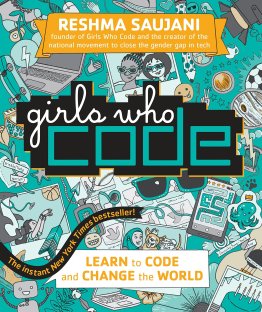 Who Code, will be the featured speaker at the Council for Women of Boston College Colloquium on Oct. 18. Girls Who Code works to inspire, educate, and equip girls for opportunities in computer programming through summer immersion programs, afterschool clubs, and other initiatives. Saujani is the author of the books, Girls Who Code: Learn to Code and Change the World, which shares real-life stories of women working at places like Pixar and NASA, and Women Who Don’t Wait in Line: Break the Mold, Lead the Way, in which she advocates for a new model of female leadership based on sponsorship. Her forthcoming book, Brave, Not Perfect: Fear Less, Fail More, and Live Bolder, is inspired by her popular TED talk. The CWBC Colloquium will be held in Yawkey Center’s Murray Function Room beginning at 6 p.m., with doors opening at 5 p.m. More from BC News.
Alumnus poet C. Dale Young
 BC alumnus C. Dale Young, a poet and writer, will read from his work on Oct. 17 at 7 p.m. in Devlin Hall, room 101. Young is the author of four poetry collections, including Torn and The Halo, and his novel in stories, The Affliction. He is a recipient of fellowships from the Bread Loaf Writers’ Conference, the National Endowment for the Arts, the John Simon Guggenheim Memorial Foundation, and the Rockefeller Foundation. He also is a recipient of the Hanes Award given by the Fellowship of Southern Writers to recognize a distinguished body of work by a poet in midcareer. His poetry and short fiction have appeared in many anthologies and magazines, including The Best American Poetry, Asian American Poetry: The Next Generation, American Poetry Review, The Atlantic Monthly, The Nation, The New Republic, The Paris Review, and POETRY. Sponsor: Lowell Humanities Series.
Divorce in the time of Joyce
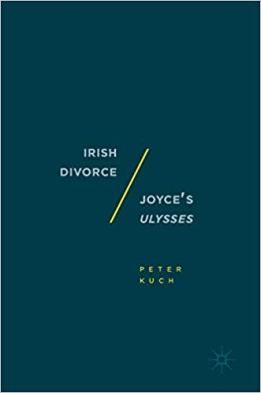 Was divorce a realistic possibility for Leopold and Molly Bloom? Peter Kuch, the Eamon Cleary Professor of Irish Studies at the University of Otago in New Zealand, will give a talk Oct. 16 on his groundbreaking book, Irish Divorce/Joyce’s Ulysses (Palgrave Macmillan, 2017), which challenges the long-held conviction that prior to 1995 Irish people could not obtain a divorce that gave them the right to remarry. Kuch writes of a forgotten Irish practice of petitioning the English courts for divorce, which casts Ulysses and Ireland’s identity in a new light. Kuch has published widely on Yeats, Joyce, Eliot, Irish theater, Irish and Australian film, literary theory and Irish/Australian history. His talk will take place in Connolly House at 4:30 p.m. Sponsor: Irish Studies.
John Paul II Lecture
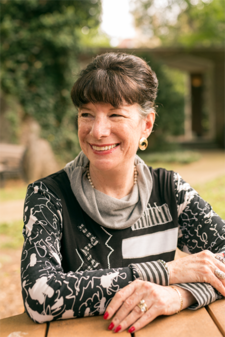 Amy-Jill Levine will present “Christian Privilege, Christian Fragility, and the Gospel of John: How American Race Relations Inform Jewish-Christian Dialogue” on Oct. 14 at 4 p.m. in Stokes Hall South Auditorium S195. Levine is University Professor of New Testament and Jewish Studies and Mary Jane Werthan Professor of Jewish Studies at Vanderbilt Divinity School and College of Arts and Science; she is also Affiliated Professor, Woolf Institute: Centre for the Study of Jewish-Christian Relations, Cambridge University. Her authored and co-authored books include The Misunderstood Jew: The Church and the Scandal of the Jewish Jesus; The Meaning of the Bible: What the Jewish Scriptures and the Christian Old Testament Can Teach Us; The New Testament: Methods and Meanings; The Gospel of Luke, and Short Stories by Jesus: The Enigmatic Parables of a Controversial Rabbi. The sixth annual John Paul II Lecture is sponsored by the Center for Christian-Jewish Learning.
Posted in Guest Authors
Tagged Center for Christian-Jewish Learning, New Testament, religion
Leave a comment
Playwright Marcus Gardley
 Poet-playwright Marcus Gardley will present a talk on “The Black God,” at Robsham Theater on Oct. 11 at 7 p.m. Gardley’s plays and musicals — which often center on African American history and allegory — have been performed around the country and internationally. His works include “Every Tongue Confess,” winner of the 2010 Edgerton Foundation New Play Award, “The Gospel of Lovingkindness,” winner of the 2014 Black Theater Alliance Award for best play/playwright, and “The Road Weeps, The Well Runs Dry,” a finalist for the 2014 Edward M. Kennedy Prize for Drama Inspired by American History. Gardley’s talk is part of the Matthew R. DeVoy and John H. DeVoy IV Perspectives on Theatre Series, which bring leading professionals and major creative forces in theatre and the performing arts to Boston College. More from BC News.
What happened to the dead?
 In the time of the Great Famine in Ireland, the rituals surrounding wakes and burial were often abandoned. Centenary University Associate Professor of History Breandan Mac Suibhne will discuss “Mortuary Practice in the Time of the Famine: Ireland, 1846-52” on Oct. 11 at 4 p.m. in Devlin Hall, room 101. Mac Suibhne is an expert in society and culture in modern Ireland, particularly Ulster, with special interests in the politics of identity in the late 18th and early 19th centuries, the Great Famine, migration, oral history, Irish America, and the Atlantic. His most recent book is The End of Outrage: Post-Famine Adjustment in Rural Ireland, named the Irish Times Irish Non-Fiction Book of the Year in 2017. He is a co-founder of Field Day Review, a journal of political and literary culture, and co-editor of Ireland’s Great Famine and Popular Politics. Sponsor: Center for Irish Programs.
 BC Bookmarks