
God and humanity
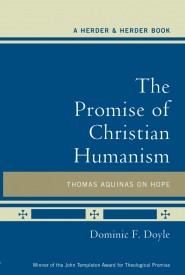 Theologian Dominic F. Doyle, an associate professor of systematic theology in the Boston College School of Theology and Ministry, has published a new book that, according to the publisher, “shows how the Christian virtue of hope breathes new life into humanism, enabling believers to approach God as the human good.” In The Promise of Christian Humanism: Thomas Aquinas on Hope, Doyle shows how the work of St. Thomas Aquinas, Charles Taylor, Nicholas Boyle, and others reveals the essential bond between the Christian virtue of hope and the life-affirming sensibilities of humanism. Doyle has been honored with the John Templeton Award for Theological Promise and the Catholic Theological Society of America’s Catherine LaCugna Award to New Scholars.
Posted in Boston College Authors
Tagged Christianity, God, School of Theology and Ministry
Leave a comment
Hope diamond
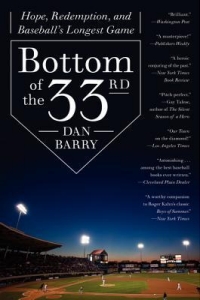 Each summer, Boston College asks its incoming freshmen to read a book whose theme can provide a starting point for reflection and conversation that will later be illuminated through an address by the author at the annual First Year Convocation in September. The book for this year’s class is Bottom of the 33rd: Hope, Redemption and Baseball’s Longest Game by Dan Barry. Barry, a New York Times columnist, will speak at Boston College on Sept. 13 at 7 p.m.
About Bottom of the 33rd from the publisher: With Bottom of the 33rd, celebrated New York Times journalist Dan Barry delivers a lyrical meditation on small-town lives, minor-league dreams, and the elements of time and community that conspired one fateful night to produce a baseball game seemingly without end. An unforgettable portrait of ambition and endurance, Bottom of the 33rd is the rare sports book that changes the way we perceive America’s pastime—and America’s past.
Transformation of a Jewish curse
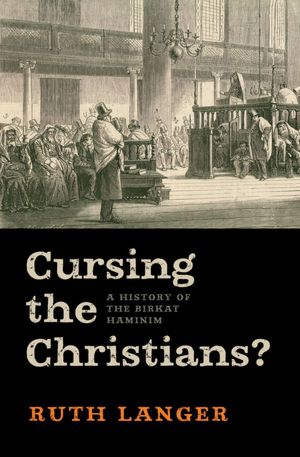
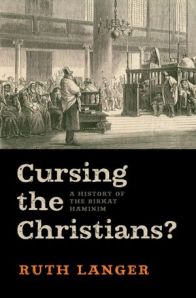 A new book by Rabbi Ruth Langer, a professor of theology and associate director of the Center for Christian-Jewish Learning at Boston College, has been hailed as “masterful” by Jewish Ideas Daily. Rabbi Langer is an expert in Jewish tradition and Jewish-Christian relations. According to the publisher (Oxford University Press), in Cursing the Christians?: A History of the Birkat HaMinim, Rabbi Langer traces the transformation of the birkat haminim from a medieval Jewish curse of Christians to its modern transformation within the Jewish world into a general petition that God remove evil from the world.
Posted in Boston College Authors
Tagged Christian-Jewish Learning, Jewish, prayer, Theology Dept.
Leave a comment
Vatican II & the Magisterium
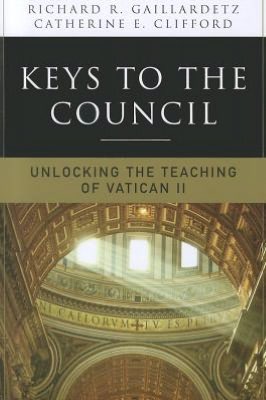
 Richard R. Gaillardetz, Joseph McCarthy Professor of Catholic Systematic Theology at Boston College and president-elect of the Catholic Theological Society of America, has co-authored (with Catherine Clifford) a book that offers an accessible take on the vision of the Second Vatican Council, which Professor Gaillardetz calls “the most important event in Roman Catholic history since the Protestant Reformation.” Keys to the Council: Unlocking the Teaching of Vatican II is particularly helpful to the growing number of Catholics — including those studying for ordained and lay ministry–with no personal recollection of Vatican II, its invigorating vision and the way it profoundly re-shaped the understanding and practice of the Catholic faith. BC Story | Prof. Gaillardetz also has edited a new volume of papers by leading Catholic scholars on the Church’s official teaching authority in a postmodern world. According to the publisher (Liturgical Press), When the Magisterium Intervenes: The Magisterium and Theologians in Today’s Church covers many topics, including the investigation of theologians that has occurred in recent years, canonical perspectives on such investigations, the role that women religious have played in these issues, the place of the media when problems arise, and possible future ways forward.
Discovering Joyce’s Dublin
 The Dublin of 1904, explored by Leopold Bloom in James Joyce’s Ulysses, is now accessible to the tech-savvy inhabitants of the 21st century thanks to JoyceWays, a multimedia virtual tour created by Boston College undergraduates with the help of BC English Adj. Associate Professor Joe Nugent, a Joyce scholar, and BC’s Office of Instructional Design and eTeaching Services. Using digital mapping and images, archival photographic research at Ireland’s National Archives, and their own camera work, the students have produced an interactive guide to the topography and texture of Dublin that includes more than 100 locations. JoyceWays features excerpts from the novels glossed with expert criticism, quirky facts, and contemporary images, video and audio—including narration by Irish Senator David Norris and best-selling author, broadcaster and BBC host Frank Delaney. News of the launch of JoyceWays received worldwide media attention. JoyceWays is available on iTunes and was awarded The Appy for app of the month for June. Said one of the judges, JoyceWays “combines both educational and tourism features. What I liked in particular about [it] was the way that the user experience was made very easy and accessible in bringing to life a novel that can be anything but…The whole experience is fun and is great bite sized introduction to Ulysses and Joyce’s Dublin.” BC story

How Effective Is Deportation?
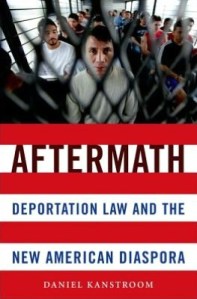 Law Professor Daniel Kanstroom, associate director of Boston College’s Center for Human Rights and International Justice, has written a new book Aftermath: Deportation Law and the New American Diaspora, which questions the effectiveness of deportation as an immigration policy. He was interviewed on “The Takeaway,” a co-production of WNYC Radio and Public Radio International. According to the publisher: Since 1996, when new, harsher deportation laws went into effect, the United States has deported millions of noncitizens back to their countries of origin. Daniel Kanstroom turns his attention to deportation’s aftermath: the actual effects on individuals, families, U.S. communities, and the countries that must process and repatriate ever-increasing numbers of U.S. deportees.

Posted in Boston College Authors
Tagged deportation, immigration, Law School, politics, US domestic policy
Leave a comment
World History Association Book Prize
 Professor of History Prasannan Parthasarathi has won the 2012 World History Association Book Prize for his work, Why Europe Grew Rich and Asia Did Not: Global Economic Divergence, 1600-1850. The WHA, considered the foremost organization for the promotion of world history through the encouragement of teaching, research, and publication, has awarded an annual book prize since 1999 to recognize outstanding contributions to world history. In Why Europe Grew Rich and Asia Did Not, Parthasarathi explores the long-debated question of why the path of economic development diverged between Europe and Asia in the 18th and 19th centuries. BC News
Posted in Awards/Honors, Boston College Authors
Tagged Asia, Europe, History Department, world history
Leave a comment
Transforming teaching
 Lynch School of Education Thomas More Brennan Professor Andy Hargreaves and his co-author Michael Fullan have been selected as education authors of the month by Routledge Press, the British publisher of their new book, Professional Capital: Transforming Teaching in Every School. Published in the U.S. by Columbia University’s Teachers College Press, Professional Capital lays out a new agenda to transform the future of teaching and public education. The book combats old arguments and stereotypes about teachers and the teaching profession, instead offering ideas-driven, evidence-based strategies for classroom teachers, administrators, schools and districts, and state and federal leaders. In praising the book, British author Sir Ken Robinson, said, “Hargreaves and Fullan set out exactly and undeniably why the only way to move forward is to honor and improve the profession of teaching. This book should revolutionize how policymakers and practitioners alike think and act in education.”
Posted in Awards/Honors, Boston College Authors
Tagged education, Lynch School of Education, policymakers
Leave a comment
Inaugural Chautauqua Prize winner
 College of Arts and Sciences Honors Program faculty member Andrew Krivak’s novel The Sojourn, already a 2011 National Book Award Finalist for Fiction, has been named the inaugural winner of the Chautauqua Prize, a new national literary prize that celebrates a book of fiction or literary/narrative nonfiction that provides a richly rewarding reading experience and honors the author for a significant contribution to the literary arts. The Sojourn, tells the story of Jozef Vinich, who was uprooted from a 19th-century mining town in Colorado by a family tragedy and returns with his father to an impoverished shepherd’s life in rural Austria-Hungary. When World War I comes, Jozef joins his cousin and brother-in-arms as a sharpshooter on the southern front, where he must survive a perilous trek across the frozen Italian Alps and capture by a victorious enemy. Inspired by the author’s own family history, this novel is a poignant tale of survival and of fathers and sons, addressing the great immigration to America and the desire to live the American dream amidst the unfolding tragedy in Europe.

Posted in Awards/Honors, Boston College Authors
Tagged A&S Honors Program, Europe, family saga, World War I
1 Comment

