
A look at a medieval “bestseller”
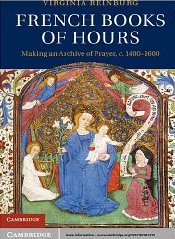 The Book of Hours was the most commonly produced and owned book in medieval and early modern Europe. In her book French Books of Hours: Making an Archive of Prayer, c. 1400-1600 (Cambridge University Press), Boston College Associate Professor of History Virginia Reinburg chronicles how the book of hours shaped religious practice and achieved popularity because it served as a bridge between liturgy and the home. Reinburg explores the book of hours’ prestige and how it was acquired, how it was read to guide prayer and teach literacy, and what it meant to its owners as a personal possession. An expert in early modern European history and religious life in early modern France, Reinburg based her account on the study of over 500 manuscripts and printed books from France. A review has been published in H-France Review, which calls French Books of Hours an “important contribution to the history of late medieval and early modern French history. First and foremost, however, it is a major contribution to the history and anthropology of religion in general.”

Posted in Boston College Authors
Tagged European history, History Department, prayer
Leave a comment
Beach read
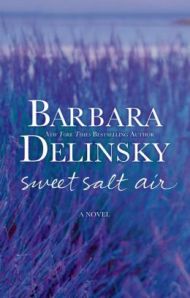 Boston College alumna and best-selling author Barbara Delinsky has a new book out this summer titled Sweet Salt Air (St. Martin’s Press), which has already made it to the New York Times Best Sellers List and been named a Best Book of the Month/Romance by the editors at Amazon.com. The novel tells the story of Charlotte and Nicole, once best friends who have grown apart and reunite one summer on an island off the coast of Maine. Read more about Delinsky and her books on her website or follow her on Twitter.
Irony fuels critical debate
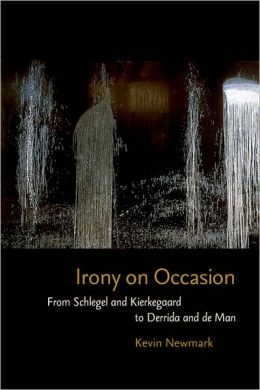
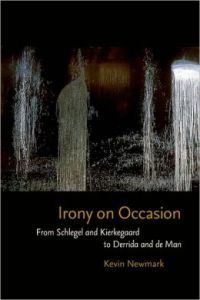 What is it about irony–as both an object of philosophical reflection and a literary technique—that fuels critical debate? Boston College Professor of Romance Languages and Literatures Kevin Newmark examines this question in Irony on Occasion: From Schlegel and Kierkegaard to Derrida and de Man (Fordham University Press, 2012). Critically hailed as “timely, provocative, carefully reasoned and argued, and unique in its scope,” it focuses on key moments in German Romanticism and its afterlife in 20th-century French thought and writing. Chapters focus on Friedrich Schlegel, Søren Kierkegaard, Friedrich Nietzsche, Thomas Mann, Jean Paulhan, Maurice Blanchot, Jacques Derrida and Paul de Man. Neither a historical nor a thematic study of irony, the book examines occasions of ironic disruption and offers an alternative model for conceiving of historical occurrences and their potential for acquiring meaning.
Catholic Shanghai
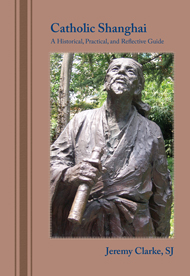 Father Jeremy Clarke, SJ, a historian whose expertise is the history of Catholicism in China, has authored Catholic Shanghai: A Historical, Practical and Reflective Guide. It is a pilgrim’s guide to the history and significance of Catholic sites in Shanghai. Fr. Clarke was interviewed about his lifelong interest in China and the new book by Qantas inflight radio. Fr. Clarke is an assistant professor in the University’s History Department and has quickly become a popular faculty member among the students at Boston College.
Finding meaning in diaspora
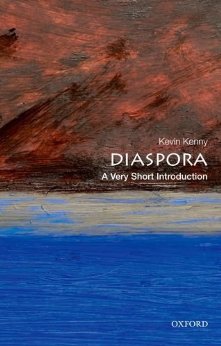
 Oxford University Press’ Very Short Introductions offer concise, balanced and readable introductions to a wide range of subjects. History Professor Kevin Kenny, whose expertise is the history of migration and popular protest in the Atlantic world, has written a volume for the series titled Diaspora: A Very Short Introduction. Focusing on three key elements–movement, connectivity, and return, Kenny explains where the concept of diaspora came from, how its meaning changed over time, why its usage has expanded so dramatically in recent years, and how it can both clarify and distort the nature of migration. Read more in the OUP blog.
Posted in Boston College Authors
Tagged diaspora, History Department, immigration, migration
Leave a comment
The Boston Strangler case, 50 years later
 The Boston Strangler case is back in the headlines with the news that DNA from the 1964 murder case of Mary Sullivan has been definitively linked to Albert DeSalvo, who had confessed to the crimes but was never convicted. Boston College History Professor Alan Rogers is the author of The Boston Strangler (Commonwealth Editions, 2006), part of the New England Remembers book series, which gives an overview of the serial killings that terrorized Boston in the early 1960s, and the evidence that pointed to DeSalvo as the killer. Rogers says this new DNA testing provides the obvious answer to the age-old question: Was Albert DeSalvo the Boston Strangler? “There’s not a shred of evidence pointing to anyone else. The preponderance of evidence in the case was so overwhelming. DeSalvo recalled details in each and every slaying that no one else could have known. These details weren’t in the newspapers but he knew them.”

Posted in Boston College Authors
Tagged Boston, History Department, murder case, serial killer
Leave a comment


