
Origins of international adoption
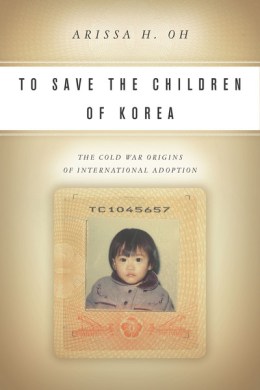 In her new book, To Save the Children of Korea: The Cold War Origins of International Adoption (Stanford University Press, June 2015), Assistant Professor of History Arissa Oh contends that although Korea was not the first place that Americans adopted from internationally, it was the place where organized, systematic international adoption was born. Korean adoption began in the aftermath of the Korean War and served as a kind of template for when international adoption began–in the late 1960s–to expand to new sending and receiving countries. First established as an emergency measure through which to evacuate mixed-race “GI babies,” Korean adoption became a mechanism through which the Korean government exported its unwanted children: the poor, the disabled, or those lacking Korean fathers. Focusing on the legal, social, and political systems at work, this book shows how the growth of Korean adoption from the 1950s to the 1980s occurred within the context of the neocolonial U.S.-Korea relationship, and was facilitated by crucial congruencies in American and Korean racial thought, government policies and nationalisms. Oh was interviewed recently by the Boston Globe about topic of her book.

Posted in Boston College Authors
Tagged adoption, Cold War, History Department, Korea
Leave a comment
His final book
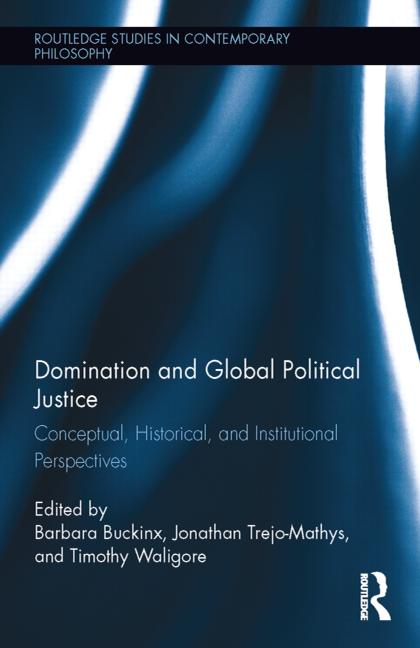
 The newly published Domination and Global Political Justice: Conceptual, Historical and Institutional Perspectives (Routledge, 2015) is the final publication from Jonathan Trejo-Mathys, an assistant professor of philosophy who died from cancer in 2014. Trejo-Mathys served as the book’s editor, along with Barbara Buckinx and Timothy Waligore. Bringing together, for the first time, mostly original pieces on domination and global political justice by some of this generation’s most prominent scholars, Domination and Global Political Justice extends debates about domination to the global level and considers how other streams in political theory and nearby disciplines enrich, expand upon, and critique the republican tradition’s contributions to the debate.
Conservation lab as classroom
 Last month, Burns Library Conservator Barbara Adams Hebard gave a presentation at the Association of College and Research Libraries, New England chapter annual meeting. The conference was focused on the evolution of the academic library as a place where students and faculty are conducting research and learning, and the physical and virtual spaces intentionally designed to encourage scholarship, collaboration and production. Hebard’s session was titled Really Making History: Craft Integrated in a Boston College History Course. She described working with History Professor Virginia Reinburg and her students in “HS4239 Early Printed Books: History and Craft” by integrating books from the John J. Burns Library of Rare Books and Special Collections in the curriculum and by incorporating hands-on workshops in the conservation lab as a part of the course. Hebard showed the students how to make a chemise-style book cover and the students each covered copies of What Are We? with cloth and imaginatively decorated the covers. Inspired by this course, Hebard created her own leather covered girdle bookbinding for New Testament and Psalms (Ignatius Press). Her work (pictured) was on exhibit at the North Bennet Street School’s Windgate Gallery in Boston.

An immigration picture
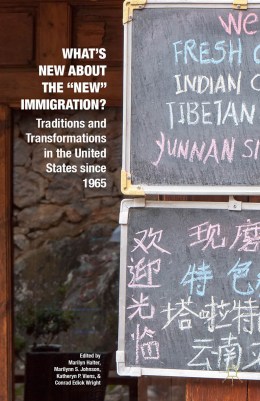 Historians commonly point to the 1965 Immigration and Nationality Act as the inception of a new chapter in the story of American immigration. The national and ethnic profile of immigrants to the US changed dramatically, including large numbers of arrivals from the Caribbean, Central America, South America, South Asia, East Asia, Africa, the Middle East, and the former Soviet Union. In What’s New about the “New” Immigration?: Traditions and Transformations in the United States since 1965 (Palgrave Macmillan, 2014), scholars from various disciplines probe what is genuinely new about post-1965 immigration (both documented and undocumented) and what continuities have persisted. Boston College Professor of History Marilynn Johnson is one of the book’s co-editors and a contributor. Johnson is the author of Street Justice: A History of Police Violence in New York and The Second Gold Rush: Oakland and the East Bay in World War II, among other titles.

Why literature matters
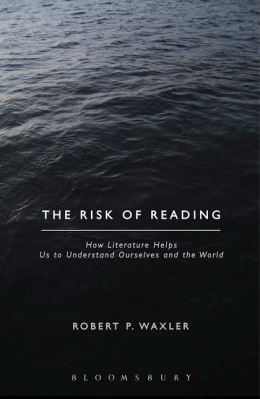 In The Risk of Reading: How Literature Helps Us to Understand Ourselves and the World (Bloomsbury Academic, 2014), Boston College alumnus Robert Waxler contends that deep and close readings of literature can help people understand themselves and the world around them. He says people need “fiction” to give “real life” meaning and that reading narrative fiction remains crucial to the making of a humane and democratic society. Some of the works explored in his book are Alice in Wonderland; Heart of Darkness; The Old Man and the Sea; Catcher in the Rye and Fight Club. Waxler, who earned a master’s degree from Boston College, is a professor of English at the University of Massachusetts Dartmouth.

From West Africa
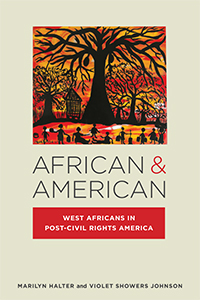 In her book, African & American: West Africans in Post-Civil Rights America (New York University Press, 2014), Boston College alumna Violet Showers Johnson and co-author Marilyn Halter tell the story of first and second generation West African immigrants and refugees in the United States during the last 40 years. Drawing on original interviews, personal narratives, cultural and historical analysis, and documentary and demographic evidence, African & American explores issues of cultural identity formation and socioeconomic incorporation among this new West African diaspora. Bringing the experiences of those of recent African ancestry from the periphery to the center of current debates in the fields of immigration, ethnic, and African American studies, the authors examine the impact this community has had on the changing meaning of “African Americanness” and address the provocative question of whether West African immigrants are becoming the newest African Americans. Johnson, who earned her doctorate at BC, is a professor of history and director of the Africana Studies Program at Texas A&M University.
The historical Ignatius of Loyola
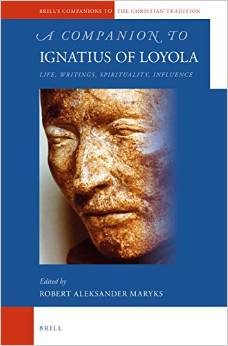
 Robert Aleksander Maryks, aThe Quest for the Historical Ignatius,” as well as the conclusion and a chapter titled “Ignatius of Loyola and the Converso Question.” Elizabeth Rhodes, a professor in BC’s Romance Languages Department, contributed a chapter titled “Ignatius, Women, and the Leyenda de los santos.” Maryks recently spoke to Jonas Barciauskas of BC Libraries about the book.
Book prize for alumnus
 Boston College alumnus Kyle G. Volk has been honored with the 2015 Merle Curti Prize in Intellectual History by the Organization of American Historians for his book, Moral Minorities and the Making of American Democracy (Oxford University Press, 2014). Volk’s book focuses on grassroot moral reforms in the early nineteenth century to show how immigrants, black northerners, abolitionists, liquor dealers, Catholics, Jews and Seventh-day Baptists –moral minorities–articulated a different vision of democracy requiring the protection of minority rights. According to Volk, the moral minorities of the mid-nineteenth century pioneered fundamental methods of political participation and legal advocacy that subsequent generations of civil rights and civil liberties activists would adopt and that are widely used today. Volk is an associate professor of American history at University of Montana.


 BC Bookmarks