
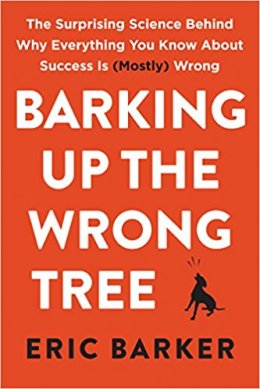
 Advice about achievement is often logical, earnest…and downright wrong. In Barking Up the Wrong Tree (HarperOne, 2017), Boston College alumnus Eric Barker reveals the science behind what actually determines success and how anyone can achieve it. Barking Up the Wrong Tree draws on statistics and anecdotes to identify what works and what doesn’t, so readers can stop guessing and start leading a successful life. Barker earned an MBA at BC and is a former screenwriter who worked on projects for Walt Disney Pictures, Twentieth Century Fox, and Revolution Studios.
Barking up the Wrong Tree
Pomp and Circumstance
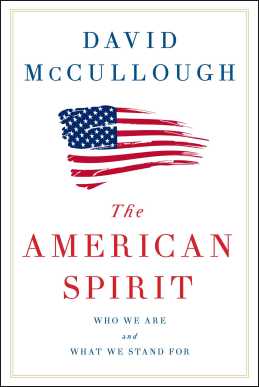 A newly published book of speeches by David McCullough, one of America’s most distinguished historians, includes his Commencement address to Boston College’s Class of 2008. The American Spirit: Who We Are and What We Stand For (Simon & Schuster, 2017) is a collection of talks given during the past 25 years by the two-time Pulitzer Prize winner and Presidential Medal of Honor recipient, author of books such as Truman, 1776, John Adams, and The Wright Brothers. According to the publisher, The American Spirit “reminds us of core American values to which we all subscribe.” McCullough’s speech at BC, titled “The Love of Learning,” included his memorable line “Read, read, read! Read the classics of American literature that you’ve never opened. Read your country’s history. How can we profess to love our country and take no interest in its history?” More from BC News.
A monster at bedtime
 Michelle Williams-King, a member of the Woods College of Advancing Studies’ Class of 2017, has published a children’s book inspired by her son who had trouble sleeping when he was younger. There’s No Such Thing as People, aimed at children ages 4-8, is about a little monster who has trouble going to sleep because he’s afraid there is a person in his closet.
Book award for alumnus
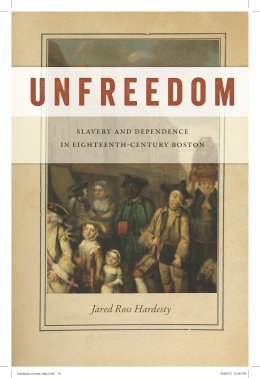 Unfreedom: Slavery and Dependence in Eighteenth-Century Boston (New York University Press, 2016) by BC alumnus Jared Ross Hardesty has been named an Outstanding Academic Title by Choice, the premier review journal of new academic titles. Hardesty, a faculty member at Western Washington University, also has been featured on Ben Franklin’s World, a podcast about early American history.
The Universe Untangled
 People are fascinated by the laws of the physical world, but many find the scientific concepts dense and complicated. To solve that dilemma, BC alumna Abigail Pillitteri has published The Universe Untangled – Modern Physics for Everyone (Morgan & Claypool Publishers, 2017), a book about physics for the general reader. She uses images, analogies, and comprehensible language to cover topics such as the evolution of the universe, fundamental forces, the nature of space and time, and the quest for knowing the unknown. Pillitteri is a science writer, poet, and visual artist.
Cognitive Neuroscience of Memory
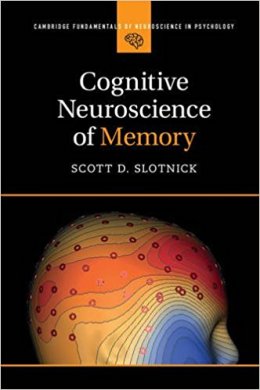 The field of cognitive neuroscience has grown as technological advances make non-invasive measurement of human brain activity more accessible. In the new textbook, Cognitive Neuroscience of Memory (Cambridge University Press, 2017), Associate Professor of Psychology Scott D. Slotnick provides the first comprehensive and up-to-date treatment on the cognitive neuroscience of memory. Topics include cognitive neuroscience techniques and human brain mechanisms underlying long-term memory success, long-term memory failure, working memory, implicit memory, and memory and disease. In his analysis, Slotnick questions popular views, rather than simply assuming they are correct. Slotnick is also editor-in-chief of the journal Cognitive Neuroscience.
Welcome to Helltown
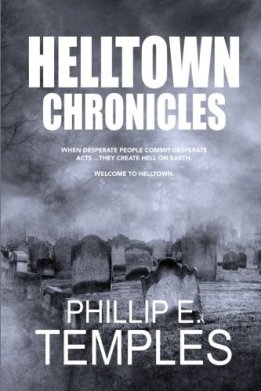 In 1974, the town of Boston Mills, Ohio was turned into a ghost town when the U.S. Department of Interior seized land and condemned homes and properties in order to expand the Cuyahoga Valley National Park. In the years since, mysterious tales and ghost stories have emerged from the area known as “Helltown.” In his novel Helltown Chronicles (Big Table Publishing, 2017), Phil Temples tells the story of newspaper reporters Jerry Wolanski and Susan Wong, who are dispatched to Ohio to write ‘fluff’ Halloween pieces about Helltown. Soon enough, Wolanski and Wong find themselves experiencing first-hand Helltown’s reputation for horror, intrigue, and the supernatural. Temples is a Systems Administrator in the Computer Science Department. He is also the author of The Winship Affair and Machine Feelings.
Posted in Boston College Authors
Tagged Computer Science Department, horror, novel, supernatural
1 Comment
Rebel Power
 Why do some national movements succeed while others do not? That question is at the heart of a new book by Assistant Professor of Political Science Peter Krause. In Rebel Power: Why National Movements Compete, Fight, and Win (Cornell University Press, 2017), Krause theorizes that the most powerful groups push to achieve states while they are in position to rule them, whereas weaker groups unlikely to gain the spoils of office are likely to become spoilers, employing risky, escalating violence to forestall victory while they improve their position in the movement hierarchy. Krause’s book is based on years of fieldwork as well as more than 150 interviews with participants in the Palestinian, Zionist, Algerian, and Irish national movements. Krause identifies new turning points in the history of these movements and provides fresh explanations for their use of violent and nonviolent strategies, as well as their numerous successes and failures. Krause was interviewed about his book on NECN’s “The Take.”
Advice and questions

 Retired faculty member Peter Olivieri, who taught at Boston College for more than 40 years, has published two books. Good Advice is a collection of wisdom worth remembering and passing along to the next generation. It is categorized in the form of some three dozen easy-to-remember principles. Questions You Should Ask features more than 1,000 questions in 50 categories. Olivieri suggests that by asking the right questions up front, one can save time, effort, money, or aggravation.
Captain Smith
 The tale of William Smith, the brother of Abigail Adams, who led the town of Lincoln’s minutemen at the Battle of Lexington and Concord and then died in disgrace 12 years later, is told in a new book by retired Boston College faculty member Donald Hafner. In William Smith, Captain: Life and Death of a Soldier of the American Revolution, Hafner writes of Captain Smith’s role in battle at the North Bridge in Concord as well as at the Siege of Boston. Within 30 months, he would be a British prisoner of war, having been captured during an ill-fated venture as a privateer. He died in poverty, disgrace, and estrangement from his wife and family at the age of 40. Hafner, who taught at Boston College for more than four decades and served as vice provost for undergraduate academic affairs, is a Colonial reenactor and gives tours at the Captain William Smith House in Lincoln. More from the Boston Globe.
 BC Bookmarks