
 Bestselling author Juliette Fay, a graduate of Boston College, has written a new novel about settling the past, rekindling lost friendships, and discovering love when it’s least expected. The Half of It (William Morrow Paperbacks, 2023) tells the story of 58-year-old Helen Spencer who has a chance to reconnect with Cal Crosby 40 years, one marriage, three children, and one grandchild after their romantic night together her senior year of high school. The Half of It is a novel filled with humor, heart, and grace. Fay is the author of several books, including Shelter Me, City of Flickering Light, and Catch Us When We Fall. In an essay for Lit Hub, she writes about focusing her novel on a protagonist who is not young, but not old.
The Half of It
BC grad named a local poet laureate
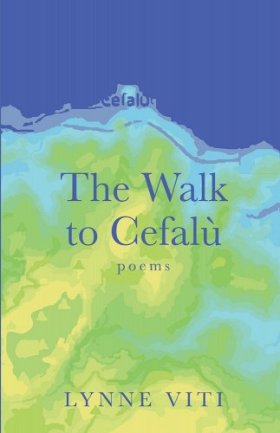 Boston College graduate Lynne Viti has been named poet laureate for Westwood, Massachusetts. In her role as the town’s poet laureate, Viti will encourage the reading and writing of poetry, mentor a teen poet, and write several poems for local events and holidays. She currently facilitates a poets-in-the-schools program and a poetry workshop at the Westwood Public Library, but hopes to expand those offerings. She also plans to hold community poetry slams and a poetry contest. Viti’s most recent collection of poetry, published in 2022, is titled The Walk to Cefalù. Her other poetry titles include Dancing at Lake Montebello and Baltimore Girls. Her short fiction collection is Going Too Fast. Read more here and in the Boston Globe.
Shrayer’s Immigrant Baggage
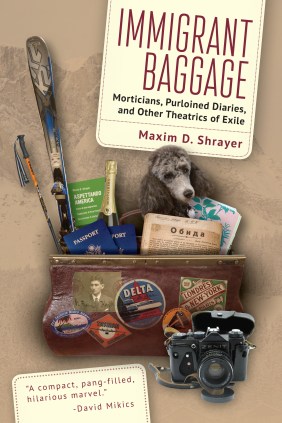 Boston College Professor Maxim D. Shrayer will read from and discuss his new literary memoir Immigrant Baggage: Morticians, Purloined Diaries, and Other Theatrics of Exile (Cherry Orchard Books, 2023) at a Boston College event on April 24. Through a combination of dispassionate reportage, gentle irony, and confessional remembrance, Shrayer writes about traversing the borders and boundaries of the three cultures that have nourished him—Russian, Jewish, and American, according to the book’s publisher. Shrayer parses a translingual literary life filled with travel, politics, and discovery—and sustained by family love and faith in art’s transcendence. Each chapter recaptures a moment of displacement and an item of the author’s immigrant baggage—material and immaterial. “Composed in the time of the pandemic, this book is a partial record of my immigrant discoveries, transgressions, and valedictions,” Shrayer said. The BC event will take place at 4 p.m. in Gasson Commons, room 112. Read more in BC News.
Jesuit Saints and Blesseds
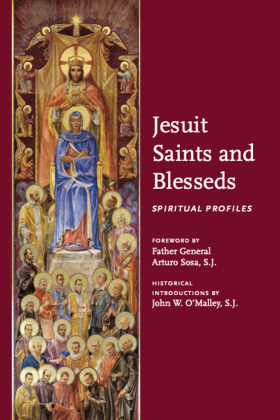 During his recuperation from a battlefield injury, Ignatius of Loyola experienced a conversion and received inspiration from reading about Jesus Christ and the lives of saints. A new book from Jesuit Sources, Jesuit Saints and Blessed: Spiritual Profiles, may offer readers a similar sense of inspiration. Edited by Jacques Fédry, S.J., and Marc Lindeijer, S.J., with a foreword by Jesuit Superior General Arturo Sosa, S.J., and historical introductions from the late Catholic historian John W. O’Malley, S.J., the book features 70 biographies, both devotional and informational, compiled by Jesuits from around the world. Jesuit Saints and Blesseds aims to introduce this community of holy men to contemporary readers and to inspire them to be selfless in their own pursuit of a greater good. Jesuit Sources, housed in Boston College’s Institute for Advanced Jesuit Studies, publishes Jesuit primary sources, monographs on the Jesuits, and auxiliary literature in Jesuit Studies.
From nothing
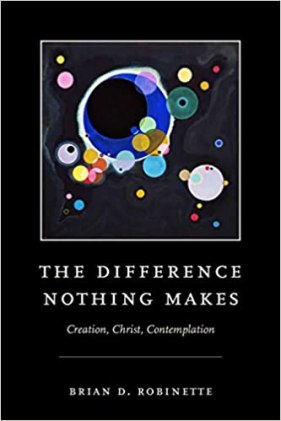 A new book by Boston College Associate Professor of Theology Brian D. Robinette explores the doctrinal, social, and spiritual significance of a central yet insufficiently understood tenet in Christian theology: creation “from nothing.” In The Difference Nothing Makes: Creation, Christ, Contemplation (University of Notre Dame Press, 2023), Robinette “offers an extended meditation on the idea of creation out of nothing as it applies not only to the problem of God but also to questions of Christology, soteriology, and ecology. His basic argument is that creatio ex nihilo is not a speculative doctrine referring to cosmic origins but rather a foundational insight into the very nature of the God-world relation, one whose implications extend throughout the full spectrum of Christian imagination and practice. In this sense it serves a grammatical role: it gives orientation and scope to all Christian speech about the God-world relation.”
The planetary turn in human history
 Historian Dipesh Chakrabarty, author of the forthcoming book One Planet, Many Worlds (Brandeis University Press, 2023), will lecture on “The Planetary Turn in Human History” on April 13 at 7 p.m. in Gasson Hall, room 100. Chakrabarty is the Lawrence A. Kimpton Distinguished Service Professor in History, South Asian Languages and Civilizations, and the College at the University of Chicago. He is the Faculty Director of the University of Chicago Center in Delhi, a Faculty Fellow of the Chicago Center for Contemporary Theory, an associate of the Department of English, and by courtesy, a faculty member in the Law School. His scholarly areas of expertise are modern South Asian history and historiography; postcolonial studies; theory and history; globalization; climate change and human history. His publications include Provincializing Europe: Postcolonial Thought and Historical Difference and The Climate of History in a Planetary Age. Chakrabarty is a recipient of the Toynbee Foundation Prize for his contributions to global history and of the 2019 Tagore Memorial Prize awarded by the Government of West Bengal for his book The Crises of Civilization: Exploring Global and Planetary Histories. His lecture is presented by the Lowell Humanities Series and co-sponsored by the Park Street Corporation Speaker Series.
Posted in Guest Authors, Lowell Humanities Series
Leave a comment
What happened to Jane Larkin?
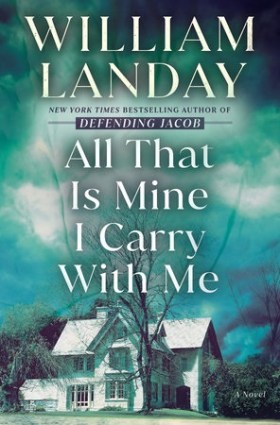 Boston College Law School graduate William Landay, author of the bestselling novel Defending Jacob, has published a new novel about family secrets, vengeance, and love—All That Is Mine I Carry With Me (Bantam, 2023). In 1975, Jane Larkin goes missing. Investigators suspect her husband, criminal defense attorney Dan Larkin. But with no evidence linking him to a crime, the case fades from the public’s memory and Dan goes on to raise the couple’s three children. Two decades later, the remains of Jane Larkin are found. The investigation is awakened. The children, now grown, are forced to choose sides. With their father or against him? Guilty or innocent? And what happens if they are wrong? Read a starred review from Library Journal. Landay has done a series of interviews about his new book: WBUR’s “Radio Boston” | The Boston Globe | The Bookreporter.
The science behind memory
 Explaining the science behind memory and memory loss—including why forgetting is a crucial property of memory, as well as strategies that help people remember better—is the subject of a new book co-authored by neuroscientist Elizabeth A. Kensinger, a professor in the Boston College Psychology and Neuroscience Department. In Why We Forget and How to Remember Better: The Science Behind Memory (Oxford University Press, 2023), Kensinger and Boston University Professor of Neurology Andrew E. Budson, M.D., explain how memory influences our behavior without our awareness, underscoring the fact that what and how we remember influences everything from our social relationships to the decisions we make on a daily basis. As they incorporated their own findings, as well as the body of research on the subject, the co-authors were surprised to discover that memory is not really about the past. Read more from BC News.
Posted in Boston College Authors
Tagged brain, memory, Psychology and Neuroscience Department, science
Leave a comment
Shakespeare and the Elizabethan Reformation
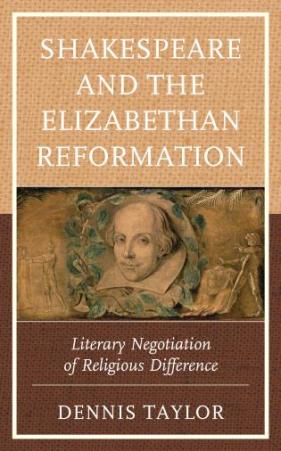 Shakespeare and the Elizabethan Reformation: Literary Negotiation of Religious Difference (Lexington Books, 2022), a major new work of literary criticism from Professor Emeritus of English Dennis Taylor, examines Shakespeare’s dramatization of key issues of the Elizabethan Reformation, including the conflict between the sacred, the critical, and the disenchanted, as well as the Catholic, the Protestant, and the secular. This detailed work of scholarship shows how Shakespeare was negotiating the key religious differences of his time, according to Taylor. Born and raised a Catholic, as most scholars now agree, Shakespeare coped with what he and others experienced as the trauma of the Protestant Reformation. According to Taylor, Shakespeare provides an important model for modern dialogue which negotiates religious differences without denying them. Taylor joined the English Department faculty in 1971, served as chair from 1982-1987, and retired in 2008. Read more on BC News.
Posted in Boston College Authors
Tagged English Department, literary criticism, religion, Shakespeare
Leave a comment
The future according to Kim Stanley Robinson
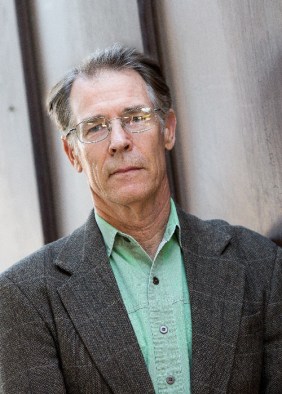 Award-winning science fiction writer Kim Stanley Robinson, author of more than 20 books, will present “The Future of Climate, Technology, and Society” on March 29 at 7 p.m. in Gasson Hall, room 100. Robinson is best known for his Mars trilogy and Shaman, 2312, New York 2140, and the highly acclaimed The Ministry for the Future. He received the Hugo Award for Best Novel twice and is a two-time winner of Nebula Award for Best Novel. He has won the Locus Award for Best Science Fiction Novel three times. His work, which has been translated into 25 languages, centers on themes such as nature and culture, ecological sustainability, social justice, and climate change. In 2008, he was named a “Hero of the Environment” by Time magazine. He has traveled to Antarctica, courtesy of the US National Science Foundation, and he works with the Sierra Nevada Research Institute. He received the Heinlein Award for lifetime achievement in science fiction in 2016 and the Arthur C. Clarke Award for Imagination in Service to Society in 2017. A prolific writer and speaker, his work has appeared in The New York Times, The Washington Post, Newsweek, Nature, and Wired, and he has lectured at more than 100 institutions. His most recent book, The High Sierra: A Love Story, is a non-fiction exploration of Robinson’s years spent hiking and camping in the Sierra Nevada mountains. Robinson’s lecture is presented by the Lowell Humanities Series and is co-sponsored by the Schiller Institute for Integrated Science and Society, Earth and Environmental Sciences Department, Environmental Studies Program, the Lynch School’s Center for Psychological Humanities and Ethics, and English Department.

