Muslims in Europe
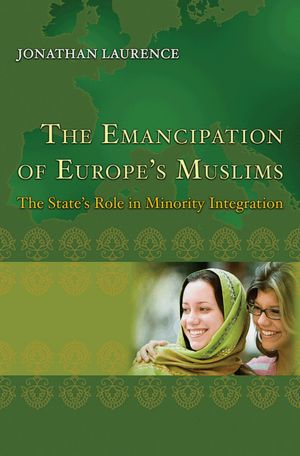
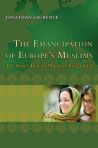 The Emancipation of Europe’s Muslims: The State’s Role in Minority Integration, a new book by Boston College Associate Professor of Political Science Jonathan Laurence, traces how governments across Western Europe have responded to the growing presence of Muslim immigrants in their countries over the past 50 years, and sheds light on the geopolitical implications of a religious minority’s transition from outsiders to citizens. Laurence draws on hundreds of interviews with government officials and religious leaders, challenges the widespread notion that Europe’s Muslim minorities represent a threat to liberal democracy, and documents how European governments in the 1970s and 1980s excluded Islam from domestic institutions–and instead invited foreign powers to oversee the practice of Islam among immigrants in European host societies. But since the 1990s, amid rising integration problems and fears about terrorism, governments have stepped up efforts to reach out to their Muslim communities and incorporate them into the institutional, political and cultural fabrics of European democracy. His book offers a reassessment that foresees the continuing integration of Muslims into European civil society and politics in the coming decades. Read a recent review in The Economist, which says, “Laurence has written an original and thought-provoking study.” | Boston College Chronicle story
Strike up the band
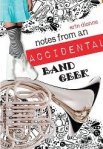 The Boston Globe recently featured author Erin Dionne, BC Class of 1997. Dionne is the author of several books, including the recent Notes from an Accidental Band Geek, (cited by BC Bookmarks back in September). The book, geared for middle school readers, is about thirteen-year-old Elsie Wyatt, a French horn player who must lower her orchestral standards by joining a marching band in order to qualify for the prestigious summer music camp of her dreams. Dionne was a member of the BC Screaming Eagles Marching Band and performed in the Macy’s Thanksgiving Day Parade.

Why Europe and not Asia?
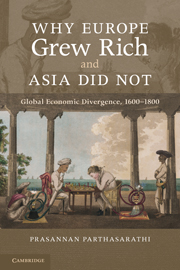
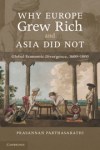 Why Europe Grew Rich and Asia Did Not: Global Economic Divergence, 1600–1850, by Boston College Associate Professor of History Prasannan Parthasarathi, offers a new answer to the question of why Europe industrialized from the late 18th century, but Asia did not. He shows that in the 17th and 18th centuries, the advanced regions of Europe and Asia were more alike than different, with sophisticated, growing economies; and that their divergence can be attributed to different competitive and ecological pressures that produced varied state policies and economic outcomes. His account breaks with the conventional view that divergence occurred because Europe possessed superior markets, rationality, science or institutions. His rereading of global economic development ranges from India, Japan and China to Britain, France, and the Ottoman Empire, and from the textile and coal industries to the roles of science, technology and the state.
Move!
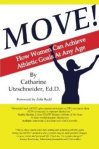 Catharine Utzschneider, who teaches in the Woods College of Advancing Studies, has published MOVE! How Women Can Achieve Athletic Goals At Any Age. According to the publisher: “Designed for women from non-exercisers to elite athletes…MOVE!’s unique process of goal setting and assessment…will help you overcome your doubts, balance your hectic schedule and life commitments and gain more control and freedom in your life.” A number of athletes and coaches from BC are featured in the book.

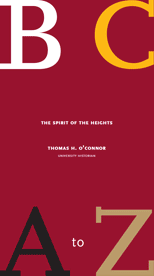
BC: A to Z
 In his latest work, Boston College A to Z: The Spirit of the Heights (Linden Lane Press), University Historian and prolific author Thomas H. O’Connor shares a treasure trove of stories, legends and memories. He invites readers to look anew at BC, “an exceptional place where amusing things happen, where important events are taken seriously, where the best of the future has been combined with the best of the past, and where memories of Linden Lane, Gasson Tower, the Golden Eagle, and the sound of the bells chiming the hours of the day are among recollections, large and small, that give this University a very special place in our hearts.”
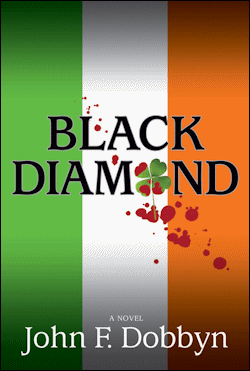
Legal thriller Black Diamond
 Black Diamond, a legal thriller set in Boston against the backdrop of the high-stakes horse racing world, is the third novel by Boston College Law School alumnus John F. Dobbyn ’65. It centers on two lawyers who agree to defend a jockey accused of murdering a fellow jockey during a race at Suffolk Downs, but find themselves in the middle of a violent conflict between Boston’s Irish mafia and remnants of the terrorist branch of the Irish Republican Army. New York Times best-selling author Lisa Scottoline lauds the thriller: “…Black Diamond takes you on a non-stop ride that keeps you gripping the wheel.” For more information on Dobbyn, a Boston native, and his books, visit www.johndobbyn.com
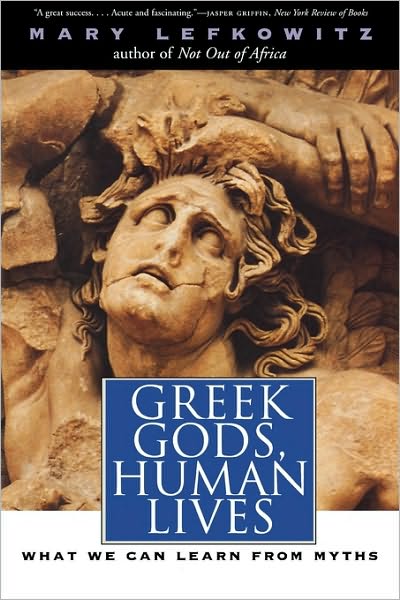
Greek gods
 Renowned classics scholar Mary Lefkowitz will present “Why We Can’t Understand Greek Drama: Some Theological and Practical Considerations” on Dec. 7 at 7 p.m. in Devlin Hall, room 101. Lefkowitz is the author of Greek Gods, Human Lives. Sponsor: Lowell Humanities Lecture Series
Thinkers on language
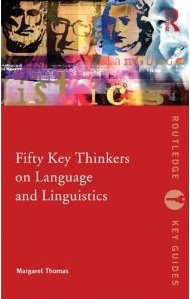
 Fifty Key Thinkers on Language and Linguistics, by BC Professor of Linguistics Margaret Thomas, explores how 50 of the most influential figures in the field have asked and responded to classic questions about the language. What was the first language, and where did it come from? Do all languages have properties in common? What is the relationship of language to thought? The book offers an introduction to thinkers—including include Aristotle, Samuel Johnson, Friedrich Max Müller, Ferdinand de Saussure, Joseph H. Greenberg and Noam Chomsky—who have had a significant impact on the subject of language. To see an interview with Thomas, visit the BC Libraries’ website.
Posted in Boston College Authors
Tagged linguistics, Slavic and Eastern Languages Dept
Leave a comment