
A story of three American cardinals
Posted in Guest Authors
Tagged Catholic, Christian-Jewish Learning, interfaith, Jewish
Leave a comment
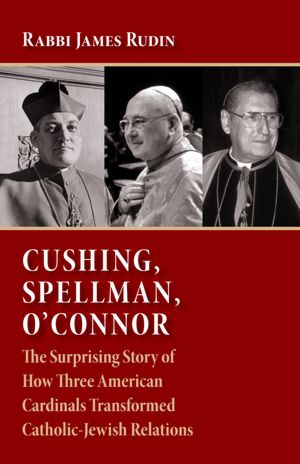 Rabbi James Rudin, one of the world’s leading authorities on interfaith relations, will discuss his new book Cushing, Spellman, O’Connor: The Surprising Story of How Three American Cardinals Transformed Catholic-Jewish Relations, on Feb. 7 at 5:30 p.m. in the Yawkey Center’s Murray Function Room. In his book, Rabbi Rudin demonstrates how Cardinals Richard Cushing and Francis Spellman influenced the Second Vatican Council to adopt Nostra Aetate—a statement against anti-Semitism—and how Cardinal John O’Connor transformed that document’s sentiments into practical results a generation later. Rabbi Rudin is a distinguished visiting professor of religion and Judaica at Saint Leo University, where he founded the Center for Catholic-Jewish Studies. He serves as senior interreligious advisor for the American Jewish Committee and is a recipient of the Eternal Light Award, presented to individuals who make outstanding contributions to interfaith relations and human rights. RSVPs are requested at cjlearning@bc.edu. Sponsors: The Boston College Center for Christian-Jewish Learning and School of Theology and Ministry Continuing Education
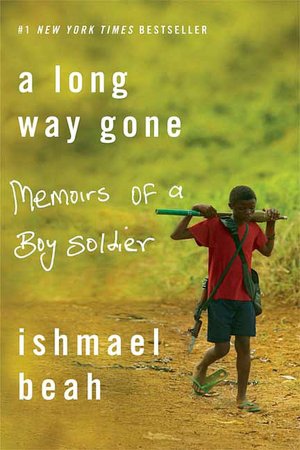 Ishmael Beah, whose memoir A Long Way Gone: Memoirs of a Boy Soldier tells his story of being forced to be a child soldier during Sierra Leone’s civil war in the mid-1990s, will speak on Feb. 6 at 7 p.m. in Gasson 100. Beah was drafted at the age of 13, and like other child soldiers, was brainwashed, given guns and drugs and instructed to kill as many people as possible. In 1996 Beah was rescued by a coalition of UNICEF and NGOs, but his transition back into society proved to be another formidable challenge. A Long Way Gone, a New York Times best-seller, is “at once crucial testimony for understanding the tragedy of contemporary war zones, and a testament to the power of peacemakers,” according to the publisher. His appearance is co-sponsored by the Center for Human Rights and International Justice and the Arts and Social Responsibility Project.
 Connell School of Nursing Associate Professor Rosanna DeMarco and co-editor/contributor Gail Harkness were honored by the American Journal of Nursing with a 2011 “Book of the Year” Award for their textbook Community and Public Health Nursing: Evidence for Practice.The textbook is geared for undergraduate and master’s entry students who are interested in learning about the principles of community and public health nursing using integrated cases, evidence-based research and community-based practice innovations. It was recognized in the category of Community and Public Health. A number of Connell School alumni and faculty contributed to the textbook: Susan Chase, Annie Lewis O’Connor, Joyce Pulcini, Teresa Eliot Roberts, Mary Margaret Segraves, Judith Shindul-Rothschild, Patricia Tabloski, and Linda Tyer Viola.
 Boston College alumnus Tom MacDonald has published The Charlestown Connection, which tells the story of Dermot Sparhawk, a former all-American football star at Boston College, who takes to the streets of Boston to solve his godfather’s murder. MacDonald says he was encouraged to pursue writing by his professor while attending BC. Read an interview with MacDonald at Boston.com.
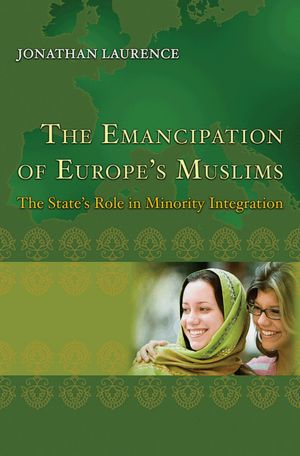 The Emancipation of Europe’s Muslims: The State’s Role in Minority Integration, a new book by Boston College Associate Professor of Political Science Jonathan Laurence, traces how governments across Western Europe have responded to the growing presence of Muslim immigrants in their countries over the past 50 years, and sheds light on the geopolitical implications of a religious minority’s transition from outsiders to citizens. Laurence draws on hundreds of interviews with government officials and religious leaders, challenges the widespread notion that Europe’s Muslim minorities represent a threat to liberal democracy, and documents how European governments in the 1970s and 1980s excluded Islam from domestic institutions–and instead invited foreign powers to oversee the practice of Islam among immigrants in European host societies. But since the 1990s, amid rising integration problems and fears about terrorism, governments have stepped up efforts to reach out to their Muslim communities and incorporate them into the institutional, political and cultural fabrics of European democracy. His book offers a reassessment that foresees the continuing integration of Muslims into European civil society and politics in the coming decades. Read a recent review in The Economist, which says, “Laurence has written an original and thought-provoking study.” | Boston College Chronicle story
 The Boston Globe recently featured author Erin Dionne, BC Class of 1997. Dionne is the author of several books, including the recent Notes from an Accidental Band Geek, (cited by BC Bookmarks back in September). The book, geared for middle school readers, is about thirteen-year-old Elsie Wyatt, a French horn player who must lower her orchestral standards by joining a marching band in order to qualify for the prestigious summer music camp of her dreams. Dionne was a member of the BC Screaming Eagles Marching Band and performed in the Macy’s Thanksgiving Day Parade.
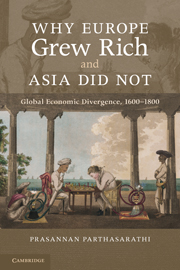 Why Europe Grew Rich and Asia Did Not: Global Economic Divergence, 1600–1850, by Boston College Associate Professor of History Prasannan Parthasarathi, offers a new answer to the question of why Europe industrialized from the late 18th century, but Asia did not. He shows that in the 17th and 18th centuries, the advanced regions of Europe and Asia were more alike than different, with sophisticated, growing economies; and that their divergence can be attributed to different competitive and ecological pressures that produced varied state policies and economic outcomes. His account breaks with the conventional view that divergence occurred because Europe possessed superior markets, rationality, science or institutions. His rereading of global economic development ranges from India, Japan and China to Britain, France, and the Ottoman Empire, and from the textile and coal industries to the roles of science, technology and the state.
 Catharine Utzschneider, who teaches in the Woods College of Advancing Studies, has published MOVE! How Women Can Achieve Athletic Goals At Any Age. According to the publisher: “Designed for women from non-exercisers to elite athletes…MOVE!’s unique process of goal setting and assessment…will help you overcome your doubts, balance your hectic schedule and life commitments and gain more control and freedom in your life.” A number of athletes and coaches from BC are featured in the book.
 In his latest work, Boston College A to Z: The Spirit of the Heights (Linden Lane Press), University Historian and prolific author Thomas H. O’Connor shares a treasure trove of stories, legends and memories. He invites readers to look anew at BC, “an exceptional place where amusing things happen, where important events are taken seriously, where the best of the future has been combined with the best of the past, and where memories of Linden Lane, Gasson Tower, the Golden Eagle, and the sound of the bells chiming the hours of the day are among recollections, large and small, that give this University a very special place in our hearts.”
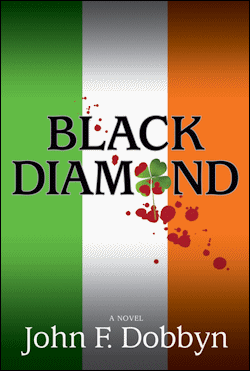 Black Diamond, a legal thriller set in Boston against the backdrop of the high-stakes horse racing world, is the third novel by Boston College Law School alumnus John F. Dobbyn ’65. It centers on two lawyers who agree to defend a jockey accused of murdering a fellow jockey during a race at Suffolk Downs, but find themselves in the middle of a violent conflict between Boston’s Irish mafia and remnants of the terrorist branch of the Irish Republican Army. New York Times best-selling author Lisa Scottoline lauds the thriller: “…Black Diamond takes you on a non-stop ride that keeps you gripping the wheel.” For more information on Dobbyn, a Boston native, and his books, visit www.johndobbyn.com
 BC Bookmarks