

Russian revolutionary
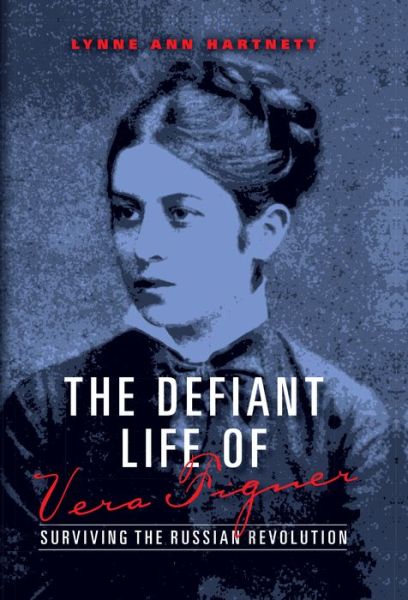
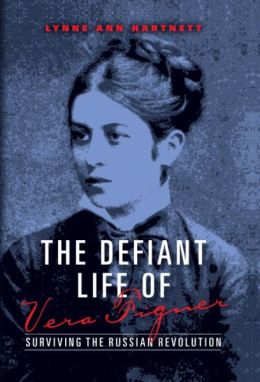 Vera Figner, a Russian noblewoman turned revolutionary terrorist, is the subject of a new biography by Boston College alumna Lynne Ann Hartnett. In The Defiant Life of Vera Figner: Surviving the Russian Revolution (Indiana University Press, 2014), Harnett reveals how Figner survived the Bolshevik revolution and Stalin’s Great Purges and died a lionized revolutionary legend. At first a champion of populist causes and women’s higher education, Figner later became an accomplice in the assassination of Tsar Alexander II. Hartnett is on the faculty of Villanova University.
Her name is Moxie
 Boston College alumna Erin Dionne’s Boston-based book for middle schoolers, Moxie and the Art of Rule Breaking (Puffin, 2014), is a finalist for a Silver Falchion Award from Killer Nashville, an annual conference for mystery, thriller and suspense writers. The award honors the best books of the year in a variety of categories. Moxie is nominated in the Middle Grade category. Dionne’s book tells the story of Moxie Fleece and her attempt, along with best friend Ollie, to find art stolen from the Isabella Stewart Gardner Museum. Moxie was also a nominee for a 2014 Edgar Award for Best Juvenile book by the Mystery Writers of America. Dionne’s latest book, Ollie and the Science of Treasure Hunting, continues Ollie’s story.

Tennis, anyone?
 A book co-authored by retired Boston College faculty member Alan Lawson was honored by the Bookbuilders of Boston at their annual New England Book Show. Longwood Covered Courts and the Rise of American Tennis, co-written by Lawson and Mark Williams of Boston University, was named best book in the category of reference books. Their book describes how the modern game of tennis was developed in the Boston area and inspired the building of the Longwood Covered Courts in 1913, the first indoor tennis club in America.

Minority rights
 In his new book Moral Minorities and the Making of American Democracy (Oxford University Press, 2014), historian and Boston College alumnus Kyle G. Volk focuses on grassroot moral reforms in the early nineteenth century to show how immigrants, black northerners, abolitionists, liquor dealers, Catholics, Jews and Seventh-day Baptists –moral minorities–articulated a different vision of democracy requiring the protection of minority rights. According to Volk, the moral minorities of the mid-nineteenth century pioneered fundamental methods of political participation and legal advocacy that subsequent generations of civil-rights and civil-liberties activists would adopt and that are widely used today. Volk is an associate professor of history at the University of Montana. Read an excerpt.

Boston reads
 Boston.com has published a list of Boston-related recommended reading. Among the listed books are a couple by Boston College grads, The Friends of Eddie Coyle by the late George V. Higgins and Defending Jacob by William Landay.

Scary good
 Boston College alumnus Chuck Hogan is co-creator of FX’s big summer hit “The Strain.” Based on the best-selling thriller The Strain, co-written by Hogan and Guillermo Del Toro, the show is about an epic battle for survival between man and vampire. Hogan also serves as one of the show’s executive producers and writers. According to FX, “The Strain”–which airs Sunday nights–has become the top cable show of the summer and FX’s all-time most popular launch. Watch a trailer. Read what Entertainment Weekly has to say about the show.

The movement of paper in colonial Latin America
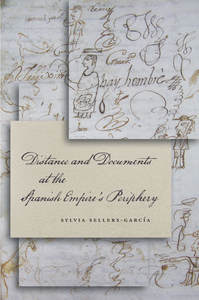 The creation, movement and storage of paperwork in colonial Latin America, part of the expansive Spanish Empire, is the focus of Distance and Documents at the Spanish Empire’s Periphery (Stanford University Press, 2013) by Assistant Professor of History Sylvia Sellers-García. She was recently interviewed by Senior Reference Librarian Elliot Brandow about the case that served as the genesis of her study– a witchcraft trial in early 18th century Guatemala– and why the study of a place beyond the center of the Spanish Empire matters.

Posted in Boston College Authors
Tagged Guatemala, History Department, Latin America
Leave a comment

 BC Bookmarks