
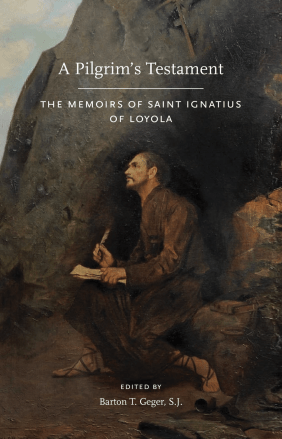
 At the urging of the early Jesuits, Saint Ignatius of Loyola recounted the story of his spiritual conversion while recuperating from a battle wound to the founding of the religious order, the Society of Jesus. It’s an autobiography that would go to inspire and guide Jesuits and other readers for years to come. School of Theology and Ministry Assistant Professor of the Practice Barton T. Geger, S.J., who also is a research scholar at BC’s Institute for Advanced Jesuit Studies, has edited a new edition of Saint Ignatius’s memoirs. In A Pilgrim’s Testament: The Memoirs of Saint Ignatius of Loyola, Fr. Geger provides a new introduction and original annotations, making the autobiography of Ignatius of Loyola more accessible to all. This new edition has been published by Jesuit Sources, which is housed at the IAJS.
New edition of Saint Ignatius’s memoirs
Guide to Vatican II
 Edited by Boston College Joseph Professor of Catholic Systematic Theology Richard R. Gaillardetz, The Cambridge Companion to Vatican II (Cambridge University Press, 2020) offers a thorough overview of the Second Vatican Council. The first part examines the historical, theological, and ecclesial contexts for comprehending the significance of the council. It also presents the key processes, as well as the participants who were central to the actual conduct of the council. The second part identifies and explores the central themes embedded in the council documents. Gaillardetz contributed to the volume as did Vice Provost and Canisius Professor of Theology James Keenan, S.J., School of Theology and Ministry Professor of Systematic Theology and Professor Ordinarius Richard Lennan, and BC alumni Brian Flanagan, Amanda Osheim, and David Farina Turnbloom.
Selvinsky’s “The Trial in Krasnodar”
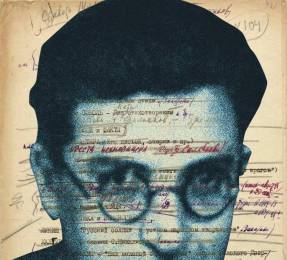 Seventy-seven years ago this month, a landmark court case on Nazi war crimes began in the Russian city of Krasnodar. Author and Boston College Professor of Russian, English, and Jewish Studies Maxim Shrayer digs into the story of Ilya Selvinsky—a poet, military journalist, and Soviet Jew—who struggled to paint a full picture of the Krasnodar Trail against the challenge of the Stalinist doctrine of universalizing the Soviet dead and obfuscating Jewish victimhood. Read Shrayer’s essay in Tablet Magazine.
Translating Joseph de Jouvancy, S.J.
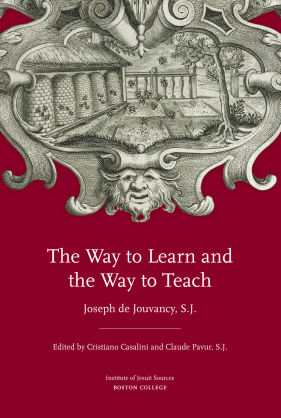 Joseph de Jouvancy, S.J., (1643–1719) is known for his plays, biographies, histories, orations, and, perhaps most notably, for his influential work De discendi et docendi ratione (The Way to Learn and the Way to Teach, 1703). In this work, Jouvancy describes how young instructors might effectively pursue their own studies during their years of teaching, and he details the essentials of good teaching. The Jesuit order found his work so important that it was made a companion piece to the great charter of Jesuit education known as the Ratio studiorum. Cristiano Casalini and Claude Pavur, S.J, of Boston College have put together an edited translation of this book titled, Joseph de Jouvancy’s The Way to Learn and the Way to Teach. Casalini is an associate professor and endowed chair in Jesuit pedagogy and educational history at the Lynch School of Education and Human Development and a research scholar with the Institute for Advanced Jesuit Studies at Boston College. Fr. Pavur is an associate editor at IAJS. Their volume has been published by Jesuit Sources, which is housed at the IAJS.
Continental philosophy & Catholic higher ed
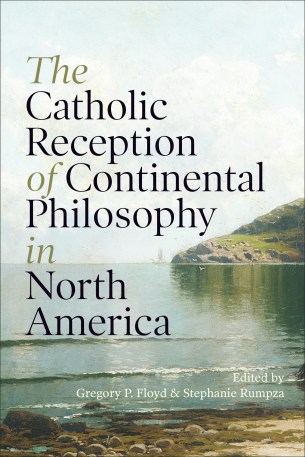 The Catholic Reception of Continental Philosophy in North America (University of Toronto Press, 2020) is a new volume of essays by leading philosophers and theologians exploring the reception of continental philosophy in North America and its ongoing relation to Catholic institutions. Edited by Boston College alumni Gregory P. Floyd and Stephanie Rumpza, The Catholic Reception of Continental Philosophy in North America provides a scholarly reflection on the historical, institutional, and intellectual effect of European philosophy on North American Catholic higher education, including their mutual interests and underlying tensions. Floyd is a teaching fellow at Seton Hall University and Rumpza is a visiting researcher at Sorbonne University. Both earned master’s degrees and doctorates in philosophy from BC.
Posted in Alumni Authors
Tagged Catholic higher education, philosophy, Philosophy Department
Leave a comment
Larceny and murder
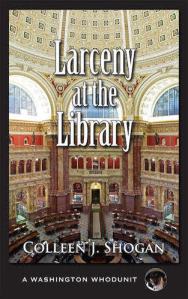 Kit Marshall, the protagonist in a series of books by Boston College alumna Colleen Shogan, is back with a new mystery to solve in Larceny at the Library. The day after the opening of an exhibition of the contents of Abraham Lincoln’s pockets the night he was assassinated, a person is found dead and several invaluable artifacts have gone missing. Marshall’s sleuthing takes to her to Washington, DC locales such the Library of Congress, National Portrait Gallery, and Ford’s Theatre. Shogan is a senior vice president and director of the David M. Rubenstein Center at the White House Historical Association. She previously worked at the Library of Congress. Shogan’s other books include K Street Killing, Homicide and the House, and Stabbing in the Senate.
A guide to conducting political science fieldwork abroad
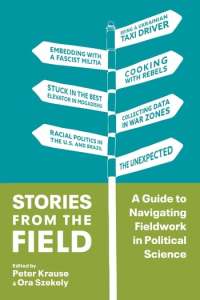 In a new volume, more than 40 political scientists provide personal accounts of conducting field research in locations, often dangerous, around the globe. Co-edited by Boston College Political Science Associate Professor Peter Krause and Ora Szekely of Clark University, Stories from the Field: A Guide to Navigating Fieldwork in Political Science (Columbia University Press), presents narratives from political scientists—from a diverse range of biographical and academic backgrounds—about work ranging from conducting archival research to interviewing combatants. Topics covered include conducting surveys and interviews, questions of health and safety, and the importance of flexibility, creativity, and interpersonal connections. Krause’s previous publications include Rebel Power: Why National Movements Compete, Fight, and Win.
Salameh book reviews
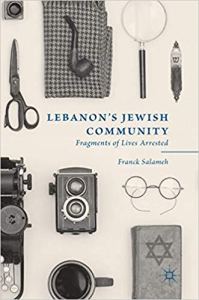 In Middle East Quarterly, Boston College Professor of Near Eastern Studies Franck Salameh reviews the book City of Beginnings: Poetic Modernism in Beirut by Robyn Creswell. According to Salameh, City of Beginnings is “a learned, nuanced, and deeply searching guide” for the student of the Middle East, Arabic literature, literary modernism, or Near Eastern intellectual history. Salameh’s own book, Lebanon’s Jewish Community, was recently reviewed by leading Lebanon historian Eyal Zisser in The Journal for Interdisciplinary Middle Eastern Studies and by Caroline Kahlenberg in Bustan: The Middle East Book Review. Salameh is the senior editor in chief of The Levantine Review. His other publications include Charles Corm and The Other Middle East.
Catholic Press Assoc. awards
 The Catholic Press Association of the U.S. and Canada bestowed honors on three Boston College faculty members at its 2020 Catholic Media Conference. The CPA awards recognize outstanding Catholic media, including books, newspapers, and magazines. Book Awards went to School of Theology and Ministry Professor of Theology and Religious Education Thomas Groome, who was awarded first place honors for his book, Faith for the Heart: A “Catholic” Spirituality (Paulist Press), and Vice Provost for Global Engagement and Canisius Professor of Theology James F. Keenan, S.J., who was recognized with second place honors for Street Homelessness and Catholic Theological Ethics (Orbis Books), which he co-edited with Mark McGreevy. The CPA also awarded STM Associate Professor of Hispanic Ministry and Religious Education Hosffman Ospino with second place honors for his Catholic News Service column, “Caminando Juntos.” More from BC News.
Aristotelian logic and China
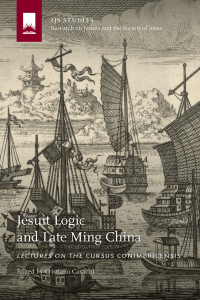 Jesuit missionaries and Chinese literati first introduced Aristotelian logic to China during the late Ming dynasty (in the first half of the 17th century). They collaborated to translate this specific part of the Cursus Conimbricensis, a set of commentaries on Aristotle’s philosophy developed by Jesuit philosophers in Coimbra, Portugal, which had become a popular manual of philosophy used throughout the world. In Jesuit Logic and Late Ming China, scholars examine the significant legacies of introducing Aristotle’s philosophy to Chinese culture. Their different perspectives shed new light on the challenges, successes, and failures of the dialogue on the art of reasoning between China and the West in the early modern period. Jesuit Logic and Late Ming China was edited by Cristiano Casalini, an associate professor and endowed chair in Jesuit pedagogy and educational history at the Lynch School of Education and Human Development and a research scholar with the Institute for Advanced Jesuit Studies at Boston College. Casalini also wrote the introduction and two chapters for the volume. Jesuit Logic and Late Ming China is a publication from the IJS Studies imprint of the Institute for Jesuit Sources, housed at the IAJS.
Posted in Boston College Authors
Tagged China, Institute for Advanced Jesuit Studies, Jesuit
Leave a comment
 BC Bookmarks