
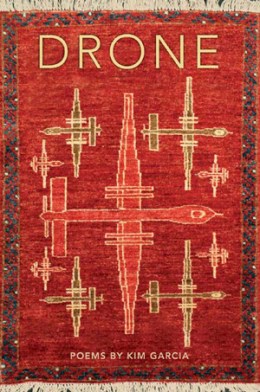
 Kim Garcia, who teaches in the English Department, has published a new book of poetry that is a meditation on modern warfare in a technological age. Drone (The Backwaters Press, 2016) explores the human, animal, personal, and domestic aspects of wars being fought by the US. Garcia is the author of The Brighter House, winner of the 2015 White Pine Press Poetry Prize, and Madonna Magdalene. Her chapbook Tales of the Sisters won the 2015 Sow’s Ear Poetry Review Chapbook Contest. Her poems have appeared in Crab Orchard Review, Crazyhorse, Mississippi Review, Nimrod and Subtropics.
Drone
Dissidence
 In her new book, Philosophy and Dissidence in Cold War Europe (Palgrave-Macmillan, 2016), Assistant Professor of Philosophy Aspen E. Brinton examines the ways Cold War dissidents in Central and Eastern Europe turned to the past for inspiration in order to change and transcend their present entrapment, contributing to a more general narrative about how to change one’s way of acting by altering one’s way of thinking. Brinton argues for a view of dissent as an existential search for mutual understanding and recognition, showing how dissidents’ ideas contribute to current conversations in political theory and philosophy about thinking and action. She was recently interviewed by Jonas Barciauskas of BC Libraries.
Posted in Boston College Authors
Tagged government, Philosophy Department, University Libraries
Leave a comment
Medea Benjamin
 Noted activist Medea Benjamin, co-founder of the women-led peace group Code Pink and the human rights advocacy group Global Exchange, will hold a discussion on her latest book, Kingdom of the Unjust: Behind the U.S.-Saudi Connection, on Oct. 20 at 7 p.m. in Gasson Hall, room 305. With extremism spreading across the globe, a reduced US need for Saudi oil, and a thawing of US relations with Iran, Benjamin contends the time is right for a re-evaluation of America’s close ties with Saudi Arabia. Named “one of the high profile leaders” of the peace movement by the Los Angeles Times, Benjamin has received the Martin Luther King, Jr. Peace Prize from the Fellowship of Reconciliation; the Marjorie Kellogg National Peacemaker Award; the Thomas Merton Center Peace Award, the Peace Foundation Memorial Award, and the Gandhi Peace Award from Promoting Enduring Peace. She is the author of several other books, including Drone Warfare: Killing by Remote Control. Sponsors: Center for Human Rights and International Justice, Students for Justice in Palestine, the Islamic Civilization & Societies program, History Department and the Sociology Department. RSVP Requested.
Posted in Uncategorized
Leave a comment
Poetry reading in honor of Burns Scholar
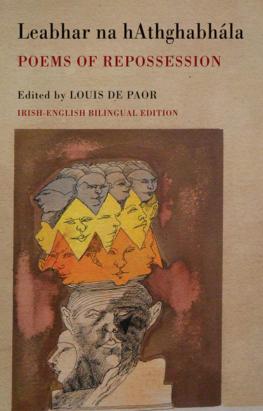 An event will be held Oct. 18 to celebrate the publication of Leabhar Na hAthghabbhála: Poems of Repossession (2016), an anthology of Gaelic poems and English translations from the past 50 years, edited by Burns Visiting Scholar in Irish Studies Louis de Paor. Poets Nuala Ní Dhomhnaill, Deirdre Brennan, and Liam Ó Muirthile will join de Paor in reading and discussing selections from the volume. The event will take place in Devlin Hall, Room 101, starting at 5 p.m. Sponsors: The Center for Irish Programs and Boston College Libraries with support from Culture Ireland and Poetry Ireland.
Ignatian-Based Ethical Leadership colloquium
 Chris Lowney, author of Heroic Leadership: Best Practices from a 450-Year-Old Company that Changed the World, will be the keynote speaker at an Ignatian-Based Ethical Leadership colloquium on Oct. 14 from 1 to 6 p.m in Fulton Hall 145. Other speakers include Joan Lee of Fairfield University and Sarah Cabral of the Carroll School of Management. The speakers will address the question of what the Ignatian tradition tells about the nature of ethical leadership, and the question of how educators can best instill Ignatian ethical principles in their students. Sponsor: Woods College of Advancing Studies
Islamic Exceptionalism
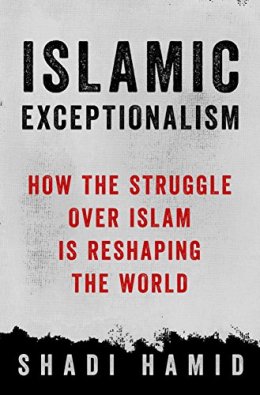 Shadi Hamid, a senior fellow in the Project on U.S. Relations with the Islamic World in the Center for Middle East Policy at the Brookings Institution, will conduct an author talk on—and signing for—his new book, Islamic Exceptionalism: How the Struggle Over Islam is Reshaping the World (St. Martin’s Press), on Oct. 13 at 6 p.m. in McGuinn Hall Auditorium. Hamid is also the author of Temptations of Power: Islamists and Illiberal Democracy in a New Middle East, which was named a Foreign Affairs “Best Book of 2014.” Hamid is the former director of research at the Project on Middle East Democracy and a Hewlett Fellow at Stanford University’s Center on Democracy, Development, and the Rule of Law. He is also a contributing writer for The Atlantic. Sponsor: Islamic Civilization and Societies program.
Chaucer
 In 16th-century England, poets, and dramatists read and admired the works of Geoffrey Chaucer, but so did historians, lexicographers, religious polemicists, and other readers with a professional—but not necessarily literary—interest in the English past. Megan Cook, an assistant professor of English at Colby College, will explore how antiquarians endowed the medieval poet with a cultural significance that extended far beyond the literary in her talk, “Getting Medieval with Geoffrey Chaucer in Early Modern England.” Cook’s lecture will take place Oct. 13 at 5 p.m. in Stokes Hall, room S295. Her current book project is The Poet and the Antiquaries: Renaissance Readers and Chaucerian Scholarship. Sponsor: English Department.
Jane Jacobs at 100
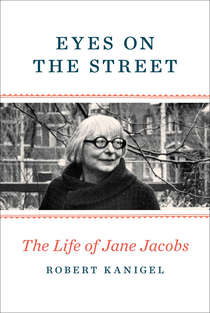 Robert Kanigel, author of the new biography Eyes on the Street: The Life of Jane Jacobs (Knopf, 2016), will give an author talk and conduct a book signing at Burns Library on Oct. 12 at 4 p.m. Burns Library is home to the archives of Jacobs, a pioneer of urban planning and city design. Kanigel is also the author of The Man Who Knew Infinity, which was a finalist for the National Book Critics Circle Award and the Los Angeles Times Book Prize. Kanigel recently discussed his book with Publishers Weekly Radio (beginning at 11:26).
Posted in Guest Authors
Tagged Boston College Libraries, Burns Library, Jane Jacobs, urban planning
Leave a comment
Galileo in a changing world
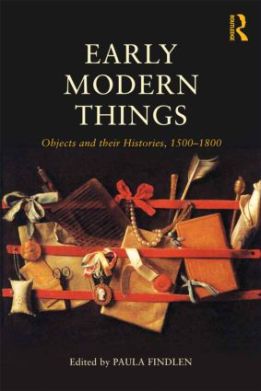 Award-winning historian Paula Findlen, who is working on a project of Galileo’s correspondence, will present “After the Trial: Galileo in a Changing World” on Oct. 12 at 7 p.m. in Gasson Hall, room 100. Findlen is developing a collaborative, NEH-funded digital humanities project, “Mapping the Republic of Letters,” to analyze and present networks of knowledge and information in early modern Europe, its overseas colonies, and its global mercantile and religious communities. Her research focuses on science and culture in the age of Galileo, the history of museums, collecting and material culture, and gender and knowledge. Findlen is the Ubaldo Pierotti professor of Italian history at Stanford University and her publications include Possessing Nature: Museums, Collecting and Scientific Culture in Early Modern Italy and Early Modern Things: Objects and Their Histories, 1500-1800. Sponsor: Lowell Humanities Series.
Doing good
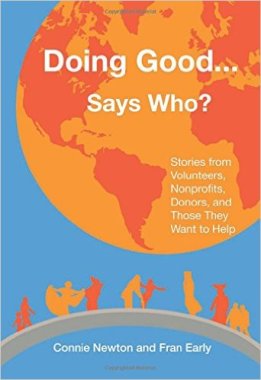 In America magazine, BC Professor of Theology Stephen Pope reviews the book Doing Good . . . Says Who?: Stories from Volunteers, Nonprofits, Donors, and Those They Want to Help by Connie Newton and Fran Early which uses the authors’ extensive experience of immersion and service to create a roadmap for “doing good” effectively. Through narratives, the authors highlight five guiding principles: Respect people and value their agency, build trust through relationships, do “with” rather than “for,” ensure feedback and accountability and evaluate every step of the way. Pope praises the book, writing that it is “packed with valuable insights for anyone engaged in service. It is a must-read for students or adults seeking to ‘do good’ either locally or overseas…especially valuable for service learning courses in high schools and colleges, parish and campus ministry retreats.”| Book review
Posted in Boston College Book Reviewer
Tagged service, Theology Department, volunteering
Leave a comment
 BC Bookmarks