
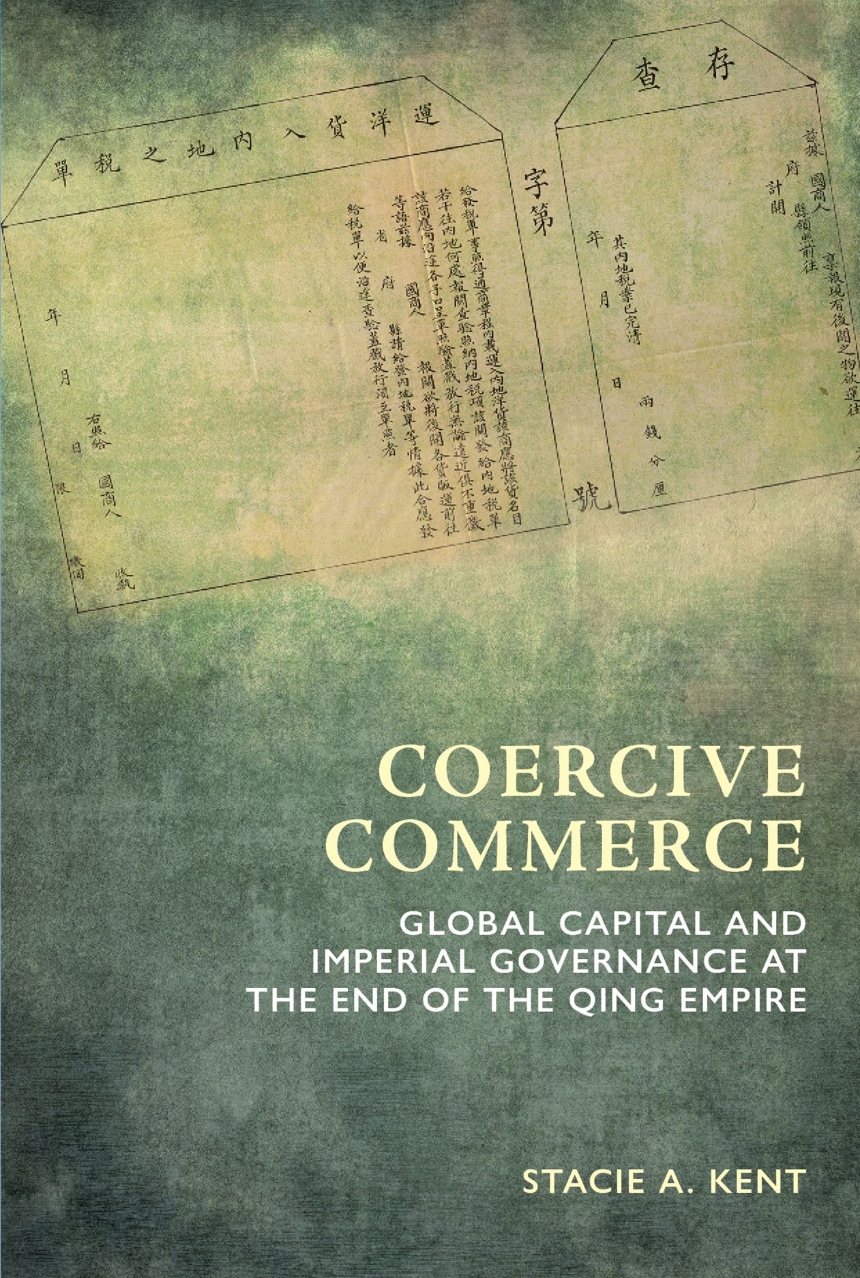
 In 1842, the Qing Empire signed a watershed commercial treaty with Great Britain, beginning a century-long period in which geopolitical and global economic entanglements intruded on Qing territory and governance. Previously understood as an era of “semi-colonialism,” Boston College Assistant Professor of History Stacie A. Kent reframes this “treaty period” by shedding light on the generative force of global capital. Based on extensive research conducted with British and Chinese government archives, Kent’s book, Coercive Commerce: Global Capital and Imperial Governance at the End of the Qing Empire (Hong Kong University Press, 2024), shows how commercial treaties and the regulatory regime that grew out of them catalyzed a revised arts of governance in Qing-administered China. Kent contends that Qing administrators alternately resisted and adapted to this new reality by reorganizing Chinese territory into a space where global circuits of capital could circulate and reproduce at an ever greater scale. Kent, who teaches in the University’ International Studies program, specializes in global capitalism in imperial and post-colonial contexts.
Coercive Commerce
This entry was posted in Boston College Authors and tagged Asian history, capitalism, China, History Department. Bookmark the permalink.
 BC Bookmarks